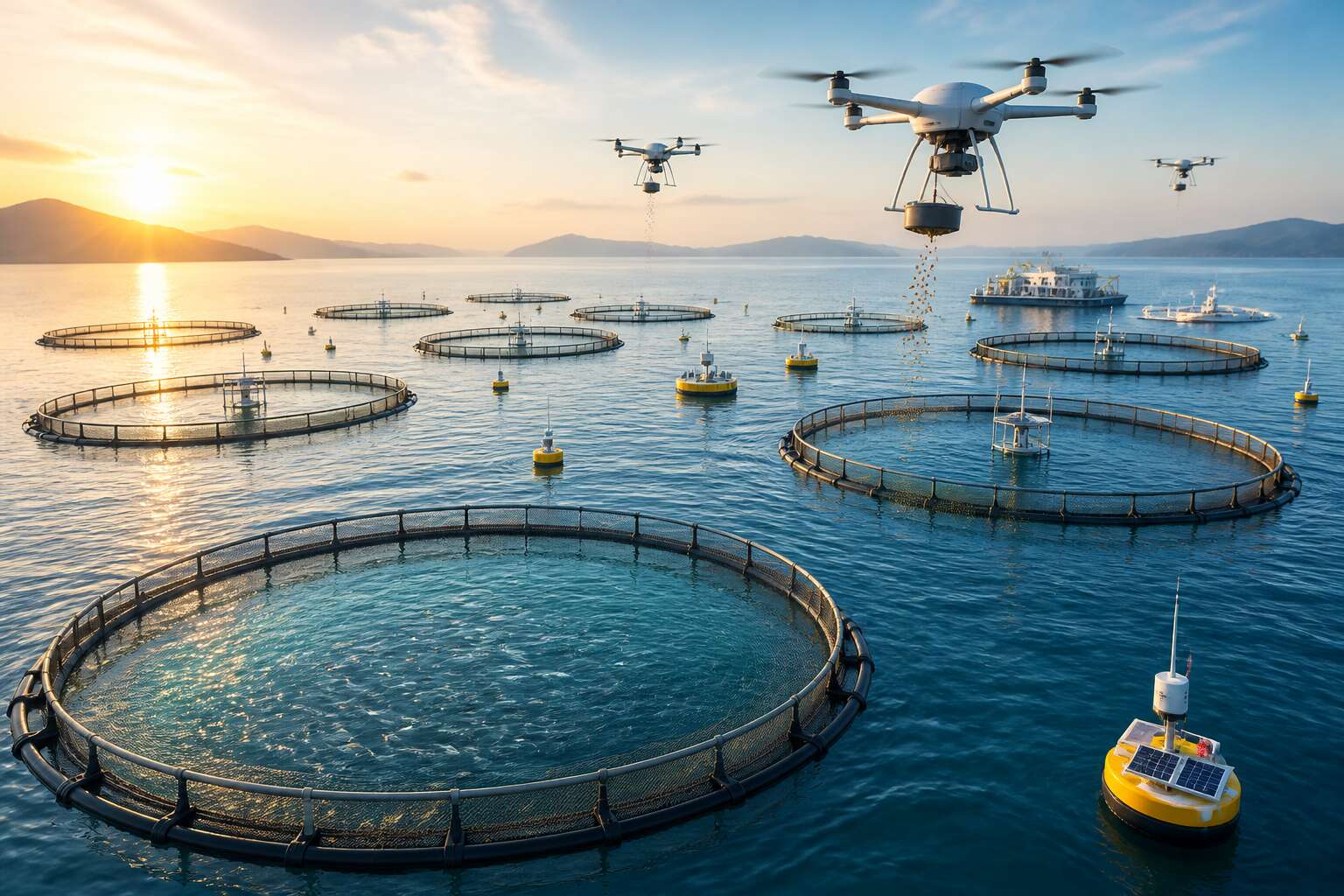
Smart Water Farming Systems
Automated Feeding and Monitoring
South African fish farmers once guessed feeding times by the toss of a pellet. Today, smart water farming systems turn that guesswork into a precise algorithm. Sensors measure oxygen, temperature, and ammonia levels in real time, while automated feeding units release rations only when fish actually need them.
This aquaculture tech reduces waste and lowers electricity costs. Monitoring dashboards send alerts when a pump stutters or a tank overheats. A farmer in the Western Cape can check water quality from a tractor seat, then adjust feed rations without a single visit to the pond.
- Feeding schedules adjust automatically
- Water chemistry tracked hourly
Less stress on fish means faster growth and better returns.
Water Quality Sensors and IoT Integration
Load shedding dims your lights and roasts your fish. A water quality sensor catches that temperature climb in real time. IoT integration links every probe into a live map of your tanks. I have seen farmers taste pond water to check acidity. The sensor does it better and without the risk of swallowing microbes!
Here is what the sensors nag about:
- Dissolved oxygen dropping at 2 a.m.
- Ammonia spikes after a heavy feed
- pH drifting outside the safe band
This aquaculture tech gives you a tidy data stream. You can check conditions from a braai in Bloemfontein and still save the harvest.
Machine Learning Applications in Breeding
One tilapia female can release a thousand fry in a single spawn, each one carrying a distinct genetic code. Yet most of those fry never reach potential because we cannot see which ones carry the traits we need. Aquaculture tech changes that with smart water farming systems.
These systems gather decades of recorded breeding data into a dynamic archive. Machine learning applications in breeding read patterns across water temperature, feed conversion, and survivorship. They rank each generation quietly, choosing broodstock with a precision that manual records cannot match.
The algorithms study features like:
- growth rate variance
- stress tolerance at high densities
- spawning timing shifts
These outputs fold back into the farm’s water management, adjusting the temperature curve when a high-value spawn approaches. The aquaculture tech learns from each hatch, refining its predictions with every cycle.
Robotic Maintenance and Harvesting Units
A third of every maintenance dollar on a recirculating farm goes to tasks that require wet boots and a strong stomach. Robotic units now handle that grunt work, from scrubbing biofouling off tank walls to swapping out fouled impellers. Our harvest siblings use camera-guided nets to grade fish by size as they move from grow-out to chill tanks. The farm floor runs itself, mostly. We still keep a human on the control screen, but purely for the paperwork that robots cannot sign.
- hull scrubbing and debris removal
- pump and valve inspections
- emergency leak response
Aquaculture tech here does not replace intuition. It replaces the exhausting manual work of farming.
Cloud-Based Farm Management Dashboards
Any farmer who has stood at the water’s edge knows a farm reveals itself slowly. The cloud dashboard compresses that timeline. Every pump, valve, and oxygen sensor feeds into a single interface showing every tank and pipe in one view.
The dashboard runs predictive models. It flags a bearing temperature climbing toward failure three days before the vibration becomes audible. It tracks feed conversion ratios against water temperature and stock density.
Our South African installations reveal a pattern in aquaculture tech. Farms using cloud dashboards cut energy costs up to 18 percent by shifting oxygen generation to off-peak tariff windows. The system learns each farm’s operating pattern.
What makes this aquaculture tech work is exception handling. The dashboard does not alert for every fluctuation. It learns what normal looks like for your system and interrupts when something needs a human decision. I have watched this shift happen in a season!
Sustainable Approaches for Marine Agriculture
Recirculating Aquaculture Systems
South Africa receives half the global average rainfall, so marine agriculture recirculating systems need sustainable approaches beyond the obvious hardware. The real work happens in the sludge, where biofiltration and anaerobic digestion convert piscine effluence into reusable nutrients. Sludge is ignored, but it keeps the system alive.
A properly tuned recirculating system reuses up to 95% of its water. That is a win when your province is rationing. I have watched this operate in a land based facility near Cape Town, and it almost looks boring, which is exactly how you want it!
Key operational choices include:
- Biofloc systems that manage carbon to nitrogen ratios
- Polyculture with sea cucumbers to clean tank floors
- Low energy pumps with variable speed drives
Aquaculture tech works when it uses mundane recycling. Gadgetry is overrated.
Integrated Multi-Trophic Farming Models
Off the Western Cape coast, the ocean is cold and stingy with nutrients. That is why integrated multi-trophic farming models matter here. Instead of growing one species alone, these systems arrange complementary organisms in a single marine territory. Finfish produce ammonia-rich waste. Kelp absorbs that waste as fertiliser. Mussels and oysters clean the remaining particulates.
Nothing is discarded, and no single crop carries the full financial risk. A poor abalone season can be offset by a strong kelp harvest. I have watched Saldanha Bay operations use this model to reduce the environmental load of open water aquaculture tech.
In practice, the farmer becomes a choreographer of species. Kelp lines slow currents and trap silt. Mussel ropes filter suspended solids. Sea cucumbers graze the benthos. It is a quiet kind of aquaculture tech, one that leans on biology rather than hardware. It is harder than monoculture, but the system rewards patience.
Algae and Seaweed Cultivation Innovations
Off the Cape coast, seaweed cultivation is altering marine agriculture. One hectare of kelp absorbs up to 20 tons of dissolved carbon annually, and farmers now leverage this natural capacity with aquaculture tech that needs no external feeding.
Innovations centre on substrate engineering. Perforated dropper lines reduce storm drag, while swarm seeding lets spores attach evenly, cutting nursery time by half. I have seen False Bay trials where oscillating rafts improve light penetration, boosting yield without a single pump!
- Copper-free coatings manage biofouling, protecting young fronds from mussel spat.
- Selective strain banks preserve genetic diversity while encouraging faster growth.
This farming mirrors natural kelp forests, creating habitat as it produces raw material for bioplastics and animal feed. For South African growers, this aquaculture tech builds resilience without imported infrastructure.
Circular Economy Strategies for Fisheries
South Africa’s fishing industry discards millions of rand worth of bycatch every year. Circular economy strategies turn this waste into raw material. Fish offal becomes hydrolysate for aquafeed. Rock lobster shells are processed into calcium amendments for soil. Fish skins are tanned into leather goods.
At the heart of this system is aquaculture tech that maps resource flows from boat to buyer. Onboard sorting logs each haul, connecting processors with markets for overlooked species. Coastal communities gain revenue from waste streams that once carried disposal costs.
- Recycling processing water through bioreactors
- Extracting chitin from crustacean shells for medical use
- Redirecting mortalities into compost streams
Marine agriculture becomes a regenerative cycle. Nothing leaves the system without purpose.
Boosting Productivity and Profitability
Data-Driven Yield Optimization Techniques
The most expensive fish on a South African farm is often the one that dies a week before harvest. That loss is not an accident; it is the result of missed signals in the data. Data-driven yield optimization exists to catch those signals early.
By correlating growth rates with feed input and water temperature, farmers can forecast the ideal harvest window and adjust stocking density accordingly. This is where aquaculture tech moves beyond monitoring into active strategy. Mortality prediction models, for instance, identify vulnerable cohorts before symptoms appear.
Reallocating feed or separating stressed fish at the right moment preserves the value of the entire batch. Profitability is simply the reward for paying attention.
Early Disease Detection and Prevention Tools
In South Africa, disease outbreaks account for nearly 40% of production losses on fish farms. That figure alone explains why early detection tools are no longer optional. Aquaculture tech has shifted from reactive treatment to preemptive surveillance. Instead of waiting for visible symptoms, farmers can now use molecular diagnostics and behavioural analytics to spot stress hours before an outbreak.
- Environmental DNA sampling to identify pathogens in water
- Smart cameras tracking fin movement and appetite changes
- Biosensors measuring cortisol levels in real time
Each tool feeds into a central dashboard, alerting staff to anomalies. The result is faster intervention, lower mortality, and healthier stock! Productivity and profitability become direct outcomes of vigilance, not luck.
Supply Chain Traceability with Blockchain
One disputed shipment can erase a month of profit for a South African farm. Blockchain traceability changes that equation. Every fish, from hatchery to harbour, receives a permanent digital record. A buyer in Johannesburg scans a code and sees the full journey: water quality, feeding schedule, catch date, and cold chain temperature.
This level of clarity does more than satisfy inspectors. It allows farms to charge a premium for verifiable provenance. Exporters hit stringent European standards with less friction. Internal operations also benefit because the same data stream reveals inefficiencies in packing and dispatch. Aquaculture tech turns accountability into an asset.
Immediate gains include:
- Faster dispute resolution
- Reduced audit paperwork
- New market access
Blockchain does not require new equipment. It adds trust onto the data farms already collect.
Cost-Effective Automation for Small Farms
For a small farm, a single bad season can be fatal. The right automation does not have to bankrupt you. Simple, low cost devices like float switches and solar powered pond aerators solve real problems before they become losses.
Consider what pays for itself within months!
- A solar powered paddlewheel aerator keeps oxygen stable without grid power.
- A float switch and relay automate water exchange for R900.
- A second hand hydraulic winch lifts harvest nets, reducing staff injuries.
Each purchase targets a specific failure point. The result is higher survival rates, and that matters. It is predictable output that lets you plan sales with confidence. This is aquaculture tech in its most honest form. It is reliable, affordable, and directly tied to profit.
Market Intelligence and Predictive Analytics
Market intelligence in aquaculture tech is the difference between selling into a glut and selling into a shortage. Predictive analytics take historical sales, weather records, and regional demand patterns, then show where the market is heading weeks ahead. That clarity changes how you plan.
I have watched farms adjust their harvest schedules based on these signals and beat their own production forecasts. The data does not eliminate risk. It narrows the field where risk can hide. The practical inputs are few:
- Historical price curves by species
- Weather anomaly forecasts for your region
- Import and export volume data
The Road Ahead for Ocean Farming
Autonomous Ships and Drone Surveillance
Ocean farming is entering an era where the captain’s role is increasingly digital. Autonomous ships now handle routine patrols across sprawling offshore sites, and they do it continuously without human fatigue. These vessels collect data on water conditions, net integrity, and stock movement.
Drone surveillance adds an aerial layer to this growing network. A single drone can scan hectares of pens in minutes, spotting tears or predator breaches that a boat might miss. The real shift is in how these tools coordinate with each other.
For instance, autonomous ships and drones can now work together to:
- Check perimeter nets after a storm
- Monitor feeding behavior from above
- Relay real time alerts to shore based managers
This convergence of hardware and software is central to modern aquaculture tech. The road ahead points to fully unmanned fleets, where human oversight happens from a screen rather than a deck.
Genetic Improvement via Genome Editing
Genome editing compresses decades of selective breeding into a single generation. A salmon’s growth rate once took five generations to improve. Targeted edits now deliver the same result in one. This changes the economics of ocean farming.
Aquaculture tech now includes tools that read and rewrite the genetic code of farmed fish. Disease resistance, feed efficiency, and heat tolerance are no longer left to chance. They are engineered with precision.
Common targets for genetic improvement:
- Faster growth without increasing feed input
- Resistance to common viral outbreaks
- Better flesh quality and omega-3 content
These edits reduce mortality and lower the environmental footprint of farms. South African producers, from abalone to yellowtail, are paying close attention. The genomes of local stocks are being mapped to prepare for this shift. The road ahead is about making targeted, measurable changes in every new generation.
AI-Powered Environmental Impact Monitoring
The ocean around a South African fish farm changes by the minute. Currents move, nutrients settle, wildlife comes and goes. AI powered environmental impact monitoring now captures these shifts in continuous detail, replacing the old snapshot approach to environmental reporting.
This is where aquaculture tech becomes ecological intelligence. Pattern analysis of water colour, current behaviour and species movement exposes a farm’s true footprint before standard tests detect a problem. Regulators, insurers and export markets increasingly expect this level of foresight.
The road ahead includes algorithms that flag developing algal blooms, trace sediment across a bay and warn when a neighbouring habitat shows strain. Monitoring becomes a working relationship. The farm adapts, and the environment shows the result over time.
Regulatory Challenges and Public Policy Solutions
Ocean farming occupies a strange position between food production and environmental conservation. Yet the rules governing it remain designed for land, not water. Permits take years, while the ocean changes weekly. This mismatch pushes operators toward uncertainty and investors toward the exit.
South Africa’s regulatory framework needs agility. The answer lies in aquaculture tech that generates real time data. Regulators can use this data to shift from fixed thresholds to dynamic benchmarks. For instance:
- Seasonal carrying capacity limits.
- Real time effluent reporting.
- Collaborative marine spatial planning.
Public policy must reward transparency. When farms share data openly, they earn faster approvals and lower insurance premiums. That turns compliance into a competitive advantage rather than a burden.

0 Comments