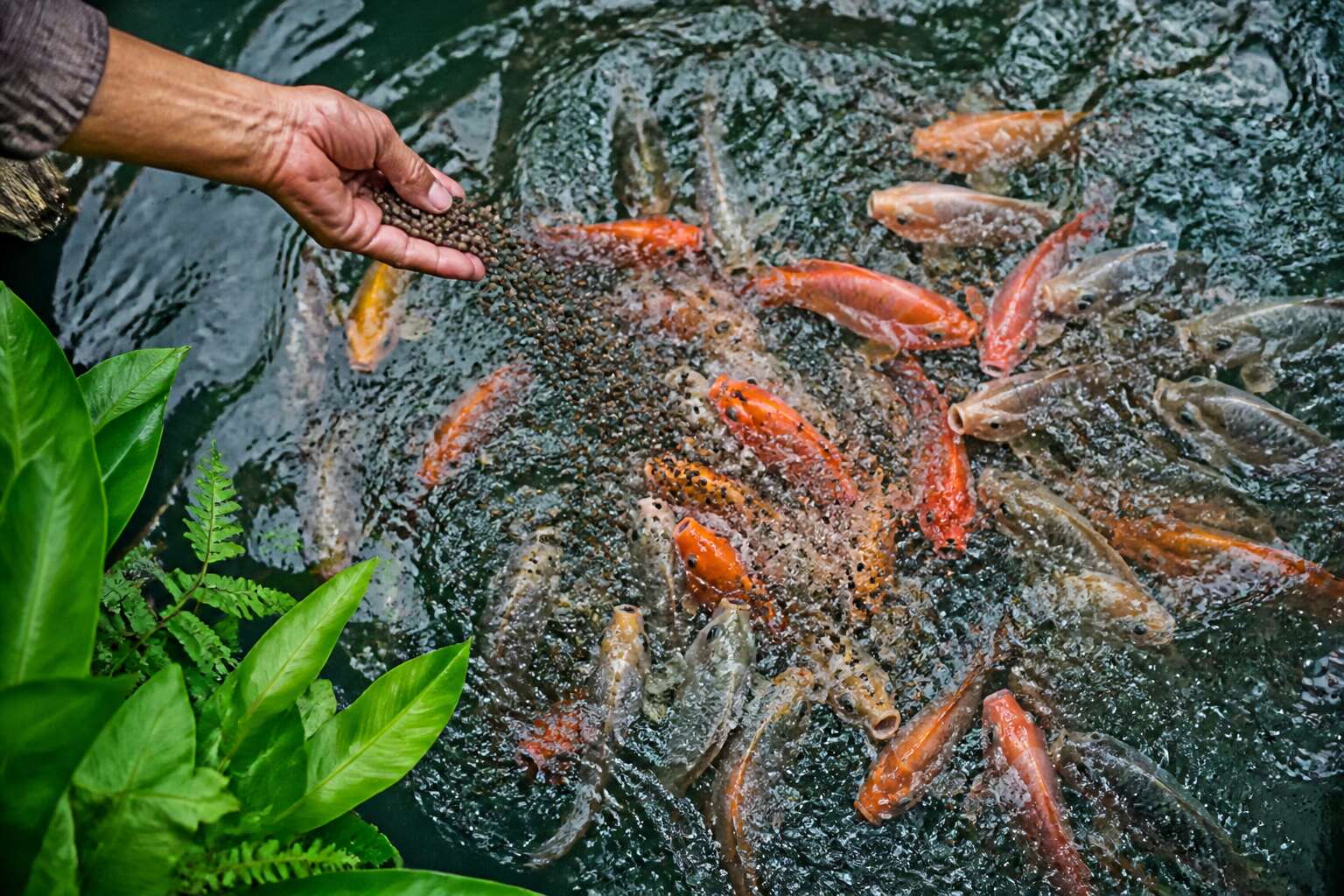
The Fundamentals of Aquafeed
What Is Aquafeed?
In South Africa, aquaculture feed can consume over 60% of a farm’s variable costs. That statistic alone explains why feed choices are critical. It is manufactured nutrition for farmed fish, shrimp, and other aquatic species.
These feeds appear in several forms:
- Floating extruded pellets for surface feeders
- Dense sinking granules for benthic species
- Fine powders for larval stages
I have seen farms thrive by matching feed texture to animal behavior. The right formula also depends on protein levels and digestibility.
The Role of Aquafeed in Global Seafood Production
The global appetite for seafood no longer rests on wild catch alone. Aquaculture now supplies over half of all fish consumed worldwide, and aquaculture feed drives that shift. Without it, production would collapse into inefficiency!
Fundamentally, feed design must mirror the biology of each species. Protein sources, lipid ratios, and amino acid profiles dictate growth rates. Farms that ignore these variables lose margin to wasted nutrients.
- Energy density determines metabolic performance.
- Water stability prevents leaching.
- Palatability ensures consistent intake.
On a global scale, feed sourcing shapes entire supply chains. Fishmeal reduction pressures force alternative ingredients, from insect proteins to algal oils. South African producers face unique constraints, but the principle holds: aquaculture feed defines both ecological impact and economic survival.
Key Ingredients Used in Modern Aquafeed
A single kilogram of quality protein can mean the difference between a profitable harvest and a silent loss. In modern aquaculture feed, the selection of ingredients has become a precise science for South African farms facing variable climate and supply chain pressures.
The core components remain straightforward:
- Fishmeal for essential amino acids and omega-3 fatty acids
- Plant concentrates like soybean or canola meal for cost-efficient bulk
- Microbial or insect proteins to reduce dependence on wild fisheries
I have watched farmers test these blends with obsessive care. Their choices affect every tank and net pen. The fundamentals of aquaculture feed demand constant recalibration, because what worked last season may fail this one.
Nutritional Requirements Across Species
Protein and Amino Acid Needs for Finfish
Over sixty percent of the cost of a typical aquaculture feed lives in its protein fraction. That fraction is not a uniform substance! A juvenile dusky kob demands a different nitrogen density than a mature Mozambique tilapia. Each species, and each life stage, presents a distinct profile of requirements. The specificity lies in the amino acid sequence, particularly the ten indispensable amino acids that a finfish cannot synthesise itself.
The essential list is unforgiving:
- Lysine
- Methionine
- Threonine
- Tryptophan
- Histidine
- Arginine
- Leucine
- Isoleucine
- Valine
- Phenylalanine
A deficit in lysine halts protein synthesis entirely. Methionine feeds the sulphur pathways. When I formulate an aquaculture feed, I consider these ratios before I ever weigh the fishmeal! The gut bacteria might metabolise some compounds, but the finfish’s own machinery is fixed. Extra protein without the correct balance becomes waste, polluting the water and the ledger. The objective is aligning the feed’s essential amino acids to the animal’s genetic demand.
Lipid and Fatty Acid Profiles in Crustacean Diets
A shrimp’s need for dietary cholesterol is absolute, a quirk that sets crustaceans apart from every finfish we have covered. Lipids carry the load here, and their fatty acid profiles are unforgiving. Marine shrimp cannot synthesise EPA or DHA from shorter precursors. They require these long-chain molecules preformed in the aquaculture feed. Phospholipids also serve as structural bricks for cell membranes, not mere energy stores.
- Phospholipids at 1.5% of the diet
- Cholesterol at 0.5%
- EPA and DHA combined at 2%
Species demand different ratios. A freshwater crayfish tolerates a leaner lipid density than a marine lobster. The balance shifts through each moult cycle. Too little lipid, and the carapace hardens poorly. Too much, and oxidative rancidity poisons the ration. I have seen a well-formulated aquaculture feed transform a sluggish juvenile into an aggressive feeder, purely by adjusting its fatty acid signature.
Vitamins and Minerals: Essential Micronutrients
One might think that once energy and protein are accounted for, the rest of the ration is merely filler. Nothing could be further from the truth. In aquaculture feed, the margin between a thriving cohort and a fractured one often rests on the unseen scaffolding of vitamins and minerals. These micronutrients are the quiet orchestrators, activating the enzymes that turn the protein and lipid we have discussed into living tissue. Sodium chloride and potassium are the electrolytes that whisper to the nervous system, while magnesium and iron are critical for keeping oxygen flowing through the bloodstream.
Vitamin C is a curious case, as most teleosts cannot synthesise it. A deficiency manifests not as a dramatic collapse, but as a slow leak of vitality. Vertebral deformities and impaired wound healing are the first signs that the ration is incomplete. For crustaceans, the requirement is even more specific. They demand a supply of vitamin C, often in a stabilised form, to fortify collagen synthesis during the vulnerable period of moulting. Equally vital are the fat-soluble vitamins. Vitamin E acts as an antioxidant guard inside the cell, protecting the valuable fatty acids we just discussed from destruction. Alongside it, vitamin A is indispensable for vision and cellular differentiation in rapidly growing juveniles.
Trace elements complete the picture. Zinc and copper often become locked in the digestive tract when phytic acid levels are high in plant-based ingredients, a common constraint in modern aquaculture feed. Therefore, supplying these minerals in a chelated form is not a luxury; it is a biological necessity. I find the balancing act of these components to be the true craft of feed formulation. The difference between a basal recipe and a phenomenal production record is often hidden within this micronutrient premix, a silent governor overseeing the entire metabolic engine.
Feed Formulation for Different Life Stages
South African feed must change with the species and the life stage. A larval mullet requires a different ration than a broodstock tilapia. Ignoring that difference reduces yields.
For early life stages, the digestive system is immature. Highly digestible proteins and finely milled particles are non-negotiable! As juveniles grow, energy demands shift. Lipid levels rise to support rapid muscle growth. In the grow-out phase, protein percentage drops to control expense, while carbohydrate inclusion climbs cautiously.
Species impose their own limits. Marine carnivores like dusky kob need taurine. Herbivores such as abalone depend on fermentable fibres. I have seen farms fail because they used one formulation for every stage. The finest aquaculture feed is a precise formula for each stage.
Sustainable Alternatives in Feed Production
Insect Meal as a Protein Source
The aquaculture feed industry faces a silent crisis: the escalating cost and environmental toll of traditional protein sources. As wild-caught fishmeal becomes a relic of a less demanding era, we must turn our gaze to the dark, fertile world of insects. Black soldier fly larvae, in particular, are voracious consumers of organic waste, transforming what we discard into a potent, sustainable protein.
This isn’t a novelty; it is a calculated evolution. The nutritional profile of insect meal is formidable, offering a complete amino acid profile that rivals conventional options. It is rich in lauric acid, which has shown promise in supporting gut health among farmed species. For the South African aquaculture sector, which is increasingly focused on reducing its import dependency, this local, circular solution presents a profound opportunity. It is a direct answer to the supply chain volatility that plagues the industry.
The practical advantages extend beyond mere nutrition. Consider the specific benefits of integrating this ingredient:
– A significantly reduced carbon and water footprint compared to soybean or fishmeal production.
– A consistent, year-round supply that is not subject to fishing quotas or agricultural seasons.
– A novel mechanism to valorise pre-consumer food waste, turning a logistical problem into a nutritional asset.
The path forward is not without its hurdles, however. The consistency of the final product, the processing parameters, and the palatability across different finfish species require meticulous calibration. Yet, the trajectory is clear. The future of aquaculture feed is being written in the substrate of the insect farm, a quiet revolution in the shadows of the feed mill. We are witnessing the beginning of a fundamental shift, where the smallest creatures provide the answer to our largest challenges in feeding a growing global population.
Algae-Based Ingredients for Omega-3 Enrichment
The cultivation of microalgae offers a direct source of omega-3 fatty acids, bypassing the inefficient passage through marine food chains. These organisms convert solar energy into EPA and DHA with a biochemical precision that fishmeal cannot match. For South African aquaculture feed, algae based oils provide a stable, ethical alternative to the declining stocks of forage fish.
The practical benefits are measurable. Algal oils contain no heavy metals or persistent pollutants, a growing concern with traditional fish oils. They also allow for precise dosage control, ensuring the fatty acid profile of farmed species meets consumer expectations.
- Consistent composition across harvests
- Reduced pressure on wild fisheries
- Local production potential in sunny climates
Algae is distinct. We see this in commercial facilities today. The process is not theoretical. The future of aquaculture feed lies in this botanical resource, transforming a dependency into a choice.
Single-Cell Proteins and Fermentation Products
The global aquafeed industry consumes over 50 million tonnes of raw materials annually, a scale that demands smarter resource use. Single-cell proteins (SCP) from bacteria, yeast, and fungi are stepping into this gap. These microorganisms are cultivated in fermenters, converting industrial byproducts and methane into dense protein biomass. This process sidesteps the agricultural land and water required for conventional protein sources.
Fermentation technology offers distinct advantages for South African producers. It provides a reliable supply chain that is immune to seasonal harvest fluctuations. The nutritional profile of SCP is consistent and highly digestible for farmed fish species. This reduces the reliance on imported soybean meal and fishmeal in the regional aquaculture feed market.
– Low carbon footprint compared to crop cultivation.
– Rapid production cycles measured in hours, not months.
– Utilization of local industrial waste streams.
The economic logic is straightforward. Fermentation facilities can be built near urban centers, reducing logistics costs. For a country focused on food security, this represents a practical pathway to self-sufficiency in feed production. The shift towards these microbial proteins is less about novelty and more about resilience in the face of global supply pressures.
Agricultural By-Products in Feed Formulation
Agricultural by-products are reshaping how South African producers approach aquaculture feed. The country’s maize, citrus, and brewing industries generate substantial residues that often go to waste. These materials, including oilseed cakes, citrus pulp, and brewers’ spent grain, contain valuable nutrients for farmed fish.
What strikes me is how each by-product brings a distinct nutritional profile. Citrus pulp offers soluble fiber and energy. Brewers’ spent grain provides moderate protein and digestible fiber. Oilseed cakes contribute essential amino acids. Yet their composition varies by season and processing method. Feed formulators must analyze every batch and adjust inclusion rates accordingly.
Consider the practical benefits:
- Lower ingredient costs compared to imported proteins.
- Reduced environmental burden from agricultural waste.
- Greater resilience against global supply disruptions.
This approach turns a disposal problem into a feed solution. For South Africa, it means a more self-reliant and sustainable aquaculture feed sector.
Reducing Dependence on Wild-Caught Fishmeal
South Africa’s aquaculture feed sector faces a critical challenge: how to nourish farmed fish without depleting wild populations. Wild-caught fishmeal, once the standard protein source, now carries an ecological cost that producers must address.
Sustainable alternatives are emerging from practical sources:
- Poultry by-product meal, a high-protein substitute available domestically
- Fermented soybean concentrates with improved digestibility
- Microbial biomass from industrial fermentation processes
Each option reduces pressure on forage fish stocks while offering predictable nutritional profiles. I have observed South African feed mills gradually replacing 30 to 50 percent of fishmeal in their formulations without sacrificing growth performance. The shift demands rigorous quality control and dependable supply chains. Lower dependence on wild-caught fishmeal strengthens the marine ecosystem and secures the long-term stability of aquaculture feed production.
Feed Manufacturing and Processing Techniques
Extrusion Technology for Floating Feeds
Most commercial aquaculture feed begins its life as a powder, a dusty amalgam of proteins and oils that would sink like a stone. The alchemy that transforms this mixture into a buoyant pellet is extrusion. This process uses heat, pressure, and steam to cook the ingredients under extreme duress. When the molten mash exits the die, the sudden drop in pressure causes trapped moisture to flash into steam, creating a porous structure that floats.
This transformation is not merely for show. A floating pellet allows farmers to observe feeding activity directly, reducing waste and protecting water quality. The high-heat process also neutralises antinutritional factors, making nutrients more digestible for species like tilapia and trout. The physical durability of these pellets is a critical factor in South African aquaculture, where the logistics of distribution can be punishing.
The engineering behind this technique is precise. The barrel temperature, screw speed, and moisture content must be calibrated for each specific diet. Get it wrong, and the pellet will either sink or dissolve on contact with water.
– The starch gelatinisation improves binding.
– Thermal treatment reduces bacterial load.
– The expansion rate dictates buoyancy.
Each variable is a lever that dictates the final product. The result is a feed that is stable, digestible, and efficient, a cornerstone of modern production. The machinery demands energy, but the return on investment is visible in the health of the stock. This is where the science of formulation meets the reality of the farm, producing the essential aquaculture feed that sustains the industry.
Pelleting and Conditioning Processes
Most aquaculture feed produced in South Africa never floats. It sinks, and that is the point! Pelleting and conditioning create dense, stable pellets for bottom feeders like catfish and carp. This path prioritises efficiency over buoyancy.
The conditioning stage is where steam gets injected into the mash, raising temperature and moisture. In practice, I’ve watched this soften starches and activate natural binders. The press forces the mash through a die, creating uniform cylinders that hold together in water.
Here is the typical sequence:
- Steam conditioning for 30 to 60 seconds.
- Compression through the die.
- Cooling and drying to final moisture.
Conditioning reduces bacterial loads, a quiet benefit for feed safety. Lower energy demands make this route cost effective. For feed that must reach the pond floor intact, pelleting remains a reliable method.
Quality Control and Feed Safety Standards
Somewhere in a mill outside Pretoria, a batch of feed is moments away from failing a simple moisture test. That failure, caught in time, keeps an entire farm’s worth of tilapia safe from mycotoxins. Quality control in this industry is not glamorous. It is a relentless game of hide and seek with contaminants, moisture spikes, and particle size deviations.
A robust safety protocol examines every input, from fishmeal to vitamin premixes. Heavy metal screening, particularly for lead and cadmium, is non-negotiable. Microbial testing targets Salmonella and E. coli, bacteria that thrive in warm, humid conditions. The pelleting process we discussed earlier reduces some bacterial loads, but it does not eliminate them entirely. That is why post-pelleting checks are critical.
Routine laboratory analysis should cover:
– Proximate analysis for protein, fat, fibre, and ash
– Moisture content to ensure pellet durability
– Toxin screening for aflatoxins and fumonisins
– Physical hardness tests to prevent crumbling
Traceability is the unspoken hero here. When a problem appears, you need to know which supplier delivered which ingredient on which date. South African producers exporting to neighbouring countries face stringent documentation requirements, and local operations benefit from the same discipline. Feed safety is not a single checkpoint. It is an attitude baked into every shift, every sieve, and every sample bag sent to the lab.
Feeding Strategies and Management on Farms
Feeding Rates and Frequency Optimization
Feeding a farmed population is less a science of exact measurement and more an art of keen observation. Standard tables provide a starting point, yet the true optimist adjusts for the daily mood of the water. Temperature shifts, dissolved oxygen levels, and even the social hierarchy within a tank dictate appetite. Serving a fixed ration on a rigid schedule ignores these variables, turning a potential growth period into a costly exercise in waste management. The discerning aquaculturist reads the surface for signs of eagerness, adjusting portion sizes to match the prevailing conditions before a single pellet meets the water.
Practical feeding strategies often depend on the specific system in place. A common approach for many South African operations involves:
– Hand feeding to visual satiety, allowing for real-time adjustment.
– Demand feeders, which empower the fish to dictate their own meal times.
– Automatic timers for consistent delivery in larger, more uniform populations.
This selection is not arbitrary. The method influences how efficiently the aquaculture feed is converted into flesh. Hand feeding remains the most precise, albeit labour intensive, option for discerning farmers who value a close relationship with their stock.
Optimizing frequency is a delicate negotiation between growth and digestive capacity. Smaller meals offered more frequently often yield better conversion rates than a single daily gorging, which taxes the metabolic system and pollutes the water. For juvenile fish, whose digestive tracts are small, a near continuous supply of high quality aquaculture feed mimics their natural grazing behaviour. As the fish mature, the schedule can be consolidated, offering fewer, larger portions that satisfy their increased capacity and reduce the energy spent on feeding activity. This adaptive rhythm, a quiet conversation between farmer and fish, minimises waste and maximises the return on every kilogram of feed invested.
Automatic Feeders and Precision Aquaculture
On modern South African farms, the mechanical arm of an automatic feeder follows a programmed schedule. It releases aquaculture feed at set moments, yet the wisest operations have moved beyond fixed timing. Precision aquaculture now merges sensor data with machine learning, allowing the system to read temperature, oxygen, and the subtle turbulence of feeding activity.
Consider the array of tools at a farmer’s disposal:
- Hydroacoustic sensors that count every strike on the pellet
- Subsurface cameras that estimate biomass and adjust portions
- Cloud-based algorithms that compare daily consumption against historical trends
These instruments do not replace the farmer’s eye. They extend it. When a cold front rolls in, the sensors detect the slackened appetite and trim the next delivery. That agility transforms aquaculture feed from a static commodity into a living variable, one that matches each tank’s unique rhythm.
Monitoring Feed Consumption and Conversion Ratios
Feed conversion ratio, or FCR, tells a South African farmer more than any yield figure. When aquaculture feed costs rise, wasted pellets hurt twice. One farm I visited dropped its FCR from 1.8 to 1.4 simply by tightening observation. They weighed feed bins daily and recorded every refused delivery.
Monitoring consumption demands more than a glance at the water surface. Submerged waste trays reveal how much aquaculture feed falls uneaten. A quick siphon test shows whether pellets crumble before reaching the fish. These checks catch overfeeding early.
Regular reviews of stocking density and water temperature add context. Conversion ratios shift with season and stress. Track them weekly, not quarterly.
Use these records to adjust batch sizes:
1. Compare intake against growth samples.
2. Check for leftover feed after ten minutes.
3. Modify rations before health issues appear.
The numbers matter only when they guide the next feed order.
Managing Feed Waste and Environmental Impact
A farm that ignores its effluent is paying twice. Waste from aquaculture feed settles into sediment, degrades water quality, and raises mortality rates. In South Africa, where water licenses are tightening, this becomes a legal and financial liability.
Feeding strategies must start with pellet size and sink rate. A floating pellet that breaks apart releases fines into the water column. Farmers can cut waste by matching feed to current weather conditions and fish behaviour.
- Reduce feeding during cold fronts and low oxygen periods.
- Use demand feeders to let fish set the pace.
- Check pond bottoms weekly for sludge build up.
Every kilogram of aquaculture feed that reaches the fish is one less kilogram of pollution. Measuring waste against growth keeps both profit and environment in balance.
Seasonal and Water Temperature Adjustments
In South Africa, the difference between a profitable season and a losing one often comes down to how a farmer reads the water. As winter settles over the Karoo or the Lowveld, the metabolic rate of tilapia and trout shifts dramatically. A fish that feeds aggressively at 24°C will barely touch a pellet at 14°C. This is not a failure of the feed; it is a failure to adjust.
The seasonal rhythm demands a sharp eye on daily temperatures. When a cold front rolls through, cut back on rations before the fish show signs of sluggishness. Their specific appetite shrinks, and leftover pellets sink into the mud, becoming a debt you pay later.
– Drop feeding frequency from three times a day to once when temperatures fall below 18°C.
– Switch to slower sinking pellets during winter to give fish more time to strike.
– Move feeding times to the warmest part of the afternoon.
Spring brings its own puzzle. A sudden warm spell tempts you to push feed, but the fish’s digestive systems need time to catch up. Increase rations gradually over two weeks, not overnight. In summer, monitor oxygen levels closely. Warm water holds less oxygen, so a midday feeding frenzy can turn dangerous. The best farmers learn to listen to the water, not the calendar. Every kilogram of aquaculture feed you save during a temperature dip is a kilogram that stays out of the sediment and on your balance sheet.
Biosecurity Measures for Feed Handling
Feeding strategies on South African farms require a disciplined approach to both the ration and its storage. The way you handle aquaculture feed can introduce disease as quickly as a sick fish. Moisture, pests, and temperature swings degrade pellets before they reach the water.
Biosecurity measures for feed handling begin at delivery. Assign dedicated tools, inspect bags for damage, and rotate stock to keep every batch fresh.
- Disinfect storage bins after each use.
- Place feed on pallets, away from walls.
- Record delivery dates and batch numbers.
These steps safeguard the feed and the fish. Farmers who treat their feed as a controlled input see fewer outbreaks and steadier growth.

0 Comments