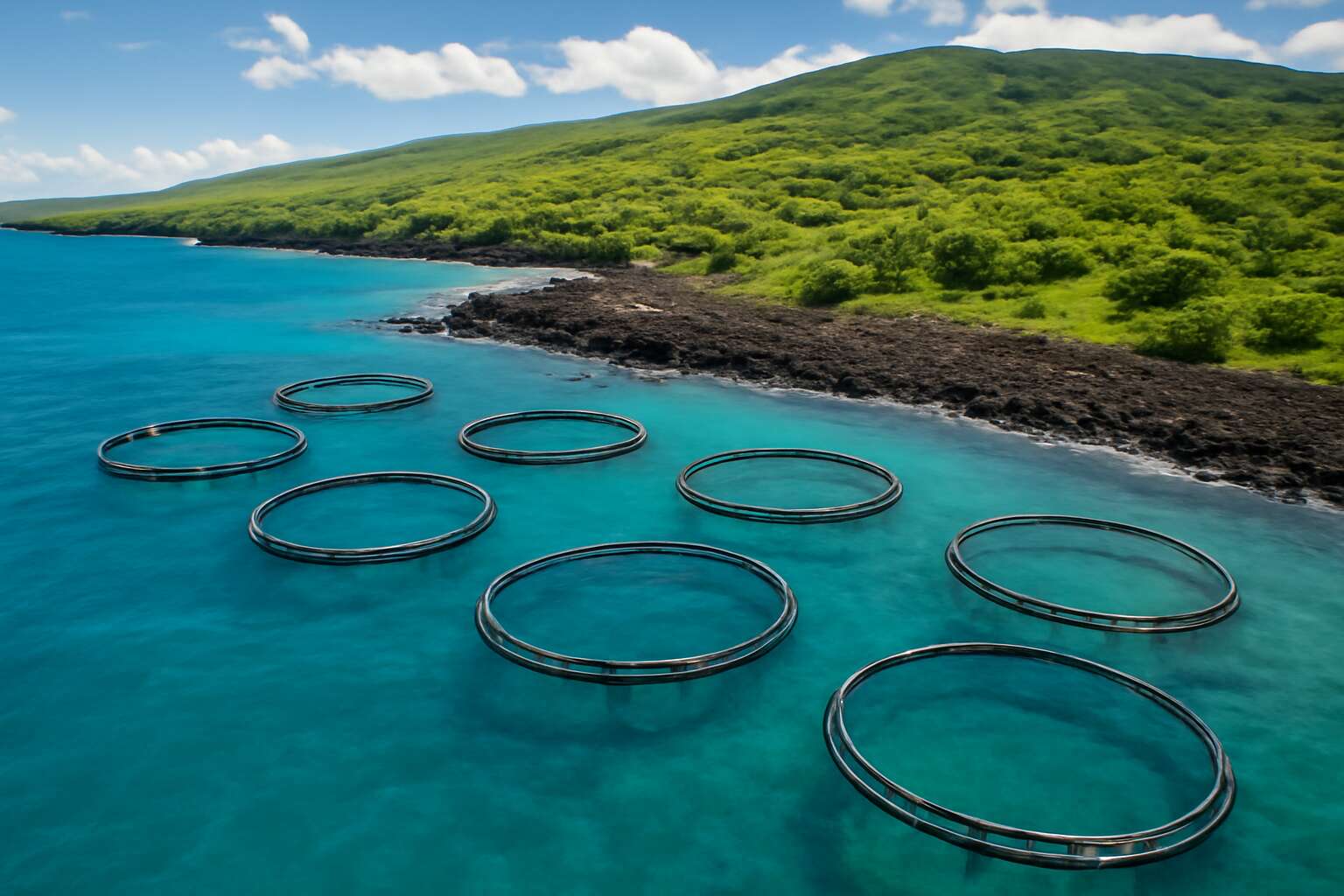
Kona aquaculture landscape and opportunities
Regional climate and water resources for Kona aquaculture
“Water is the lifeblood of Kona aquaculture,” a veteran farmer reminds me as we scan the calm bays. In this place, fish farm kona is more than a business—it’s a shoreline with a future!
Kona enjoys a steady tropical climate, warm seas, and reliable trade winds, with gentle rainfall that helps balance water quality. The landscape blends saltwater basins, volcanic aquifers, and coastal lagoons—ideal for scalable, responsible aquaculture.
- Integrated multi-trophic systems
- Accessible hatcheries near processing hubs
- Community partnerships and eco-certifications
This convergence promises resilient livelihoods and regional opportunities for fish products anchored in trust and traceability, a model South African partners are eyeing with growing interest.
Popular species within Kona aquaculture operations
This fish farm kona model is reshaping coastlines, with pilot projects reporting a 33% boost in feed efficiency under integrated systems!
Kona’s landscape blends saltwater basins, volcanic aquifers, and coastal lagoons—ideal for scalable, responsible aquaculture. Our approach centers on integrated multi-trophic systems, accessible hatcheries near processing hubs, and sturdy community partnerships backed by eco-certifications.
- cobia
- barramundi
- snapper
- tuna
For South African readers, these operations offer a blueprint of trust, traceability, and regional opportunity in fish products.
Economic impact and market demand in Hawaii
The Kona coast is turning into a living lab for modern aquaculture, where salt-kissed beaches meet a matrix of saltwater basins, volcanic aquifers, and sheltered lagoons. Pilot projects have already delivered a 33% boost in feed efficiency under integrated systems—signal of faster, cleaner growth. The fish farm kona model is reshaping coastlines.
In Hawaii, this translates into tangible economic ripples—local jobs, hatchery-to-market pathways, and bustling processing hubs that anchor value on the islands. For South African readers, the Kona approach offers a blueprint of trust and traceability in fish products, supported by regional partnerships and eco-certifications.
- Near-market processing hubs that shorten supply chains
- Eco-certifications and community co-management
- Public-private partnerships funding scalable infrastructure
The landscape invites investors to imagine a coast where community and commerce move in step with the tides.
Regulatory environment and permits for Kona aquaculture
Coastlines shimmer as regulation becomes a scaffold for smart growth. In Kona, clear rules and predictable timelines turn investment into progress. As one regulator puts it, “Clear rules, traceability, and timely decisions breed trust”—a sentiment that positions the fish farm kona as a beacon of sustainable aquaculture.
Regulatory practice centers on a streamlined permit stack that protects water, wildlife, and people while speeding projects forward. Typical permits include:
- Water-use and discharge permits
- Coastal-zone lease or authorization
- Environmental impact assessment
- Biosecurity and hatchery licensing
- Public-health and product-safety certifications
Public-private partnerships back scalable infrastructure, from processing hubs to biosecure feed systems.
For South African readers, Kona’s model reveals how trust, eco-certifications, and community co-management can anchor export-ready coastal farming. The Kona landscape invites investors to imagine a coast where near-market logistics and rigorous governance move hand in hand with preservation and opportunity.
Operational best practices for Kona aquaculture
Water quality management and recirculating systems
Water is the silent ally of a thriving aquaculture enterprise; a single misread parameter can turn a system into a soggy misadventure. For a resilient fish farm kona, the baseline is impeccable water quality management and well-tuned recirculating systems.
Here are the high-level indicators that keep it elegant rather than a chore.
- Dissolved oxygen above 5 mg/L maintained by steady aeration.
- Ammonia and nitrite controlled by biofiltration and routine sampling.
- pH and temperature stabilized to minimize stress and waste.
- Solids removal and biofilter upkeep to prevent buildup.
With vigilance and sensible design, water quality remains steady, and the system rewards that restraint.
Feed strategies and growth optimization
In Kona’s bays, feed decisions rewrite the margin between thriving stock and squandered resources. A fish farm kona treats feeding as an art, not a routine, harvesting growth with less waste and steadier health. The science whispers a truth: the right protein-energy mix, matched to age and species, unlocks faster, more efficient growth. The aim is steady performance across variable coastal conditions, and relevance to South Africa’s climate realities.
Consider these feeding dynamics:
- Balanced protein-to-energy ratios aligned with species and life stage
- Frequent, smaller rations to sustain digestion and water quality
- Digestible ingredients that minimize uneaten feed and waste
- Monitoring indicators such as appetite and feed conversion as a guide
Growth optimization requires harmonizing appetite, health status, and environmental cues, crafting a growing curve that remains resilient through seasons. The ethos of the fish farm kona ritualizes care for feed, health, and habitat—an unspoken pact that underpins sustainable yield.
Health management and biosecurity
In a fish farm kona, health management is the quiet engine behind every thriving cohort. Stock resilience comes from vigilant observation, clean habitats, and a culture that treats disease as a preventable risk rather than an accident. When health holds, margins stay steady and communities stay nourished.
- Quarantine and health screening for all new stock, with defined observation periods.
- Restricted access and visitor logging to minimize cross-contamination.
- Rigorous sanitation protocols for nets, crates, and gear between enclosures.
- Regular staff training on early disease signs and proper disposal of mortalities.
For South African readers, the shared duty of biosecurity protects coastal livelihoods and local markets. This approach keeps a fish farm kona steady through seasonal surprises, lowering risks and preserving the integrity of the harvest.
Waste management and environmental stewardship
Waste management on a fish farm kona is not a footnote but a compass. In well-tended coastal systems, thoughtful stewardship can recycle up to eighty percent of nutrients, turning effluent into soil and seawater that nurture the next harvest. Stewardship here is artistry and discipline, shaping resilience with every cycle!
Operational poise rests on gentle balance—minimized leaks, measured discharges, and a culture of accountability.
- Nutrient recycling through biofilters and aquatic plants
- Sediment capture and shoreline protection
- Effluent treatment and continuous monitoring
- Community collaboration and transparent reporting
For South African readers, these rhythms are a pledge to coastal livelihoods and markets, a promise that fish farm kona will endure storms as surely as it celebrates calm seas.
Technologies shaping Kona aquaculture
Recirculating aquaculture systems and automation
“Water has memory,” a Kona tech lead likes to say, and data memory follows suit. On the fish farm kona, recirculating systems turn salty air into a precise, living algorithm that translates coastal light into reliable harvests—Yes indeed!
From hatchery to market, automation curates every heartbeat of the system: feeding, aeration, cleaning, and waste capture. I watch real-time sensors monitor dissolved oxygen, pH, and temperature, while smart controls adjust pumps and valves to steady the rhythm.
- Smart sensors tracking dissolved oxygen, temperature, pH
- AI-guided feeding and growth forecasting
- Energy-efficient pumps, variable-speed drives
- Automated solids separation and biofilter management
- On-site water treatment with UV, ozone, and recirculation optimization
These technologies honor the water cycle and invite South African operators to imagine Kona-inspired resilience within their own climates.
Sensor networks and data analytics
Spectral morning light meets a measured chorus of readouts. In the fish farm kona, sensor networks map every gulp of oxygen, every shift in salinity, turning coastal weather into a map of certainty. A single dashboard glows with real-time insight, and operators read the pace of the system like a well-tuned orchestra.
Key technologies shaping Kona aquaculture include:
- Sensor networks and edge analytics that push decisions to pumps and valves
- AI-guided feeding and growth forecasting for precise rations
- Data fusion from DO, pH, temperature, and salinity to create a living model
- Automated fault detection and predictive maintenance to reduce downtime
- Cloud and on-site data platforms ensuring rapid action and resilience
South African operators might imagine their shores echoing this cadence, as Kona-style sensor literacy rewrites expectations for harvest timing and resource use.
Selective breeding and genetics in Kona species
Breeding tables and genome maps are reshaping Kona aquaculture. A generation of selective breeding can tilt growth efficiency by up to 15%, easing feed costs and sharpening harvest timing. ‘We’re shaping tomorrow’s stock,’ a breeder notes, and the sentiment lands like a compass for practitioners. In the fish farm kona landscape, genetics is a living toolkit rather than distant theory.
Key levers include:
- Trait heritability and practical selection criteria for Kona species
- Maintaining genetic diversity and controlling inbreeding
- Genome-informed selection and ethical, regulatory alignment
Taken together, selective breeding and genetics anchor sustainable yields for coastal aquaculture.
Farm design and site selection considerations
On Kona’s salt-kissed mornings, farm design becomes choreography—the tide as conductor, the wind as tempo. “We shape tomorrow’s stock with every beam,” a veteran engineer says, turning the coast into a living blueprint for resilience.
Technologies steering the fish farm kona design fuse modular pens, buoyant platforms, autonomous feeders, and smart sensors that track currents, temperature, and feed conversion. Real-time data lets managers adapt spacing and harvest timing, reducing waste while keeping a community’s faith in seafood quality.
- Currents and wind exposure
- Water depth and seabed bathymetry
- Proximity to power, logistics, and processing facilities
Site intelligence blends science and stewardship, guiding choices that honor reef health while sustaining livelihoods.
Investing in Kona aquaculture: startup tips and ROI
Capital costs and financing options
Global seafood demand is rising, and aquaculture now accounts for well over half of what we eat. Investing in fish farm kona demands a clear read on water reliability, logistics, and local markets. For South African investors, currency risk and dependable off-take can shape the upside as much as the design itself.
Capital costs set the baseline. Start with site prep, equipment, licenses, and initial stocking to understand cash flow. Financing options vary, from traditional bank loans to equity partners and concessional schemes.
- Capital costs: site, tanks, filtration, licenses, and initial stocking
- Financing options: bank loans, equity partners, government grants or concessional schemes
- ROI levers: stocking density, feed efficiency, and market access
ROI hinges on disciplined cash flow, reliable suppliers, and flexible sales. For fish farm kona, staged investments help weather market swings and currency shifts in SA’s investment landscape.
Licensing, permits, and compliance steps
Investing in fish farm kona hinges on licensing, permits, and compliance steps that keep the project moving rather than stalling at the gates! A pragmatic startup plan builds in phased investments, clear milestones, and reliable suppliers—so you can ride market cycles rather than chase them.
- Secure licenses early and track permit renewals to avoid delays.
- Plan staged capital releases aligned to milestones and cash flow.
- Lock in off-take partners and payment terms before the first fry arrives.
ROI levers include stocking density, feed efficiency, and market access, while disciplined cash flow and dependable suppliers help weather currency shifts.
In Kona, a conservative, staged approach is wise.
Risk management and insurance
In the realm of fish farm kona, capital must ride a tide, not sprint a current. A staged funding plan—firm milestones, predictable cash flow, and steady supplier commitments—keeps the project moving when markets turn and currencies wobble. The trick is releasing the next tranche only after a milestone is met, so capital chases growth rather than risk.
Risk management and insurance act as ballast, with a focus on resilience rather than ticking boxes. A balanced policy mix shields against stock fluctuations, equipment hiccups, and operational interruptions, while well-negotiated contracts help keep payments smooth across borders for South African investors eyeing Kona opportunities.
- Insurance coverage types aligned with farming operations
- Contract terms and contingency planning with partners
- Risk transfer and resilience strategies across supply networks
ROI remains tied to disciplined cash flow, dependable partners, and stable off-take expectations—the quieter, steadier path to profitability that keeps value accruing even as global cycles turn.
Phased growth strategies and exit planning
Across the horizon where spray writes its own weather, returns from a patient, hand-guided venture can outlast the storm. For fish farm kona, ROI is a patient tide: fund in stages, release the next tranche only after a milestone is met, and let steady partnerships steer the voyage toward growth rather than peril. I watch the cycle tighten like a rope against the biting wind!
- Milestone-driven funding cadence
- Durable, transparent partnerships
- Exit-readiness and governance flexibility
Phased growth and exit planning unfold as a quiet architecture: a harbor built stone by stone, not a dash to the harbor mouth. In South Africa’s mornings, this map keeps value afloat as markets turn.




0 Comments