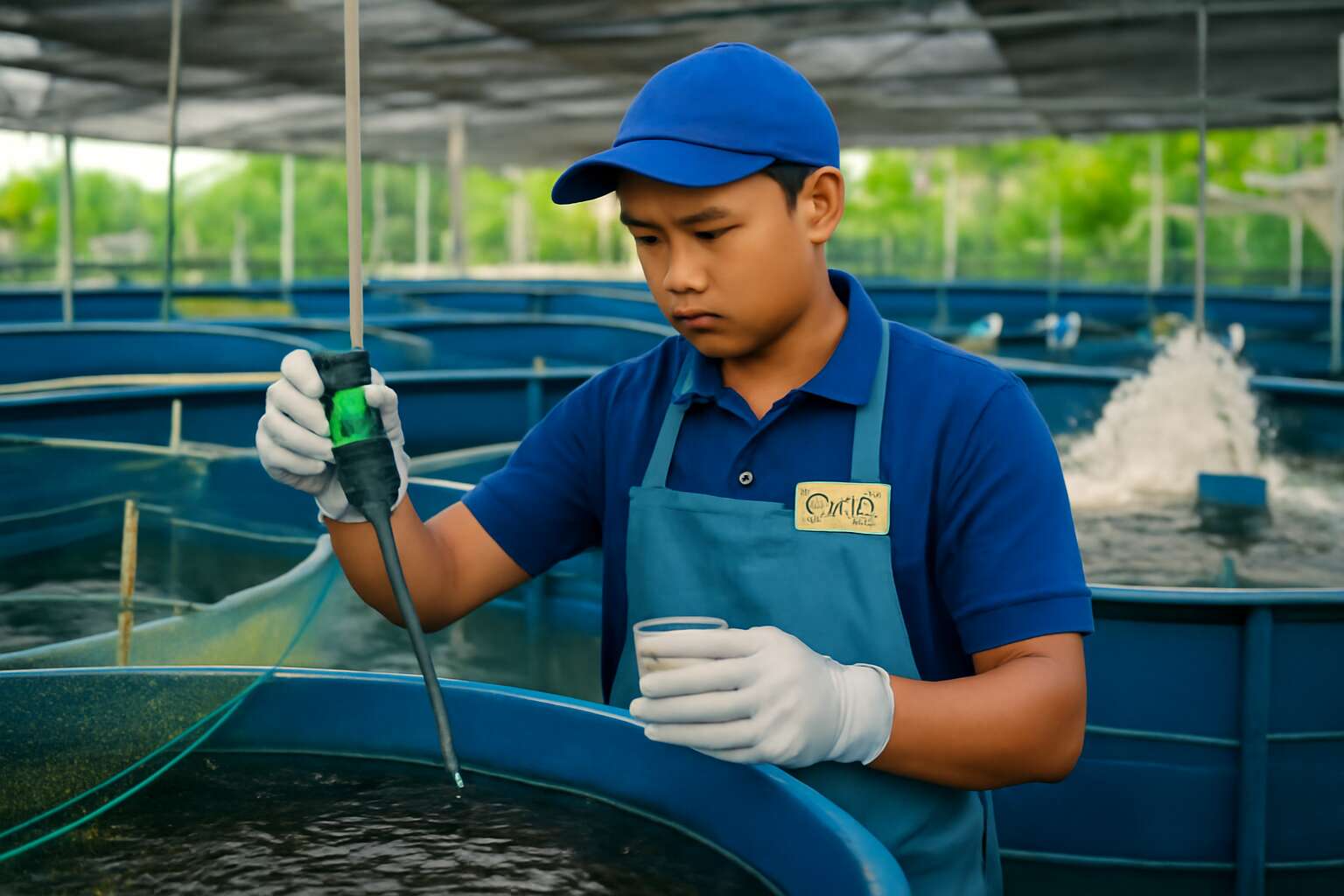
National Certificate II in Aquaculture: Overview and Career Value
What is the National Certificate II in Aquaculture and who qualifies
South Africa’s coastal farms are quietly reshaping the economy, and the aquaculture nc ii sits at the heart of that wave. ‘Skill beats luck in every harvest!’ observes a veteran supervisor, and this certificate translates classroom grit into pond-ready, job-ready competence in record time.
What is the National Certificate II in Aquaculture and who qualifies? This entry-level qualification suits learners fresh from Grade 12 or those transitioning from related trades who crave hands-on expertise in hatchery operations, water quality management, and stock handling.
Its career value extends beyond a single role; it acts as a springboard to supervising small teams, maintaining systems, and supporting farm operations across South Africa’s aquaculture sector.
- Hatchery technician
- Farm supervisor
- Water quality assistant
Benefits and industry demand for NC II graduates in aquaculture
In the dawn-tinged light of South Africa’s coastal farms, the aquaculture nc ii opens a door to skilled, hands-on work. “Skill beats luck in every harvest!” a veteran supervisor reminds us, and this certificate translates classroom grit into practical, pond-ready competence.
With an emphasis on hatchery operations, water quality management, and stock handling, the program builds a portable toolkit that supports roles across the aquaculture sector. It serves as a springboard to supervise small teams and keep systems humming in harmony.
- Practical, field-ready skills in hatchery operations and water quality control
- Clear pathways to supervisory roles and team coordination
- Foundations applicable to farm operations and stock handling
- Strong employability across South Africa’s growing aquaculture sector
As farms expand and sustainability practices mature, demand for NC graduates remains robust, translating training into steady placements and meaningful career progression within the sector.
Typical training durations and delivery formats
South Africa’s coastal farms are expanding, and the aquaculture nc ii acts as a fast-track into hands-on work with real impact. It bundles practical basics with field-ready competencies, turning classroom grit into operational skill that farms rely on. It’s more than a certificate—it’s a portable toolkit for today’s production environments.
Typical training durations vary by provider, but you’ll commonly see short modular formats or full programs spanning weeks to a few months. Delivery blends theory with practical sessions and on-site supervision to mirror real farm cycles.
- Short modular formats: 4–8 weeks
- Full programs: 12–20 weeks
- Blended formats: online theory plus on-site labs
Graduates emerge ready to supervise teams, coordinate tasks, and keep workflows steady across farming operations. This certificate lays a clear path to career progression in South Africa’s growing sector, with portable credentials that travel between farms and districts.
Core competencies and skill areas covered
Across South Africa’s coastlines, the aquaculture nc ii stands as a compass for immediate impact. “Skill is the ballast that steadies every voyage,” a veteran grower likes to say, and I watch this certificate turn ballast into hands-on mastery—bridging classroom grit with on-farm precision!
Core competencies and skill areas cover the daily rhythm of a thriving operation, from humane handling to meticulous record-keeping. The following essentials shape capable practitioners:
- Water quality management and biosecurity
- Species husbandry and feeding regimes
- Health monitoring and disease prevention
- Record-keeping and data literacy
- Safety, sanitation, and equipment operation
With portability across districts and a clear path to supervision, graduates become anchors in production cycles, coordinating tasks, monitoring quality, and upholding safety across farms. It is not just a credential; it’s a career scaffold in South Africa’s growing aquaculture sector.
Certification eligibility, renewal, and recognition
Across South Africa’s aquaculture farms, the aquaculture nc ii stands as a reliable beacon for talent. The certificate turns classroom grit into on-farm precision, anchoring daily tasks in proven practice. It’s more than a credential; it’s a proven pathway to steady work and progression.
Certification eligibility, renewal, and recognition follow clear lines. The essentials include:
- Eligibility: Candidates typically need a basic school leaving certificate and access to an accredited training provider for assessment.
- Renewal: Ongoing professional development maintains recognition, often through CPD units or additional modules.
- Recognition: It is nationally recognized and portable across districts, aligning with SAQA standards and employer expectations.
Its portability lets graduates move between farms, taking on supervision, coordinating tasks, and upholding safety and quality across production cycles. That recognition translates to real opportunity!
Curriculum and Competency Standards for Aquaculture NC II
Core competencies in fish culture, hatchery operations, and rearing practices
A strong curriculum does more than teach techniques; it choreographs a future in South Africa’s fish farms. The core competencies for Aquaculture NC II illuminate three key arenas where hands-on excellence grows: fish culture, hatchery operations, and rearing practices.
Within each arena, learners build practical mastery through focused tasks:
- Fish culture: stock management, grow-out scheduling, health monitoring
- Hatchery operations: broodstock handling, incubation, larval rearing
- Rearing practices: feeding regimes, water quality control, welfare and biosecurity
Within the aquaculture nc ii framework, these competencies translate into day-to-day readiness for South Africa’s growing industry.
Water quality management and biosecurity protocols
Curriculum and Competency Standards for aquaculture nc ii frame water quality management and biosecurity protocols as more than lab notes; they are the whispering backbone of South Africa’s nascent fish farms. I have watched these standards turn dry data into living practice, rewarding patience, observation, and governance as much as technique, forging stewards who can read a tank as a living ecosystem!
- Water quality oversight: parameters and interpretation
- Biosecurity governance: access controls and sanitation ethos
- Compliance and assessment: records, audits, and risk awareness
Within this framework, the NC II pathway cultivates professional readiness with a poise that blends caution and curiosity, a cadence South Africa’s aquaculture industry is learning to trust.
Health management, vaccination, and disease prevention
Within the health management strand of the aquaculture nc ii, knowledge and practice fuse into a living craft. A telling statistic from the sector suggests disciplined vaccination and disease prevention can cut stock losses by up to 25%, turning training into resilience on South Africa’s farms. The curriculum threads veterinary insight, ethical stewardship, and patient observation into a graceful discipline rather than a dry checklist.
Core competencies in health management require keen disease recognition, vaccination planning, and a robust prevention framework that keeps fish and farmers in balance.
- Identify clinical signs and anomalies in stock early.
- Coordinate vaccination schedules and traceability within the production cycle.
- Maintain meticulous health records and report trends for audits.
- Collaborate with veterinarians to refine risk assessment and response.
With poise and curiosity, this NC II pathway shapes capable stewards who read a tank as a living body, attentive to whispers of trouble yet steadfast in governance.
Record-keeping, data management, and reporting procedures
In the aquaculture nc ii curriculum, strategic record-keeping is the heartbeat of practice. Data management and reporting procedures aren’t afterthoughts — they’re practiced from day one! Trainees learn to log batch numbers, feed inputs, growth and survival metrics, and health events with precision, creating auditable trails that support traceability across seasons. The approach blends veterinary caution with disciplined governance, turning raw data into actionable insights for South Africa’s farms.
Key competencies include:
- Establish standardized data entry protocols
- Maintain digital records with version control and backups
- Generate routine reports for farm managers and regulators
- Preserve audit trails that meet compliance standards
These practices convert numbers into governance, ensuring transparency from hatchery to harvest and fostering resilience across South Africa’s aquaculture landscape.
Safety, PPE, and workplace safety guidelines
Safety isn’t a gadget—it’s the margin on every harvest. In the aquaculture nc ii program, curriculum and competency standards emphasize PPE and workplace safety as core skills, not afterthoughts. Trainees learn to assess hazards, select appropriate protective gear, and regulate procedures that prevent slips, bites, and biohazard exposure while maintaining productivity on South Africa’s farms.
To keep teams aligned, practical guidelines cover signs, drills, and incident reporting. PPE essentials include:
- Hard hats
- Safety goggles or face shields
- Chemical-resistant gloves
- Waterproof boots and coveralls
- Life jackets or buoyant vests where required
These elements reinforce a culture of safety, ensuring compliance with local regulations and the rigorous standards.
Equipment maintenance, infrastructure, and farm operations
On South Africa’s shoreline and inland bays, risk and yield share the same weathered plank. In the aquaculture nc ii framework, equipment maintenance, infrastructure, and farm operations are woven into the curriculum as core competencies—not afterthoughts. Trainees learn to gauge the age of pumps, the integrity of tanks, and the reliability of ventilation, so every harvest rides a steady, well-lit tide rather than a broken current. I’ve seen mornings when the hum of a pump steadies a restless shed.
- Preventive maintenance scheduling for pumps, aerators, and filtration systems
- Infrastructure integrity checks for containment, water supply, and electrical safety
- Operational planning and workflow optimization to sustain production while meeting safety norms
These competencies translate to durable facilities, efficient workflows, and steadfast compliance on South African farms. The curriculum keeps pace with evolving infrastructure standards, turning maintenance into a strategic asset rather than a cost center.
Training Delivery, Assessments, and Certification Process
Classroom instruction, hands-on labs, and field training integration
Training delivery for aquaculture nc ii blends classroom instruction, hands-on labs, and field training integration—putting theory into practice with the precision of a well-timed feeding cycle. It’s not just about passing a test; it’s about walking out with work-ready competencies and the confidence to handle real-world challenges on a South African farm or hatchery.
- Classroom instruction covers core concepts, safety, and professional conduct.
- Hands-on labs simulate hatchery operations and equipment handling under supervision.
- Field training integration provides supervised, on-site experiences at partner farms.
Assessments mix practical demonstrations, written evaluations, and portfolio evidence to gauge true competency. The Certification Process follows a clear path: complete modules, pass assessments, and receive the national certificate from the accredited issuing body. Renewal requires ongoing professional development to keep skills current.
Competency-based assessment framework and grading criteria
Training delivery for aquaculture nc ii mirrors on-farm rhythms, blending classroom theory with hands-on practice and on-site experiences. The competency-based framework guides progress, ensuring every activity maps to real tasks—from hatchery routines to biosecurity checks. Lessons stress safety and professional conduct, while the pathway emphasizes work-ready performance through integrated assessments and consistent feedback.
Assessments shift from exams to performance-driven tasks, scenario-based challenges, and a growing portfolio. Rubrics prize observable skills, safe decision-making, and accurate record-keeping. Feedback is timely and actionable, guiding progression rather than merely signaling completion.
Certification Process culminates when modules are completed and thresholds met, with a national certificate issued by an accredited body. Renewal hinges on ongoing professional development to stay current with evolving hatchery technologies and farm practices.
Work-based training, on-site demonstrations, and practical tests
“Hands-on practice turns theory into muscle memory,” a South African hatchery veteran notes. For aquaculture nc ii, training delivery mirrors farm rhythms—work-based training, on-site demonstrations, and practical tests that map to real hatchery routines and on-farm duties. Theory meets practice in a steady flow of supervised tasks, quick feedback, and opportunities to refine skills in safe, professional settings.
- Work-based assessments
- On-site demonstrations
- Practical tests
Assessments shift from exams to performance-driven tasks and scenario challenges, building a growing portfolio that proves capability. Feedback stays timely and actionable, guiding the journey to certification. The process culminates when modules are complete and a national certificate is issued, with ongoing professional development keeping aquaculture nc ii graduates current with evolving hatchery technologies and farm practices.
Assessment tools, rubrics, and performance criteria
Across South Africa’s hatcheries, aquaculture nc ii programs move with the river’s rhythm—training that feels like steady weather, not a classroom storm. A veteran mentor once said, ‘Hands-on practice turns theory into muscle memory,’ and I’ve witnessed it countless times, guiding daily farm life with steady, supervised learning.
Training Delivery blends work-based learning with on-site demonstrations and practical tests that mirror real hatchery routines. To illuminate pathways, assessment tools align with farm duties, charting progress in authentic settings.
- Work-based observation checklists
- On-site demonstrations with mentor feedback
- Practical performance tests
- Scenario-based simulations
Assessment rubrics and performance criteria sharpen the evaluation into actionable steps. The certification process culminates when modules are complete and a national certificate is issued, while portfolios and ongoing development ensure graduates stay current with evolving hatchery technologies and farm practices. What a journey!
Portfolio development, validation, and record keeping
Across South Africa’s hatcheries, aquaculture nc ii training feels like steering with the tide—steady, practical, and deeply rooted in daily life. A veteran mentor once said, ‘hands-on practice turns theory into muscle memory’—a truth repeated in every morning feed and water check. Training Delivery blends work-based learning with on-site demonstrations and real-world tasks that mirror hatchery routines!
Assessments unfold in the rhythm of farm duties, with rubrics translating performance into clear, actionable steps. Portfolios and ongoing development keep pace with evolving hatchery technologies, anchoring progress in authentic, observable outcomes rather than abstract exams.
The Certification Process crowns achievement when modules are complete and the national certificate is issued. Portfolio development, validation, and robust record keeping ensure graduates’ competencies stay current and verifiable, supported by digital archives and mentor sign-offs within South Africa’s aquaculture nc ii framework.
Certification steps, verification, and credential issuance
In South Africa, the training delivery for aquaculture nc ii moves with the tide—steady, practical, and immediately useful on the hatchery floor. A veteran mentor whispered, ‘hands-on practice turns theory into muscle memory,’ and you feel it in every dawn feed and water check. The program blends work-based learning with on-site demonstrations that mirror hatchery routines, so lessons flow into daily tasks!
Assessments unfold alongside routine work, guided by rubrics that translate performance into clear steps. Learners assemble portfolios that capture authentic outcomes, then face practical tests that measure competence in live conditions. Certification steps, verification, and credential issuance are streamlined and traceable within the framework:
- Module completion and mentor validation of competencies.
- Verification of results and formal credential issuance with digital records.
Once earned, the aquaculture nc ii credential sits in digital archives and is supported by mentor sign-offs, ensuring the qualification stays current as hatchery methods evolve.
Career Pathways, Salary Insights, and Industry Applications
Job roles and responsibilities for NC II graduates in aquaculture
Career Pathways within aquaculture nc ii graduates in South Africa span from entry-level farm technician to shift supervisor, farm manager, or project coordinator. Mobility across coastal and inland operations is common, with pathways into hatchery support, biosecurity oversight, and extension work in communities.
Salary Insights reflect a developing sector. Entry-level salaries typically range from R60,000 to R120,000 per year, with experienced technicians earning R180,000 to R350,000 as skills broaden and responsibilities grow. Benefits include formal recognition, on-the-job training, and clear progression milestones!
Industry Applications: Job roles and responsibilities for NC II graduates center on practical, on-farm tasks and basic data management. Roles and duties include the following:
- Farm Technician: feed management, water quality checks, equipment sanitation
- Hatchery Assistant: larval care, stocking, routine monitoring
- Health and Biosecurity Aide: disease observation, record-keeping, vaccination support
- Data and Inventory Clerk: stock management, logistics, supplier liaison
Salary ranges, benchmarks, and earning potential
With aquaculture nc ii, pathways unfold like a tidal chart—start as a farm technician and rise toward shift supervision, farm management, or project coordination. Mobility across coastal and inland farms is common, opening doors to hatchery support, biosecurity oversight, and community extension work that shapes livelihoods and local food security.
Salary insights reveal a growing sector where responsibility outpaces convention. Entry-level salaries typically range from R60,000 to R120,000 per year, while seasoned technicians climb to roughly R180,000 to R350,000 as skills broaden and duties expand. Benefits include formal recognition, on‑the‑job training, and clear milestones.
- Entry-level: R60,000–R120,000
- Mid-career: R180,000–R350,000
- Senior: above R350,000
Industry applications translate this earning potential into tangible outcomes—on the farm, the work is practical, data-driven, and relentlessly local. Benchmarks rise with experience, and demand across coastal and inland operations keeps the career arc both steady and intriguing.
Industry sectors, employers, and job market outlook
Career pathways in aquaculture nc ii unfold like tides—steady and promising. From the farm technician who learns water, feed, and stock rhythms, to shift supervisors and onward to farm managers or project coordinators, advancement follows a patient arc. Mobility between coastal and inland operations adds texture, opening hatcheries, biosecurity roles, and community extension that support livelihoods. The aquaculture nc ii credential anchors this journey, signaling practical mastery and growth ahead.
Salary insights trend upward as responsibilities expand and expertise becomes the currency. The inland-to-coastal mix, hands-on accountability, and reliability are recognized with compensation growth across roles—from entry to senior levels—reflecting a dynamic, maturity‑driven market.
Industry applications span sectors and employers across South Africa, with a buoyant job market that rewards practical skill and local knowledge.
- Coastal fish farms
- Inland recirculating systems
- Hatcheries and nurseries
- Research, extension, and policy bodies
These forces shape a resilient future for aquaculture in SA.
Career progression, additional certifications, and training
Career pathways with aquaculture nc ii unfold like tides—steady, patient, and brimming with promise. I’ve watched the farm technician who learns water, feed, and stock rhythms, rise through shift supervision to farm managers or project coordinators, advancement following a measured arc. Mobility between coastal and inland operations adds texture, opening hatcheries, biosecurity roles, and community extension that sustain livelihoods.
Salary insights trend upward as responsibilities broaden and expertise becomes currency. The inland-to-coastal mix, hands-on accountability, and reliability are rewarded with compensation growth from entry to senior levels, mirroring a dynamic, maturity-driven market. To stay ahead, professionals seek additional certifications and training that deepen practical know-how and leadership.
- Data management basics
- Safety and compliance essentials
Industry applications span coastal fish farms, inland recirculating systems, hatcheries and nurseries, and research and extension bodies across South Africa. This reality anchors careers in local knowledge and practical mastery.
Entrepreneurship opportunities in aquaculture businesses
Across South Africa’s coastlines and inland farms, opportunity moves like a tide—steady, patient, and brimming with promise. The career pathway in aquaculture nc ii unfolds from the skilled farm technician to shift supervisor, then to farm manager or project coordinator. Mobility between coastal and inland operations adds texture, opening hatcheries, biosecurity roles, and community extension.
Salary insights rise as responsibilities broaden and practical know-how commands real currency. Entry roles reward reliability and hands-on accountability, while senior positions recognize leadership, strategic thinking, and cross-disciplinary expertise across evolving farming systems.
Industry applications in South Africa span coastal fish farms, inland recirculating systems, hatcheries, nurseries, and research and extension bodies. For entrepreneurs, this landscape hosts opportunities to build resilient aquaculture businesses that serve local markets and empower communities. Potential paths include:
- Micro hatchery ventures and on-farm hatchery services
- On-site processing and value-added products
- Training, extension, and consulting for farming co-operatives
Professional associations, networks, and continuing education
A veteran fish farmer once said, “The tide favors the adaptable.” In South Africa, aquaculture nc ii opens a clear ladder: from skilled farm technician to shift supervisor, then farm manager or project coordinator. Mobility between coastal and inland operations adds texture—hatcheries, biosecurity, and community extension await.
Salary insights track responsibility and know-how. Entry roles reward reliability and hands-on accountability; senior positions reflect leadership, strategic thinking, and cross-disciplinary expertise across evolving farming systems.
Industry applications in South Africa span coastal farms, inland recirculating systems, hatcheries, nurseries, and research bodies. Professional associations, networks, and continuing education keep skills sharp and careers resilient within the industry landscape.
- Professional associations and networks
- Continuing education: workshops, short courses, online modules
- Industry conferences and field days




0 Comments