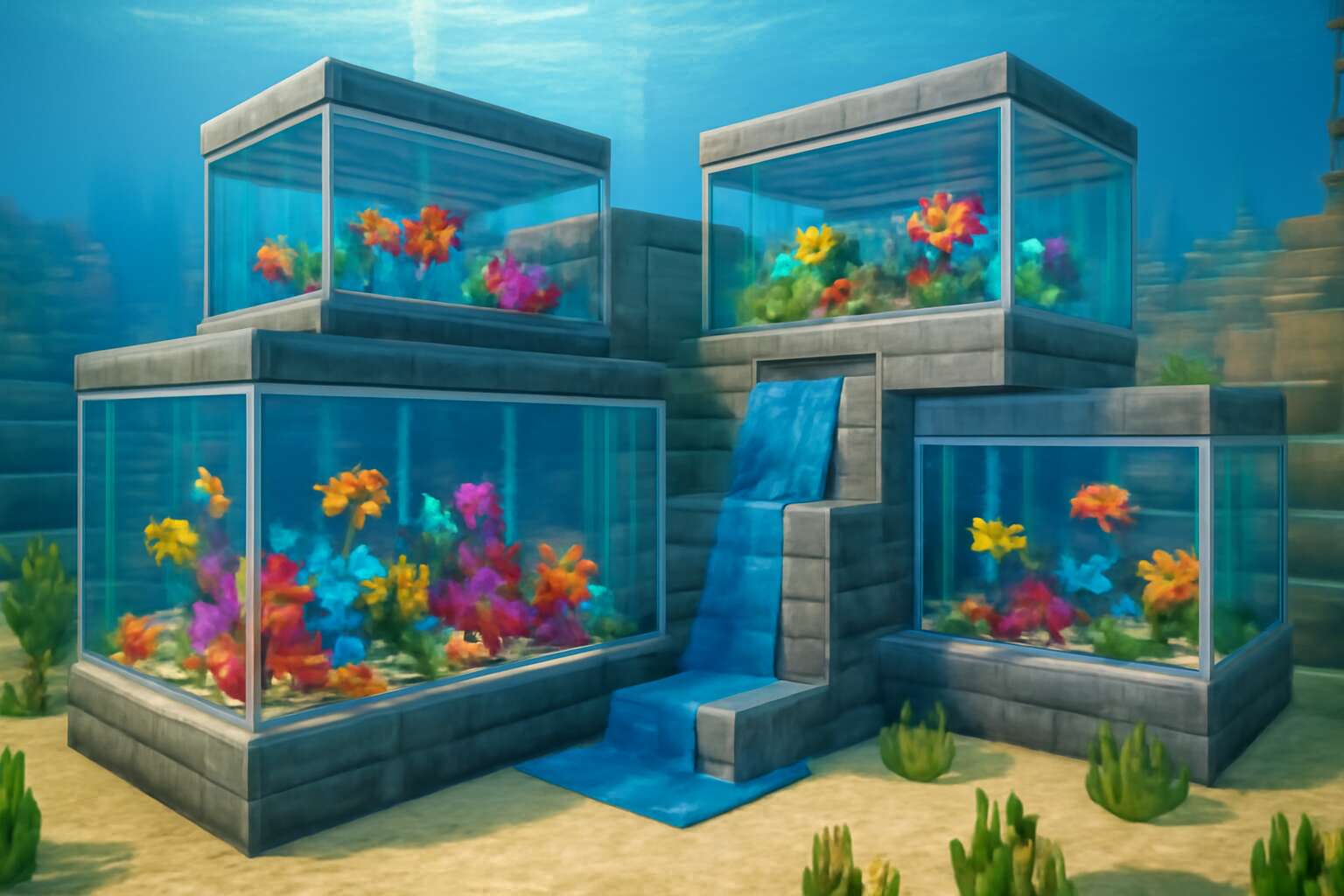
Aquaculture Fundamentals in Minecraft
What is aquaculture in Minecraft
A brisk snapshot from the Minecraft community shows that well-tuned aquaculture setups can cut resource waste by nearly a third while delivering steady yields during long play sessions. The term aquaculture wiki minecraft often surfaces as a beacon, guiding players through the essentials with practical, community-tested wisdom.
Fundamentals hinge on careful water management, sympathetic enclosure design, and the rhythm of breeding cycles. In vanilla Minecraft, space, light, and movement determine growth. A compact farm can be built with simple blocks and hopper-driven sorting—a workflow that rewards patience.
- Stable water sources with flowing blocks controlled to avoid overflow
- Clear boundaries to keep fish, items, and water in check
- Efficient collection and storage to minimize waste
For South African players, the craft feels familiar in its balance of constraint and ingenuity—turning a few blocks into a steady supply line without overbuilding. The journey invites explorers to test, adapt, and share refinements across regional servers.
Why players build fish farms
Across South Africa’s Minecraft servers, a meticulously tuned aquaculture setup can turn a handful of blocks into a steady stream of resources during marathon sessions. The aquaculture wiki minecraft has long served as a beacon for players seeking tested wisdom and practical builds. Fundamentals hinge on water management, purposeful enclosure design, and well-timed breeding cycles. In vanilla Minecraft, space, light, and movement govern growth, so the clever builder squeezes yield from a minimal footprint and avoids waste.
- Stable water sources with flowing blocks controlled to avoid overflow
- Clear boundaries to keep fish, items, and water in check
- Efficient collection and storage to minimize waste
On South African servers, constraint and ingenuity go hand in hand, and I’ve watched players turn a handful of blocks into a dependable supply chain while the community tests refinements across regional networks.
Thus, aquaculture fundamentals are as much about rhythm as geometry—a social ritual that keeps players returning to the water between quests.
Key versions impacting aquaculture
“Water is patience,” a South African builder once told me, and the truth threads through aquaculture fundamentals. In vanilla Minecraft, balance between water and space becomes a practical philosophy. The aquaculture wiki minecraft acts as a compass, outlining how disciplined water management and purposeful enclosure unlock rhythms that breathe life into a crowded server world. Growth here is as much about timing as geometry, a quiet art that rewards consistent attention.
Three foundational ideas anchor the pattern, and they travel with you from dawn to dusk:
- Reliable water sources with controlled flow to prevent overflow
- Clear boundaries to keep fish and items in check
- Efficient collection and storage to minimize waste
On South African servers, constraint breeds ingenuity, and the microcosm of aquaculture becomes a social ritual that keeps players returning to the water between quests, testing refinements across regional networks.
Common terminology and concepts
The crowded canvas of vanilla Minecraft rewards careful water stewardship and thoughtful enclosure. In South African realms, the rhythm of flow and space becomes a practical philosophy, turning aquaculture into a living map of patience and timing. The aquaculture wiki minecraft serves as a compass, translating common terms into a shared dialect—flow, containment, harvest—so players can read the water like weather and plan enclosures with calm precision!
Three foundational ideas anchor this pattern.
- Reliable water sources with controlled flow to prevent overflow
- Clear boundaries to keep fish and items in check
- Efficient collection and storage to minimize waste
On South African servers, constraint breeds ingenuity, turning the microcosm of aquaculture into a social ritual that draws players back to the water between quests and across regional networks.
Building Efficient Fish Farms
Designs for compact and scalable farms
Across South Africa’s blocky seas, compact fish farms are turning crowded plots into thriving oases of aquaculture. In the community of players, yields per chunk can double when space is treated like a precious resource and water moves with intention. The magic lies in airflow and flow: a quiet choreography where every tile hosts potential, and small channels sing as currents guide the harvest!
- Modular modules that snap together
- Efficient water channels that reduce waste
- Smart lighting to sustain growth without glare
- AFK-friendly harvest layouts for steady returns
These compact, scalable designs invite players to imagine new villages built around water, wind, and wonder. The concept lives in aquaculture wiki minecraft.
Biome-specific farming layouts
Across South Africa’s blocky seas, a quiet statistic lands with a thud: biome-tuned water flow can lift yields by up to 28% in compact builds. The ritual of airflow and current turns every tile into potential, where currents guide the harvest. As noted in aquaculture wiki minecraft, the drama is in the choreography—air, water, and patience.
Building Efficient Fish Farms demands biome-aware layouts that respect local moods—desert ponds, forest streams, coastal lagoons. The following patterns show how to balance turnover and waste reduction:
- Desert ponds demand evaporation control and mineral balance
- Forest biomes favor shaded channels and cooler water pockets
- Coastal biomes exploit tidal turns to sustain steady intake
These biome-specific adjustments echo what the aquaculture wiki minecraft teaches—turn constraints into efficient currents and predictable yields!
From SA’s shores to inland harbors, the design whispers of a single truth: atmosphere and aquifer partner in the quiet art of harvest.
Redstone automation and timing
Timing is the quiet engine of efficient fish farms. In SA, a well-timed Redstone loop slashes downtime and boosts throughput. aquaculture wiki minecraft reminds us that automation hinges on predictable pulses rather than brute force.
Key components keep the rhythm steady:
- comparator-based triggers
- repeaters to adjust pulse length
- hopper clocks for steady feeding cycles
- observers to detect state changes
These parts shape a calm, consistent harvest. Pulse timing must respect local moods—shorter pulses in shaded pockets, longer gaps where water moves slowly. Efficient farms balance power use with dependable flow, avoiding waste and stagnation.
From SA coast to inland hubs, Redstone timing becomes the language of harvest.
Harvesting strategies and fish yield optimization
Efficient fish farms hinge on balance, not brute power. In SA and beyond, harvests grow where the water flows like clockwork and pulses stay predictable. Building with calm cadences keeps fish calm and populations thriving, even in mixed biomes. It’s all about rhythm! This aligns with aquaculture wiki minecraft, which frames farming as a steady rhythm rather than brute force.
- Steady feeding cadence
- Modular tanks for predictable yields
- Non-stagnant water turnover
When design respects local mood of water speed and shade, yields climb with minimal waste. Focus on spacing, clean intake, and consistent filtration to sustain a healthy cycle across seasons and server climates.
Species and Farming Mechanics
Fish spawning behavior and habitat
Fish in Minecraft aren’t passive icons; they have spawning quirks and habitat preferences that shape your farms. A well-tuned water world invites natural cycles and steadier yields. This is the kind of insight you’ll find on aquaculture wiki minecraft, where species behavior is distilled into practical patterns!
Understanding spawning behavior and habitat helps you design spaces that feel alive.
- Water depth and flow influence which species appear.
- Light levels and time of day affect juvenile versus adult presence.
- Plants, vegetation, and blocks signal attractive zones for fish.
- Tank connectivity and enclosure shape change movement and comfort.
South Africa’s Minecraft communities value clarity and reliability in farming setups. Spawning and habitat cues shape what players experience, not just what they harvest, and that insight elevates any aquaculture project across servers!
Catching and breeding methods
Across South African servers, practitioners report a notable uplift in yields when species dynamics are respected. In aquaculture wiki minecraft, catching and breeding mechanics aren’t decorative fluff; they’re living systems that reward patient observation and thoughtful design. Seeing fish respond to depth, light, and flow turns a tank into a thriving micro-ecosystem.
Catching and breeding hinge on a shared truth: behavior guides layout. Some species cluster in calm pockets, others roam open channels; breeding signals emerge from proximity and feeding interactions. The craft lies in building spaces that invite natural interactions rather than forcing outcomes.
Key considerations include:
- Catching: visibility and water movement shape school behavior
- Breeding: align food sources with paired individuals and their preferences
- Population: modular enclosures that adapt to shifting groups
Drops, loot, and resource cycles
Across South African Minecraft communities, resource drops can swing by as much as 22% when habitat cues align with species behavior—a quiet reminder that the world is listening. The thrill isn’t in chance; it’s in perception, in noticing when shadows tell you where loot will linger.
In the aquaculture wiki minecraft framework, drops and loot aren’t decorative but essential signals of cycles. Species stacked in calm pockets yield different rewards than those patrolling open channels; feeding events and proximity shape what items appear and when the stocks renew. The same rules govern light, depth, and water flow, turning a tank into a living ledger of demand and supply.
- Drops: biomass, carcasses, and spawn tokens that unlock future yields
- Loot: rare shells, pearls, and specialized items tied to habitat and diet
- Resource cycles: renewal rates, depletion shadows, and seasonal pulses that drive pacing
Understanding these patterns helps translate observation into design, letting players foresee shifts in supply and align their farms with the rhythm of the micro-ecosystem—an art the aquaculture wiki minecraft codifies for South African builders.
Breeding requirements and outcomes in practice
A single spawning cycle can flip a week’s worth of supply in a shimmer of possibility. In the aquaculture wiki minecraft, species breed under precise cues—temperature bands, crowd density, and feeding rhythms—turning tanks into living ledgers of potential. Some fish pair only when the habitat forms calm pockets; for South African builders, others respond to season pulses, light, and depth. It’s not luck; it’s perception—reading where shadows tell you life will linger.
- Breeding prerequisites: age, health, and readiness
- Habitat cues: calm pockets, appropriate density, and water quality
- Triggers: feeding timing and light cycles
- Outcomes: spawn rate, fry viability, and growth windows
Breeding outcomes unfold in practice as you tune the micro-ecosystem toward reliability. When the cues align, stock yields extend beyond a single spawn; the cycle sets a cadence for rotation, space, and nutrition, letting you forecast the farm’s next wave of life.
Growth, Resources, and Optimization
Measuring efficiency and resource use
The tide of growth in a Minecraft aquaculture setup can surge swiftly, with compact farms yielding around 200 fish per hour. Growth here is a dialogue between space, water, and timing—craft that balance, and routine becomes a reliable rhythm.
Resources are the stream that nourishes growth: water blocks, lighting, and space must be allocated with care. In South Africa’s bustling servers, layouts are tuned to conserve water and energy while keeping harvests steady.
- Water efficiency and recycling
- Space economy and block cost
- Power and timing discipline
Optimization measures efficiency and resource use: track output per hour, consumption per cycle, and downtime. The aquaculture wiki minecraft guides these metrics, shaping builds that balance wonder with hard data.
Automation tips and best practices
Growth in a compact aquaculture setup is a dialogue between space, water, and timing. A well-tuned farm can push around 200 fish per hour, turning cramped corners into reliable harvests. The trick is balancing density with flow so fish have room to swim and feed without clogging.
Resources are the stream that nourishes growth: water cycles, lighting, and tank geometry must be designed with economy in mind. In practice, layouts squeeze more yield per block and reduce waste. aquaculture wiki minecraft provides benchmarks and ideas to tune your builds.
- Modular tank designs enable water reuse across units
- Staggered harvest triggers reduce downtime by smoothing cycles
- Passive cooling and shading address overheating in warm climates
Optimization thrives on clear metrics and automation. Track output per cycle, minimize downtime, and scale in measured steps. Timers, redstone logic, and modular design let you harvest predictably while keeping maintenance lean and the vibe alive.
Performance considerations on servers vs single-player
Two hundred fish per hour from a single compact chamber isn’t fantasy—it’s growth measured in space. Growth in a compact aquaculture setup is a dialogue between space, water, and timing. A well-tuned system yields reliable harvests by balancing density with flow, so fish swim freely and feed stays accessible.
Resources are the stream that nourishes growth: water cycles, lighting, and tank geometry must be designed with economy in mind, squeezing more yield per block and trimming waste. In aquaculture wiki minecraft, designers share benchmarks and ideas to tune builds for steady habitations.
Optimization thrives on clear metrics and automation. On servers, tick rates, concurrency, and latency shape what you can sustain; in single-player, you command timing with fewer moving parts. Timers, modular design, and quiet redstone logic let you harvest predictably while keeping maintenance lean—an ethic mirrored in South Africa’s gaming communities.
Common pitfalls and troubleshooting
Growth is a careful breath in a snug glass world, where space and water choreograph the rise of life. Two hundred fish per hour from a single compact chamber isn’t fantasy; in aquaculture wiki minecraft, designers tune density and current until the harvest becomes a steady, singing cadence that respects every grain of space.
Resources are the stream that nourishes growth: water cycles, lighting, and tank geometry must be designed with economy in mind, squeezing more yield per block and trimming waste. When the flow stays honest, habitations hum with predictable quiet.
Optimization thrives on clear metrics and automation. Common pitfalls creep in when systems lean on luck rather than rhythm; troubleshooting reveals gaps in flow, timing, and modularity. A disciplined, legible design keeps harvests steady and maintenance lean.
- Overcrowding without adequate flow
- Inconsistent lighting or temperature swings
- Rigid designs that resist modularity

0 Comments