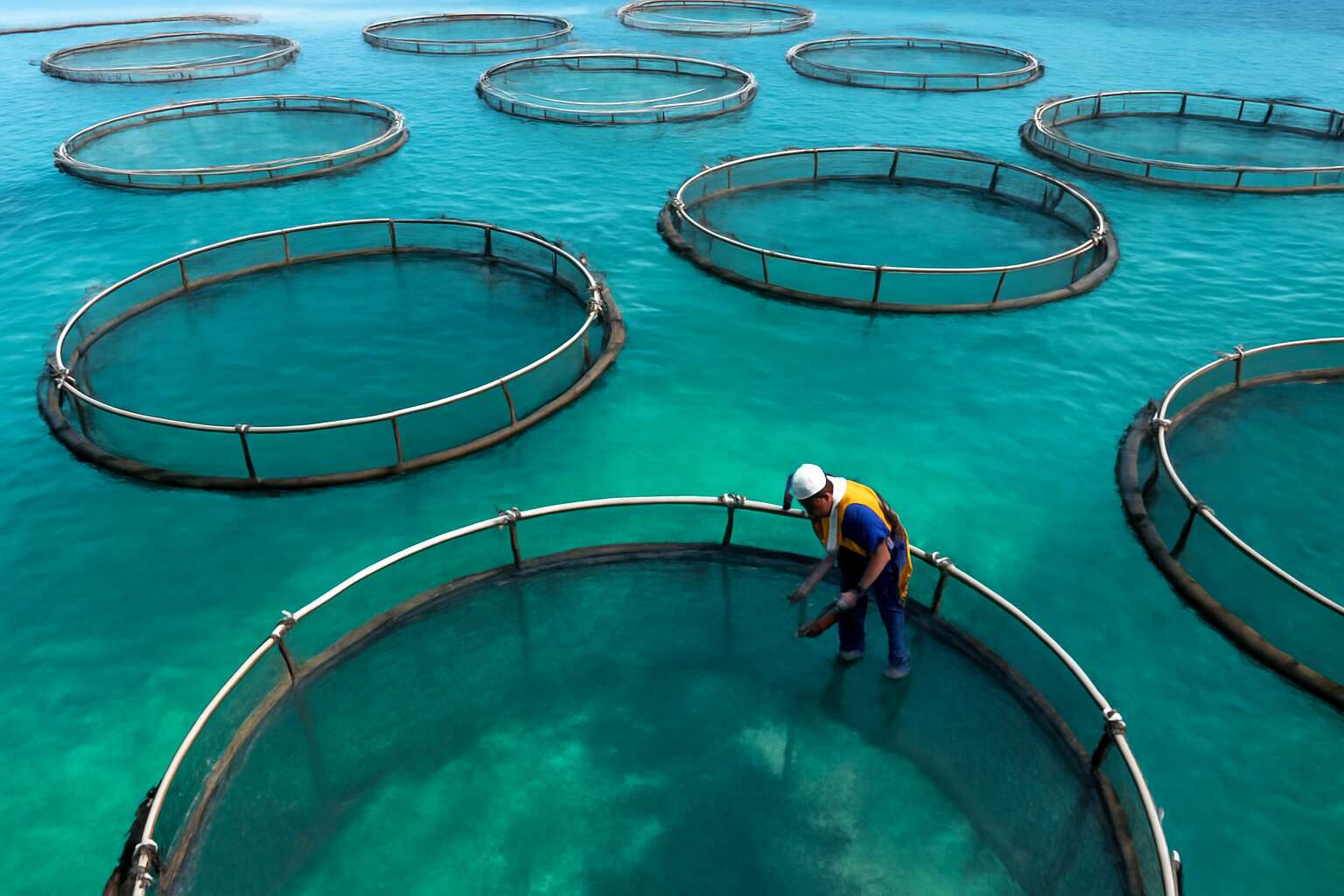
Environmental and Biodiversity Benefits of Aquaculture
Reduces pressure on wild fisheries and bycatch
Global seafood now comes from farms more than ever; nearly half of what people eat comes from aquaculture. In South Africa, responsible practices behind the coastlines deliver practical aquaculture benefits—reducing pressure on wild fisheries and boosting biodiversity through careful siting and waste management! When farms respect the shoreline, resilience grows, and local communities enjoy steadier livelihoods alongside healthier reefs and estuaries.
- Reduces pressure on wild fisheries by providing a steady, farm-based supply.
- Protects biodiversity through thoughtful siting and waste management that shields habitats.
- Decreases bycatch risk by concentrating captures in controlled, monitored environments.
These choices, grounded in care and science, frame a sustainable dialogue between people and the sea.
Efficient water use and waste management practices
Coastal kingdoms breathe beneath the sun, and in South Africa we are learning to steward water with a quiet magic. These aquaculture benefits glow like phosphorescent kelp: resilient crops, cleaner shores, and a calmer sea, where farms become guardians of biodiversity.
Efficient water use is the heart of modern farms. Recirculating systems sigh with cleaner loops; nutrient-rich effluent nourishes wetlands rather than overwhelming them. Waste management turns solids into compost, reducing plume and protecting habitats along South Africa’s estuaries.
Together, such practices weave biodiversity-friendly narratives across coastlines where gulls cry and fishermen listen. I see science turning into soil and skies turning safer, as reefs breathe easier and communities inherit steadier rhythms.
- Closed-loop water recirculation minimizes discharge
- Waste capture and composting supports local agriculture
- Controlled effluent preserves nearby habitats
Potential for habitat restoration and conservation initiatives
On the wind-salted edge of South Africa’s coast, the sea keeps a ledger of our choices. “The ocean is a patient witness,” a coastal ecologist notes, and in the murmur of aquaculture benefits we hear its verdict shaping the shoreline!
With careful siting, these farms are not just harvest but weathered guardians—potential for habitat restoration and conservation initiatives. Estuaries drink filtered effluent and gentle currents, allowing sediment to settle and wetlands to rebound. Mangroves and seagrass beds can thrive around nurseries, while man-made reefs create sanctuaries for juvenile fish and invertebrates.
- Estuary restoration through nutrient-aware design
- Mangrove and seagrass rehabilitation partnerships
- Shoreline habitats supported by biogenic structures
In these corridors, biodiversity breathes easier, and communities inherit steadier rhythms—mysterious, hopeful, and true.
Sustainable species selection and genetic considerations
Globally, aquaculture benefits are reshaping how coastal communities feed themselves, with healthy yields and careful stewardship weaving a buoyant thread through the shoreline economy. In South Africa, this is more than numbers—it’s a philosophy about place, people, and a living coastline!
Environmental and biodiversity gains hinge on sustainable species selection and genetic considerations. Using locally adapted stock reduces ecological risk and fosters resilience against disease and climate fluctuations. Genetic stewardship—avoiding inbreeding, maintaining diverse broodstock, and transparent trait selection—keeps hatcheries honest and ecosystems robust.
- Genetic diversity protects against disease outbreaks
- Local adaptation minimizes ecological disruption
- Transparent breeding programs build public trust
When these threads align, the ripple extends to nurseries, seagrass beds, and estuarine dynamics, enhancing biodiversity and sustaining long-term productivity.
Ecosystem services and biodiversity impacts
The coast keeps its own ledger, and the ink is salt. In South Africa’s shadowed bays, the dialogue between water and enclosure is less about profit and more about memory—the ancient, patient vow to endure. These aquaculture benefits unfold as a quiet wind under the sun: resilient stocks, healthier habitats, and livelihoods that breathe with the tide. I stand at the quay and hear the estuary counting its breaths, a chorus where careful stewardship writes the next chapter of the shoreline!
Consider these ecosystem services:
- Biofiltration and cleaner water through diverse, living filters
- Habitat complexity that shelters juvenile species
- Nutrient cycling that sustains seagrassbeds and marshes
These ripples extend through estuaries, reefs, and dunes, reminding us that production and biodiversity can travel the same dark current.
Economic Growth and Community Development
Job creation and rural livelihoods
Across rural South Africa, ponds shimmering at dawn aren’t just scenery; they’re engines of opportunity. The aquaculture benefits ripple from households to town centers, turning local know‑how into steady incomes. As one farmer observes, “Water is wealth when managed with care.”
These gains translate into tangible job creation and community development: skilled pond technicians, feed handlers, transport links, and traders join a growing local economy—fuelled by a supportive policy environment and consumer demand for responsibly raised seafood.
- Local training programs for fish farm technicians and caretakers
- Smallholder cooperatives strengthening supply chains
- Processing and cold-chain facilities to keep products fresh
These dynamics bolster food security and regional resilience, proving that the aquaculture benefits extend beyond the pond to healthier households, vibrant markets, and rural livelihoods that can weather droughts and shocks with a little splash of innovation.
Support for small-scale and family-led operations
Across South Africa’s rural heartlands, ponds shimmer with more than morning light—an economic pulse. I’ve stood at the edge of a dawn raft of nets and felt the aquaculture benefits thread through households, village shops, and local markets. “Water is wealth when managed with care,” a veteran farmer told me, and that wisdom travels from shore to town like a rising tide.
- Access to microfinance and patient capital for family farms
- Cooperative networks that stabilize supply chains and open markets
- Investment in local processing and cold-chain facilities to lift value
For small-scale and family-led operations, growth is measured in steady incomes, apprenticeships, and stronger community ties. It’s a quiet, stubborn revolution—where local hands, careful planning, and ethical markets coalesce into resilient towns and healthier plates across South Africa.
Stable supply chains and local market resilience
A pond can be a bank in disguise, quietly powering towns from the riverbank to the corner shop. The aquaculture benefits ripple through family farms, village markets, and local processing hubs, weaving stable supply chains and resilient local economies that endure even when drought tightens calendars.
Access to patient capital for equipment upgrades, paired with cooperative networks that stabilise deliveries, turns modest ponds into dependable suppliers. Investment in local processing and cold-chain facilities reduces waste, lifts value, and helps traders weather price shocks while keeping shelves stocked.
- Stable market linkages that support village traders
- Local processing careers and apprenticeships
- Reliable deliveries with reduced spoilage
These currents buoy economic growth and community development, turning ponds into engines of local pride and nourishment across South Africa.
Export opportunities and regional trade
Across South Africa, a single pond can spark a wider economy. The aquaculture benefits ripple from riverbank to regional markets, opening export opportunities and linking producers with SADC corridors and global buyers. Growth here is real and tangible, lifting towns toward a broader horizon.
I’ve watched partnerships bloom—processing hubs, cold chains, and reliable buyers who value quality and consistency. The path to regional trade rests on traceability and cooperative networks that move products swiftly and fairly—every shipment carries promise!
- Export-ready standards for regional buyers
- Cooperative processing hubs to unlock value-added goods
- Reliable logistics with cold-chain partners
Through these currents, local wealth grows and communities flourish, and the aquaculture benefits become a shared heritage—nourishing families while expanding South Africa’s footprint.
Policy incentives, financing options, and investment
From my vantage, one well-tended pond can unlock a corridor of opportunity, turning humble yards into thriving markets. The benefits ripple from riverbank to regional shops, lifting livelihoods and weaving resilience into town life. I see the promise rise in schools, clinics, and family budgets as steady incomes anchor a brighter future.
These levers—policy incentives, financing options, and investment signals—shape growth and keep aquaculture benefits flowing.
- Policy incentives: tax relief, grants, and streamlined licenses.
- Financing options: blended finance, micro-loans, and loan guarantees.
- Investment signals: stable policy, PPPs, and regional hub partnerships.
With patient capital, towns build durable infrastructure—processing facilities, cold chains, and skills training—that sustain a vibrant local economy. This shared heritage nourishes families and expands South Africa’s footprint, confidence in tomorrow, and pride in a resilient food system.
Nutrition, Food Security, and Public Health
High-quality protein and essential nutrients
Globally, aquaculture now supplies half of all seafood, a quiet revolution shaping diets from Cape Town to Limpopo! In South Africa, that means steadier protein access for communities and schools.
Nutrition sits at the heart of the story. High-quality protein and essential nutrients from farmed fish support growth, immunity, and energy. The aquaculture benefits include predictable supply and nutrient-dense options.
- High-quality protein and essential amino acids
- Minerals like iodine and selenium, plus vitamin D
- Omega-3 fats for heart and brain health
Food security takes root where local production meets local plates. Farmed fish diversify protein sources, cushioning households against price swings and shortfalls while supporting livelihoods in rural towns.
Public health benefits emerge as communities access better nutrition, strengthening children’s growth and adults’ well-being. These aquaculture benefits ripple through households, clinics, and schools across the country.
Affordability and wider access to seafood
In markets where tides and budgets meet, the reach of farmed fish grows. Nutrition anchors this growth, not as a luxury but as a daily staple that strengthens minds and bodies. Across South Africa, aquaculture benefits are translating into steadier protein for households and schools alike.
The ripple effect is clear: with predictable supply, households stretch grocery rands further and school meals gain reliability. This strengthens food security by making seafood a feasible option in more kitchens across the country.
- Lower risk of price shocks for households
- Expanded access in rural towns and schools
- Support for local fisheries and livelihoods
Public health benefits emerge as better nutrition reaches clinics and communities, reducing malnutrition and energy gaps. Wider access to seafood translates into healthier lives, with families and students supported by affordable fare that keeps pace with demand.
Nutrition-sensitive aquaculture practices
In South Africa, reliable protein often arrives on the table via farmed fish, a quiet force behind better nutrition. The aquaculture benefits reach beyond taste, delivering meals that support growing minds and active bodies. When schools settle into mealtimes with steady fish portions, attendance and focus improve—and that is no small victory.
Nutrition-sensitive aquaculture practices shape this outcome by aligning production with real dietary needs. Practitioners emphasize nutrient-rich feeds, diversify species to fill local gaps, and sanitation that keeps products safe from farm to fork.
- Fortified feeds with micronutrients
- Local processing for remote communities
- Controlled biosecurity measures
Public health advances ride on steady seafood availability, supporting school meals and clinics where energy gaps linger. The broader impact is a healthier cohort in classrooms and clinics, anchored by sustainable aquaculture benefits that nurture everyday health without ballooning costs.
Food safety, traceability, and consumer confidence
“Food is medicine,” a South African nutritionist insists, and aquaculture benefits prove it, quietly feeding growing minds with steady protein from ponds and tanks.
Nutrition and food security are strengthened when farmed fish offers nutrient-dense options, diversified species target local dietary gaps, and farm-to-fork sanitation protects food safety and taste.
- Traceable sourcing that reinforces consumer confidence
- Transparent labeling and consistent quality checks
- Public health collaboration with schools and clinics
Public health benefits arrive with reliable seafood availability in school meals and clinics, supporting energy and cognitive function without driving costs up. The aquaculture benefits extend to safer food systems and resilient supply chains, fostering trust among consumers and regulators.
Technological Innovations and Sustainable Practices
Recirculating systems and water efficiency
South Africa’s aquaculture sector is riding a quiet revolution, with recirculating systems trimming water use by up to 40% in some farms and boosting yield stability. The machinery hums like a quiet spell, answering the sea’s cadence with precision. Technological innovations are not sci‑fi here; they’re daily tools that turn salinity, temperature, and feed into reliable performance. These advances translate into aquaculture benefits for coastal communities, farms, and diners alike.
- Smart sensors monitor water quality in real time
- Automated feeding reduces waste and energy
- Modular filtration minimizes environmental discharge
In practice, these tools allow farms to scale responsibly, unlocking steady supply while protecting fragile river systems and fish health.
Smart monitoring, automation, and data analytics
The hum of data pulses through South Africa’s coastal farms; a shift as quiet as it is radical. Real-time sensors and data analytics turn weathered intuition into precise stewardship, predicting oxygen needs, disease risks, and feed curves before trouble appears. I feel the weight of every decision as data makes the sea’s mercy legible. These innovations redefine what sustainable means in practice!
In practice, the approach looks like this:
- Remote monitoring and dashboards that span sites
- AI-guided feeding and schedule optimization
- Predictive maintenance for pumps and filtration
- Transparent traceability from hatchery to plate
Together, these practices magnify aquaculture benefits for communities, farms, and diners alike.
Alternative feeds and reduced environmental footprint
On South Africa’s coastline, the quiet revolution in the water is a big deal. Technological innovations are turning data into stewardship and turning waste into value, slashing environmental footprints while boosting yields. Sustainable practices like alternative feeds and smarter nutrient use are not a gimmick—they’re the backbone of long-term resilience. These shifts are what we mean by aquaculture benefits, in living color.
- Insect protein meals
- Algae-based feeds
- Fermented by-products from local agriculture
- Precision nutrition tailored to species and life stage
These feeds reduce pressure on wild fisheries while keeping local markets fed, proving that profitability and planet-friendly farming can go hand in hand.
Disease prevention, biosecurity, and welfare
South Africa’s coastal farms are quietly reworking risk into resilience! In 2023, producers adopting real-time health dashboards slashed disease losses by up to 25%, a striking glimpse of the aquaculture benefits in action. Disease prevention, biosecurity, and welfare have moved from afterthought to architecture—built into every pen, feed, and batch.
- Advanced water-quality analytics and IoT sensors that detect subtle shifts before illness takes hold
- Automated sanitation protocols and controlled access to facilities to prevent cross-contamination
- Targeted vaccination and quarantine workflows that halt outbreaks at their source
- Welfare-centric handling and design choices that minimize stress and support robust growth
These tools weave a smoother rhythm across production cycles, delivering reliable, high-quality outputs that satisfy local markets and sustain the broader sector benefits with care and precision.
Certification, standards, and transparency
Across South Africa’s coast, sensors hum like quiet seers, turning tide data into decisive action. Real-time dashboards slashed losses by up to 25% in 2023, turning risk into resilience. These aquaculture benefits are stitched into every pen, feed, and batch with transparent confidence.
Advanced water-quality analytics, IoT sensors, automated sanitation, and controlled access weave a living nervous system for farms. Subtle shifts are detected before illness takes hold, guiding decisions with precision and keeping production steady through fluctuating seasons.
Certification, standards, and transparency finish the arc, turning technology into trust. In practice, this means auditable records, clear performance metrics, and the continued aquaculture benefits woven into supply chains.
- GlobalGAP or equivalent schemes
- ISO 22000-based traceability
- Third-party verification and public reporting

0 Comments