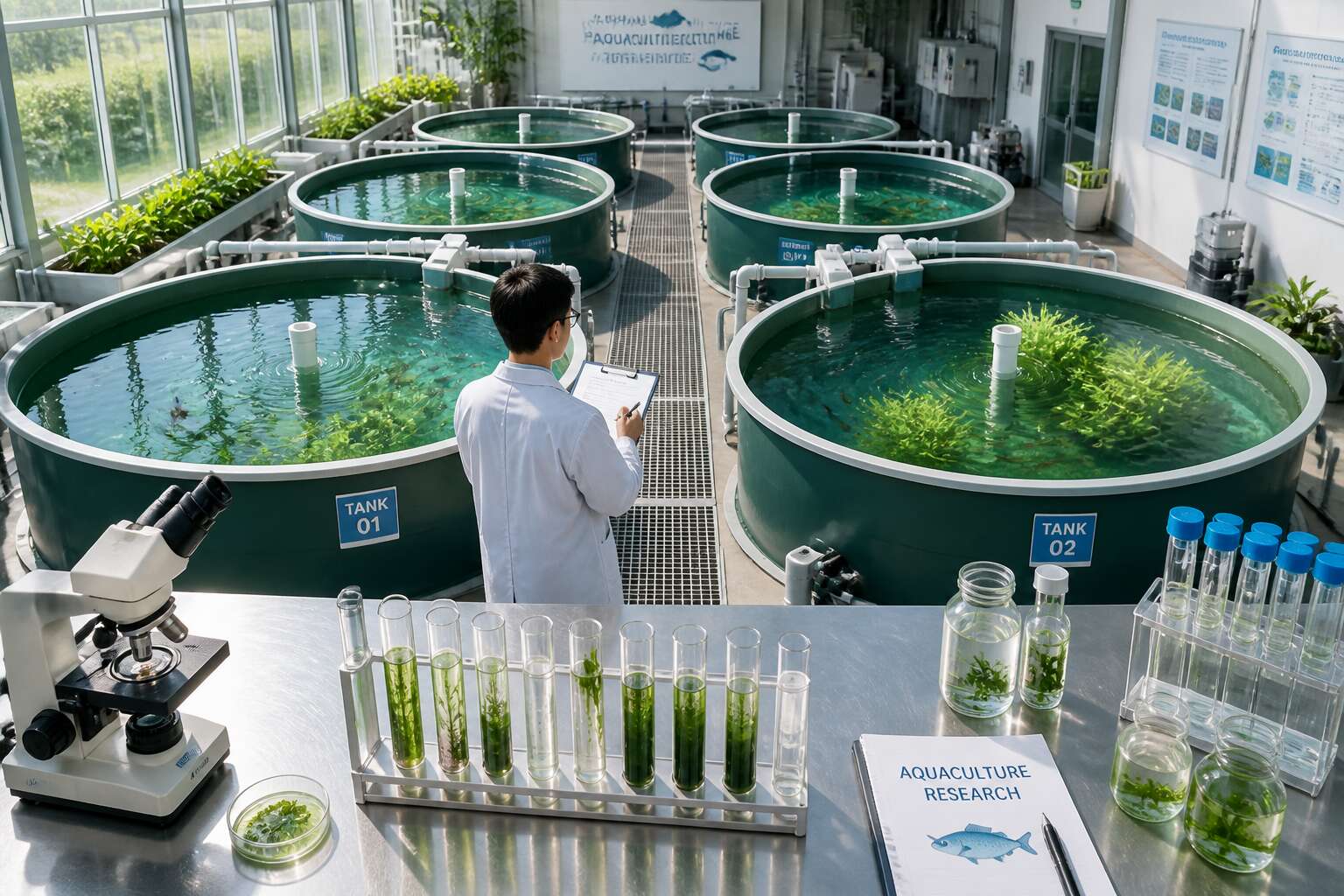
The Foundations of Research Impact in Aquaculture
Defining Impact Factor and Its Relevance
South Africa’s marine economy depends on science that can be measured, and the aquaculture research impact factor is the yardstick most funders trust. This journal-level metric reflects how often recent papers get cited, giving institutions a quick read on which work shapes the field. It matters here, where the ocean economy contributes meaningfully to the GDP and universities compete for a narrow pool of research grants.
The foundational relevance rests on several practical functions:
1. It signals which journals carry weight in global aquaculture debates.
2. It helps local universities benchmark their output against international peers.
3. It guides young scientists toward publishing venues that elevate their visibility.
For a researcher in Stellenbosch or Gqeberha, the aquaculture research impact factor influences promotion, hiring, and long-term project survival. It is not a perfect measure of quality, but it remains the most widely accepted proxy for influence. Understanding its mechanics is the first step toward using it wisely.
The Evolution of Citation Metrics in Aquatic Sciences
Before the aquaculture research impact factor became a standard, aquatic scientists measured influence through citation counts alone. That crude tally rewarded volume over resonance. A single paper might accrue hundreds of citations for reasons unrelated to its intellectual weight. The field needed a finer measure.
Citation metrics in aquatic sciences evolved through several milestones:
- The Science Citation Index in the 1960s, which first made citation tracing systematic.
- The journal impact factor itself, which normalised citation counts by publication volume.
- The h-index in 2005, which shifted focus to individual researcher output.
- Altmetric scores, which capture policy documents and public discourse.
Each layer added value. For South African aquaculture researchers, the aquaculture research impact factor remains the most visible benchmark, yet its foundations now rest on a wider base of evidence.
Why Impact Factor Matters for Aquaculture Researchers
For a South African scientist studying abalone or tilapia, the aquaculture research impact factor acts as a quiet gatekeeper. It shapes which journals accept your work, which grants review panels approve, and which international partners return your emails. This metric carries tangible weight in a country where research budgets face constant pressure and global collaboration is essential.
The quality of the journal itself often speaks before a single reader opens the article. Researchers must interpret this number carefully, since it reflects journal-wide averages rather than individual contribution. This distinction becomes crucial in niche fields like aquaculture, where specialist publications may have smaller audiences but deeper relevance.
The impact factor influences several practical decisions:
– Where to submit first drafts
– How to allocate scarce research time
– Which co-authors to pursue internationally
Each choice carries professional consequences. A strong publication record built on solid foundations can open doors that raw citation counts never will.
Tools and Databases for Measuring Impact
Web of Science and Journal Citation Reports
Thousands of journals exist in the aquatic sciences, yet only a fraction are indexed with enough rigor to generate a meaningful aquaculture research impact factor. Web of Science curates journals through a strict evaluation process before they enter its citation indices. Journal Citation Reports then transforms that citation data into the metrics researchers consult each year, including the well known Journal Impact Factor.
For an aquaculture scientist in Stellenbosch or Durban, these databases reveal more than a single number. They offer citation networks, Eigenfactor scores, and cited half life data that show how quickly work influences the field. Key capabilities include:
- Tracking which journals cite your published work
- Identifying emerging high impact journals in aquaculture
- Comparing journal performance across related disciplines
Understanding the mechanics of these tools matters. The aquaculture research impact factor you see in a journal’s profile is only as reliable as the underlying index, and Web of Science remains one of the most selective sources of that data.
Scopus and Its Aquaculture Coverage
Scopus indexes nearly three times as many journals as Web of Science, yet it applies a different filtering standard. For aquaculture researchers in South Africa, this means a broader view of regional publications. The aquaculture research impact factor derived from Scopus often differs from the Web of Science value, sometimes dramatically.
Scopus provides CiteScore, SJR, and SNIP metrics. These tools measure citation velocity and source prestige. A journal may rank highly in Scopus while having a lower traditional impact factor. That discrepancy matters when you evaluate where to submit your work.
- Scopus covers over 40,000 active journals
- It includes predatory journal detection protocols
- Its African regional coverage has expanded since 2020
The choice of database shapes your perception of impact. Understanding Scopus helps you interpret the aquaculture research impact factor with greater nuance.
Google Scholar Metrics and Altmetrics
In 2021, a study on tilapia nutrition accumulated more online mentions in one week than it earned citations in three years. That disparity illustrates why Google Scholar Metrics and altmetrics deserve attention when assessing the aquaculture research impact factor. Google Scholar casts a wide net. It captures preprints, institutional reports, and African journals that often slip through commercial indexing. This broad coverage creates a counterweight to the narrower metrics from traditional databases.
Altmetrics supplement citation counts with behavioural data. They track downloads, saves, and mentions across social platforms. Here is what they frequently reveal:
- Policy documents citing a paper signal practical influence.
- News coverage indicates public interest beyond academia.
- Mendeley readership reflects early scholarly engagement.
For South African aquaculture researchers, these tools provide a richer picture of reach. The traditional metric remains central, but combining it with Scholar’s breadth and altmetric immediacy gives a more honest assessment of a paper’s real-world footprint.
Specialized Fisheries and Aquatic Science Databases
The typical research paper on abalone farming may be cited only a handful of times before it fades into the archives. Yet the aquaculture research impact factor for a South African institution depends on capturing every one of those citations. General databases miss a substantial portion of the relevant literature, particularly studies published in regional journals or those dealing with species specific to the African coastline.
Specialized fisheries and aquatic science databases offer a corrective lens. The Aquatic Sciences and Fisheries Abstracts (ASFA) database serves as the definitive index for this niche. It scans over 5,000 sources, including grey literature and conference proceedings. The ASFA records often contain abstracts and indexing terms that reveal the practical applications of a study on wastewater treatment in a KZN hatchery. CAB Abstracts also provides strong coverage of aquaculture nutrition and disease, with a particular strength in animal health research.
These platforms provide the following advantages:
– Depth in regional coverage, especially for African and Indian Ocean research.
– Search tools that filter by taxonomic group and geographical descriptors.
– Indexing of technical reports from government bodies like the Department of Forestry, Fisheries and the Environment.
When a researcher relies solely on Web of Science, they might miss a critical citation from a Mozambique-based journal. This omission distorts the perceived influence of the work. An accurate calculation of the aquaculture research impact factor requires a cross-referenced approach, combining the broad scope of standard databases with these specialist tools to trace the complete journey of a paper through the scientific ecosystem.
Top Aquaculture Research Journals and Their Impact Scores
Leading Journals in Aquaculture Science
Among the periodicals, a handful command disproportionate influence. Aquaculture Research and Aquaculture hold dominant positions, yet their aquaculture research impact factor scores diverge sharply, revealing editorial rigor and citation velocity. For instance, the Journal of Shellfish Research occupies a narrow niche, while Reviews in Aquaculture surges ahead. Consider these leading venues:
- Aquaculture: long-standing breadth
- Reviews in Aquaculture: synthesis and critique
Each score measures a different kind of scholarly influence. A high number does not guarantee practical wisdom for tilapia farmers in the Western Cape. It does signal which papers the research community deems indispensable. That distinction matters when you are deciding where to submit your own findings.
Comparing Impact Factors Across Subdisciplines
Subdisciplines within aquaculture cite at different speeds. A nutrition study in a modest journal can outperform an engineering paper in a flagship title. Pathogen research follows its own pattern. Fish and Shellfish Immunology, for example, carries an aquaculture research impact factor that reflects outbreak-driven urgency.
The hierarchy among journals is real, but it is not uniform:
- Nutrition and immunology papers draw consistent citations across molecular and applied audiences.
- Engineering and systems research accumulates references slowly.
- Genetics studies fall somewhere between, depending on the species.
We tend to assume a higher score means better work. That is rarely the full story. Reviews in Aquaculture leads because it synthesizes entire fields. The number reflects velocity, not truth!
Open Access Journals and Their Rising Influence
Top aquaculture journals still set the benchmark, but their dominance is no longer absolute. Reviews in Aquaculture and Aquaculture carry prestige, yet their scores are incomplete. A paper in a modest title can outpace them in citations if it addresses a pressing local problem, especially in South Africa where abalone and finfish research shapes commercial practice.
Open access journals are changing the incentive structure. Titles such as Aquaculture Reports and Fishes offer rapid publication and global visibility, which directly raises the aquaculture research impact factor through faster citation cycles. For African researchers, this means findings reach international audiences without subscription barriers.
- Aquaculture Reports: rapid peer review, broad distribution
- Fishes: dedicated platform for aquatic species research
- Frontiers in Marine Science: strong interdisciplinary engagement
These platforms do not replace established journals, but they force a reassessment of what the aquaculture research impact factor actually measures.
Case Studies of High-Performing Journals
Reviews in Aquaculture posted an impact factor near 10 in 2023, a number that makes fisheries scientists weep into their spreadsheets. Raw scores, however, tell only part of the story. Aquaculture, the field’s workhorse journal, hovers around 4.5 but publishes more papers and earns citations from a wider range of species and systems. A South African abalone study in Aquaculture often triggers commercial adaptation within months, while a higher impact review gets read, cited, and forgotten.
Consider the performance tiers:
- Reviews in Aquaculture: synthesis-heavy, long citation half-life
- Aquaculture: broad reach, rapid applied uptake
- Aquaculture Environment Interactions: niche dominance with moderate scores
The aquaculture research impact factor rewards synthesis, not speed. Case studies of high-performing journals show a consistent pattern: prestige follows utility. Citation half-lives often stretch beyond the metric’s window, especially in niche titles. For researchers in Cape Town or Stellenbosch, the aquaculture research impact factor remains an imprecise tool, but it still shapes funding decisions and career timelines across the country.
Factors Influencing Impact Factor in Aquaculture Studies
Research Collaboration and International Networks
A paper with authors from three continents often pulls more citations than a single-lab effort. That dynamic directly influences the aquaculture research impact factor for many institutions.
International collaboration expands peer networks and sharing of unique aquatic data. South African teams gain visibility when partnering with Norwegian or Japanese institutes. These ties shorten the path from preprint to citation.
Consider common collaboration patterns:
- Joint fieldwork that merges local ecological knowledge
- Cross-national funding that forces wider dissemination
The result is a sustained upward push in citation rates, and that is what editors track when calculating rankings.
Citation Habits and Self-Citation Dynamics
Citation habits in aquaculture studies often behave like tidal rhythms, predictable yet shaped by unseen forces. Researchers frequently cite work that validates their own methods, creating a quiet feedback loop. This is where self-citation dynamics enter, sometimes inflating an institution’s aquaculture research impact factor without adding new knowledge.
Consider these patterns:
- Authors citing their previous papers to establish continuity
- Review articles that cluster around a narrow set of foundational studies
- Editorial policies that encourage citation of the hosting journal
These habits accumulate over time. When South African researchers acknowledge the same local datasets, the citation network tightens. That concentration can nudge the aquaculture research impact factor upward, but it also raises questions about scholarly reach. Editors monitor these patterns closely, knowing that a high number does not always equal broader impact.
Publication Frequency and Journal Prestige
Publication frequency acts as a structural determinant of the aquaculture research impact factor. Quarterly journals accumulate citations slowly, while monthly outlets accelerate accumulation. Yet frequency without methodological rigor produces hollow metrics. South African authors must weigh their own timelines against these rhythms.
Journal prestige adds another layer. Editors curate reputations over decades, and researchers submit accordingly. Prestige encourages selective citation, reinforcing existing hierarchies. Consider how these elements converge:
- Submission turnover rates shift annual counts
- Editorial standards filter citation-worthy work
- International indexing expands visibility
Each factor interlocks, making the aquaculture research impact factor a composite of human decisions rather than pure objective measurement.
The Role of Review Articles and Meta-Analyses
Reviews are a minority of publications in aquatic science, yet they capture a disproportionate share of citations. This asymmetry directly shapes the aquaculture research impact factor. Review articles and meta-analyses synthesize fragmented evidence into coherent datasets, and primary studies cite them because they save time. Unlike empirical papers, reviews become reference points that researchers return to year after year.
Consider the mechanics behind this influence:
- Reviews accumulate citations faster than single experiments
- Meta-analyses produce numeric conclusions that are easy to cite
- Editors actively solicit review submissions to strengthen journal metrics
For South African researchers, this dynamic carries weight. Publishing a review boosts personal visibility, but it also raises the aquaculture research impact factor that institutions use to judge research output.
Strategies for Enhancing the Impact of Aquaculture Research
Improving Manuscript Quality and Novelty
Hype cycles and provocative findings often capture attention, yet they rarely build a durable citation base. The aquaculture research impact factor rewards work that withstands scrutiny over time. Editors and reviewers increasingly look for evidence of rigorous methodology, transparent data, and clear statements of limitations. A manuscript built on shaky statistical ground may generate short-term buzz, but it risks becoming a cautionary tale rather than a cornerstone reference.
Novelty does not always mean studying a species never before examined or inventing a new metric. It can mean asking a fresh question of existing datasets or synthesizing disparate findings into a coherent framework. Researchers in South Africa often face unique ecological conditions, and their insights on local species or farming practices can offer global relevance if framed properly. The key is to present this novelty as a clear, testable hypothesis rather than a vague observation.
– Precise, reproducible descriptions of experimental design
– Explicit linkage between research questions and chosen methods
– Honest reporting of negative or null results
– Placement of findings within a broader physiological or ecological context
These elements signal intellectual integrity and invite other researchers to build upon the work. When a manuscript demonstrates this level of care, it tends to attract citations from diverse subfields. A study on stress responses in South African abalone, for instance, could inform work on other mollusks worldwide if the physiological mechanisms are clearly articulated.
The most effective strategy for enhancing impact is to view the manuscript as a contribution to a larger scholarly conversation. This involves reading recent issues of target journals thoroughly, identifying gaps in their published research, and demonstrating how the new work addresses those gaps. Reviewers recognize when a submission engages seriously with prior literature without resorting to superficial citation padding. This engagement shows that the author is a participant in the field, not a bystander. By focusing on substantive novelty and rigorous presentation, researchers can elevate both their individual work and the broader aquaculture research impact factor of their chosen journals.
Effective Abstract and Title Optimization
In scholarly publishing, the title and abstract are not afterthoughts. They are the first elements a potential reader encounters, and in many cases, the only elements. A title that buries the central finding in vague phrasing will lose the attention of busy researchers. A title that names the species, the treatment, and the measured outcome allows the paper to surface in precise database queries.
- State the specific knowledge gap addressed
- Describe the experimental design
- Report exact numerical outcomes
- Explain the significance without overreach
This structure gives readers a clear reason to continue. It also helps reviewers recognize a contribution worth citing. When authors optimize these elements with standard terminology, they directly influence the aquaculture research impact factor of the journals that publish such carefully crafted studies, and they position South African research within a global conversation.
Targeting Appropriate Journals for Maximum Reach
A manuscript rejected for the wrong reason often disappears into an obscure archive. The choice of journal is a strategic decision that determines whether your work reaches the right skeptical eyes. I have watched brilliant South African aquaculture studies fade because authors aimed at broad international titles instead of specialized ones. The aquaculture research impact factor of a target journal signals how actively its readers cite and apply new evidence.
Practical strategies include prospecting the journal’s recent paper trail. Match your species, system, and questions to the editorial appetite.
- Check the journal’s acceptance rate and review speed.
- Verify whether its readership covers African aquaculture contexts.
- Confirm the journal’s position in JCR and Scopus rankings.
This upfront effort prevents wasted cycles and places your findings where they can spark real dialogue.
Building a Personal Citation Strategy and Networking
Building a personal citation strategy starts with understanding how your work enters the scholarly conversation. I have watched researchers boost their aquaculture research impact factor simply by tracking which papers cite similar studies and then positioning their own findings to address those gaps.
Networking amplifies this effort. Conferences, institutional partnerships, and even social media create touchpoints where your research gains visibility. One South African colleague saw citations double after sharing preprints with regional aquaculture networks.
Consider these approaches:
- Set citation alerts for key journals in your field.
- Engage with authors whose work you build upon.
- Share your datasets to invite reuse and verification.
Each interaction strengthens the professional relationships that sustain long-term research impact.


0 Comments