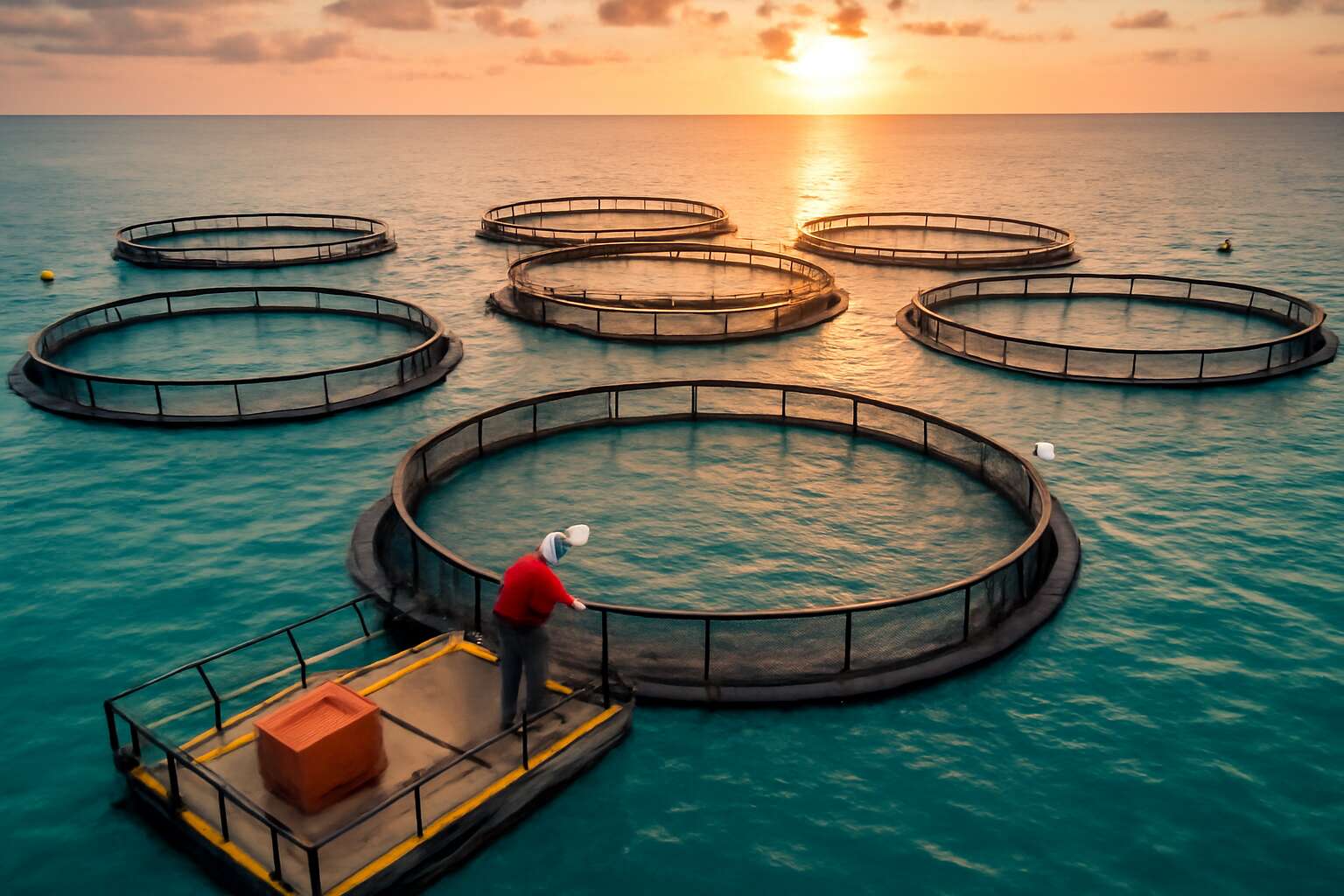
The Importance of Aquaculture in Modern Fisheries
Environmental Benefits of Responsible Aquaculture
Across the globe, aquaculture now supplies more than half of the seafood we eat, securing nutritious protein for millions. In South Africa, the tides of innovation meet careful farming, and this is why aquaculture is important in fishery industry.
Environmental benefits of responsible aquaculture are tangible and growing. It helps relieve pressure on wild stocks, improves feed conversion, and strengthens coastal resilience.
- Reduces pressure on wild fish populations
- Optimizes feed efficiency and waste management
- Creates stable livelihoods for coastal communities
From sea to table, responsible aquaculture aligns flavor with responsibility. In a nation of sunlit coasts, it harmonizes production with nature, nourishing communities while safeguarding water quality, reefs, and the ocean’s quiet rhythm. Amazing things happen when care guides every harvest!
Reducing Pressure on Wild Stocks
Global seafood supply now comes from aquaculture for more than half of what ends up on plates. In South Africa, responsible farming ties local communities to resilient coastlines and steady protein access.
Aquaculture reduces pressure on wild stocks by providing a dependable source of high-quality protein and a growth path that doesn’t hinge on seasonal fetches from open water. With careful siting, robust feed, and tight biosecurity, ecosystems stay healthier and fisheries become more predictable.
- Supports traceable supply chains and quality control for coastal markets
- Advances selective breeding and improved feed efficiency, reducing ecological footprint
- Strengthens rural livelihoods with steady harvests and job stability
This clarifies why aquaculture is important in fishery industry. By aligning farming with local ecosystems, production becomes a bridge between nutrition and conservation, especially along South Africa’s diverse coastlines.
Diversification of Fish Species Through Farming
Across South Africa’s wind-worn coast, a quiet revolution is unfolding: the diversification of fish species through farming is turning uncertain tides into steady harvests. Global seafood supply from aquaculture now accounts for more than half of what ends up on plates, and the ripple is felt from Cape Town to Kosi Bay. Species such as tilapia, sea bass, and shellfish are moving beyond single-species nets, opening new markets and flavor bursts. The sea hums with possibilities!
This is why aquaculture is important in fishery industry. By cultivating a range of species in well-managed systems, we build resilient supply chains that respond to demand, climate shifts, and seasonal quirks. The work isn’t just farming; it’s careful siting, genetics, and feed strategies that keep ecosystems healthier while expanding choice for consumers.
- Broader consumer options and higher market resilience
- Enhanced breeding and feed tech reducing waste
- Safer, traceable supply chains for coastal communities
Driving Sustainability and Food Security in the Fishery Sector
Food Security and Supply Stability
On a cobalt horizon, aquaculture quietly threads stability into a hungry world. The demand for seafood climbs even as the sea grows unpredictable, and the answer glints in offshore pens. ‘Sustainable harvests are the shield that feeds a nation,’ a coastal analyst murmurs—this is the point: why aquaculture is important in fishery industry.
Driving sustainability and food security hinges on predictable harvests and local resilience. Farmed fish shorten supply chains, steady prices, and guard communities against shocks.
- Local employment in coastal towns
- Reliable supplies during seasonal scarcity
- Species adaptability to market needs
Together these threads craft a shield for South Africa’s meals, a nocturnal promise that nourishes tomorrow’s table.
Nutrition and Public Health Implications
Seafood sustains millions, and in South Africa’s coastline, it fuels more than meals—it sustains livelihoods. Globally, seafood provides roughly 17% of animal protein, a figure that climbs when drought and volatility shake wild stocks. This is why aquaculture is important in fishery industry for resilient nutrition and stability.
Healthy, traceable production supports nutrition and public health in coastal communities. The following points illustrate key implications:
- Consistent omega-3 levels and essential micronutrients in farmed fish improve heart health and development.
- Controlled feeds and rigorous safety standards reduce contaminants and enhance food safety.
- Localized farming shortens supply chains, improving access to affordable protein during shortages.
In practice, this nexus drives nutrition and public health, turning farms into buffers against price shocks and seasonality. When governance aligns with good farming practices, communities gain healthier diets and steadier meals.
Resilience to Climate Variability
Coastal communities across South Africa face climate volatility that tightens wild catches and tests price stability. In this cauldron, aquaculture emerges as a shield—providing predictable yields and local employment where storms threaten seasonal shortages. This is the reason—why aquaculture is important in fishery industry—for resilience!
Driving resilience means more than steady supply; it crafts communities where nutrition travels shorter distances and confidence travels further. Consider these elements:
- Water-efficient farming and onsite storage reduce vulnerability to drought and transport disruptions.
- Multi-harvest planning and careful species selection dampen the shocks of seasonality.
- On-site energy resilience and waste-to-value loops keep production costs steadier through volatile markets.
In this way, aquaculture not only feeds people but also stabilizes livelihoods when climate swings widen the gaps between catch and supper.
Policy and Regulation for Safe Aquaculture
“We fish to feed tomorrow,” a fisherman once told me, and those words echo in every policy brief and permit issued. In South Africa, seafood security rests on clear rules that shield people, habitats, and livelihoods from climate swings and market shocks.
Driving Sustainability means policy that keeps safety and trust at the core. The pillars are:
- Licensing clarity and predictable permit timelines
- Biosecurity standards across farms and transport
- Traceability from hatchery to plate and robust safety audits
When regulation supports collaboration among smallholders and coastal communities, harvests stay steady, products stay safe, and local jobs endure. This is why aquaculture is important in fishery industry.
Economic Impact of Aquaculture on Coastal Communities
Economic Growth and Local Jobs
Coastal towns along South Africa’s shores glimpse a new tide of opportunity when aquaculture is embraced. It turns quiet harbors into hubs of steady income, linking hatcheries, feed suppliers, transport, and processing into a cohesive local economy. The result is a stable tax base that funds schools and clinics, while families enjoy predictable work even in lean seasons. The economic ripple shows up in better infrastructure, skills training, and a renewed sense of community.
- Local employment opportunities across farm sites, hatcheries, and processing facilities
- Stronger supplier networks and logistics that keep value chains moving
That vitality feeds schools, clinics, and small businesses while reframing coastal economies. The question why aquaculture is important in fishery industry becomes tangible as jobs persist, investment grows, and communities maintain their pride in seaside heritage.
Value Chains and Market Access
Coastal towns breathe a steadier current when aquaculture becomes a working tide. In South Africa, this new wave anchors local growth, turning quiet harbours into hubs of steady income. I walk the piers at dusk, hearing nets and processing whispers knitting a resilient town.
Value chains wake with purpose when farms connect hatcheries, feed suppliers, transport, and processing into a single current. The network strengthens local procurement and keeps money circulating, building seafood security for neighborhoods.
- Farm sites and hatcheries
- Feed suppliers and transport networks
- Transport and cold-chain logistics
- Processing and distribution hubs
Market access widens through regional retailers and direct channels, with export routes to regional neighbors. Local producers gain pricing power, better data, and resilient demand, even when the climate tests harvests. This helps answer why aquaculture is important in fishery industry.
Investment and Financing in Aquaculture Projects
Coastal towns are riding a new tide of opportunity. Investment in coastal aquaculture has risen in double digits across South Africa, turning harbours into hubs of steady work and local procurement. This momentum illustrates why aquaculture is important in fishery industry—it’s real!
Funding comes from multiple streams, each strengthening local finance ecosystems and enabling scale:
- Development finance institutions offering patient, staged funding
- Grants and subsidies targeting small-scale producers
- Commercial banks and credit unions expanding agro-credit
- Public–private partnerships sharing risk and expertise
Long-term capital upgrades hatcheries, feed and transport infrastructure, and processing capacity. When the money circulates through local lenders and suppliers, communities gain resilience, jobs remain local, and coastal economies stay buoyant even as global markets shift.
Export Opportunities for Farmed Fish
Coastal towns in South Africa logged a double-digit rise in aquaculture jobs last year, a tide turning docks into hatcheries and processing floors. This momentum underscores why aquaculture is important in fishery industry—our shores are converting wind into work, and local supply chains into lasting prosperity.
Export opportunities for farmed fish widen the footprint of coastal economies, threading small-scale producers to regional markets and distant buyers. The following channels now pulse as the main arteries of this growth:
- Regional distribution to supermarkets and restaurants
- Certification-driven access to EU, UK and Asian markets
- Value-added processing for fillets, smoked products, and ready-to-cook formats
Together, these currents keep communities buoyant even as the seas churn.
Innovation, Technology, and Environmental Stewardship in Aquaculture
Technology and Innovation in Aquaculture
More than half of the world’s seafood now comes from aquaculture, and in South Africa our coastal farms are turning that potential into practice. Innovation in every pen blends patient hands with new ideas, delivering healthier stock and steadier harvests that families rely on.
Key advances in technology are reshaping daily care:
- Recirculating Aquaculture Systems (RAS) for water reuse
- Sensor networks and AI-driven health and feed decisions
- Better, sustainable feeds and habitat-friendly design
These tools also uphold environmental stewardship, turning waste into value and reducing energy use through smarter design. I’ve watched rural communities gain pride when careful planning protects streams, supports biodiversity, and keeps ponds productive.
This is why aquaculture is important in fishery industry, because it blends innovation with stewardship and helps feed a growing nation.
Environmental Monitoring and Compliance
Data-dense channels are redefining care in South Africa’s coastal nets and pens: real-time monitoring slashes waste and boosts yield by double digits in many trials. Sensors watch oxygen, salinity, and temperature while AI suggests feeding tweaks before stress appears. Environmental stewardship becomes a living protocol, not a quiet afterthought! This is why aquaculture is important in fishery industry.
- Real-time water-quality sensors
- Automated compliance dashboards
- Traceability from pen to plate
Compliance reporting, risk assessment, and habitat-safe design become routine rather than reactionary—proof that innovation and stewardship can coexist in South Africa’s aquaculture landscape.
Sustainability Certifications and Consumer Trust
Innovation is the pulse behind sustainable farms. In South Africa’s coastal nets and pens, certification-led tech—precision feeding, real-time water-quality data, and AI-informed husbandry—transforms risk into reliability. Environmental stewardship becomes not a policy, but a daily practice that resonates with buyers and communities alike.
Brand trust rises when every step from fry to plate is auditable. That’s where Sustainability Certifications shine: clear standards, independent audits, and transparent reporting empower consumers to see the care behind the crop. This is the essence of why aquaculture is important in fishery industry.
- Blockchain-backed traceability from hatchery to plate
- Audited certifications and continuous improvement
- Independent verification and consumer-accessible reports
Case Studies: Success Stories in Fisheries Aquaculture
Innovation is the pulse behind sustainable farms, and in South Africa’s coastal nets and pens, tech turns risk into reliability. Real-time water-quality data and AI-informed feeding aren’t fancy toys; they’re daily governance that keeps stock healthy and feed waste down. This is why aquaculture is important in fishery industry.
- Blockchain-backed traceability from hatchery to plate
- Audited certifications and continuous improvement
- Independent verification and consumer-accessible reports
I’ve watched a hatchery dashboard glow at dawn, translating data into daily decisions that protect water and welfare. Case studies from South Africa’s coastal farms show precision feeding paired with real-time sensors reducing stress and waste, while auditable reports invite communities to share the pride. Environmental stewardship isn’t a policy here—it’s a practiced art that earns trust and resilience.




0 Comments