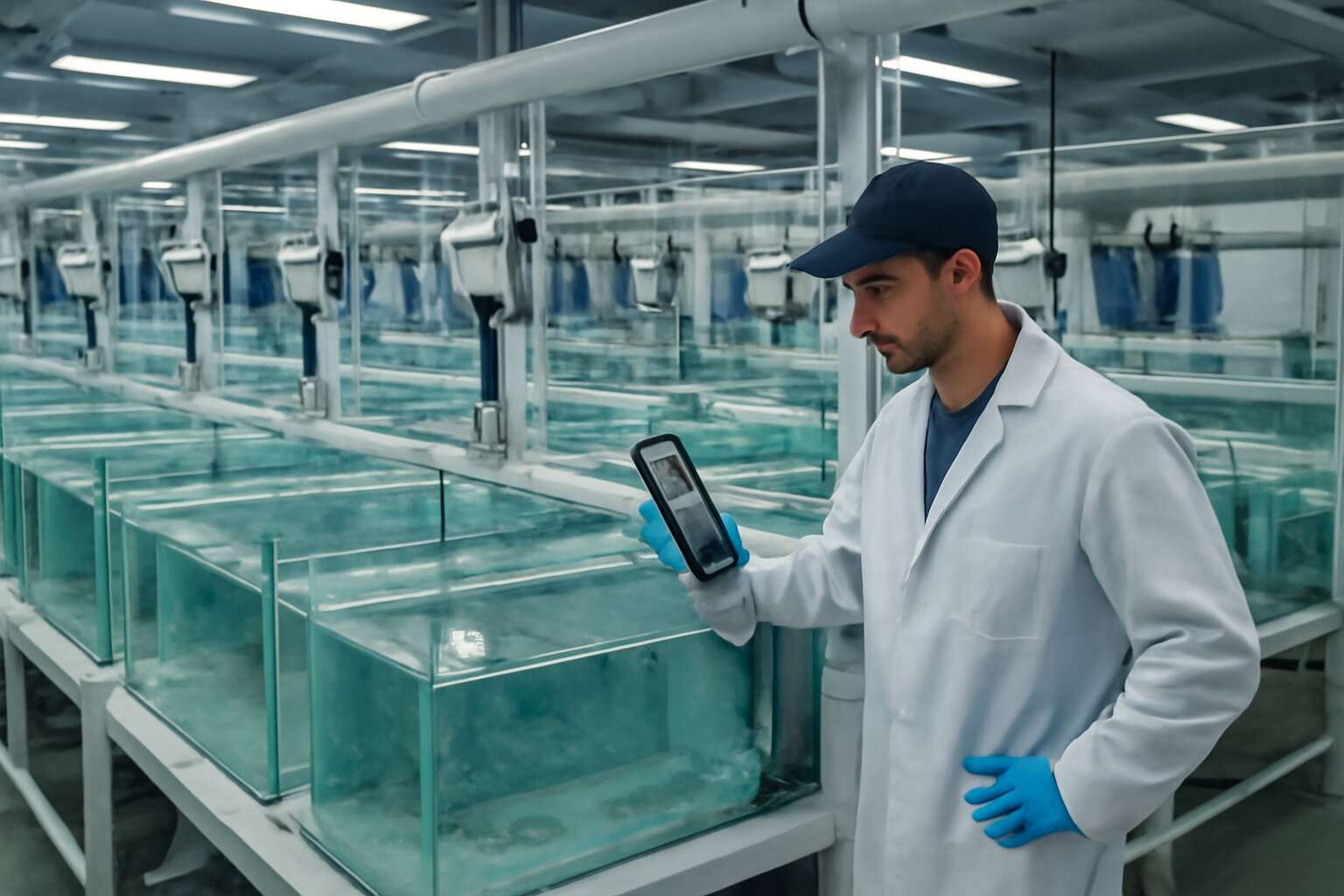
aquaculture 1.21.11: section on industry foundations
What is aquaculture 1.21.11? definitions and scope
Across South Africa, coastal towns and inland farms rely on steady protein sources, and the aquaculture sector nourishes both table and economy. I’ve watched smallholders turn simple ponds into livelihoods, and communities keep nets and nurseries alive.
aquaculture 1.21.11 defines the practice as growing and harvesting aquatic organisms under controlled conditions for food, restocking, or research. Its reach spans smallholder ponds, community hatcheries, and larger land- and water-based facilities.
Foundations set the standards for quality, safety, and sustainability.
- Definitions and boundaries that distinguish farming from wild capture
- Scope across species and production scales
- Stakeholders, governance, and community participation
In South Africa, these foundations meet local needs—feeding families, supporting jobs, and aligning with conservation goals—without losing the warmth of rural life.
Key drivers and trends in aquaculture 1.21.11
Across South Africa, aquaculture continues to turn ponds into productive lifelines. Globally, more than half of the seafood we eat comes from farms, and that momentum has a local heartbeat—families tapping simple water bodies into steady protein and small businesses. aquaculture 1.21.11 anchors this movement, balancing controlled growth with safety and sustainability while keeping the warmth of rural life intact.
Key drivers and trends shape what happens next: smarter feed and genetics, disease management that stays ahead of outbreaks, and climate-resilient species that flourish in variable water. The shift is powered by digitized monitoring, community hatcheries, and governance that foregrounds local voices.
- Market diversification with new value-added products
- Skilled technicians and targeted extension services
- Integrated multi-trophic approaches to reduce waste
Historical context and evolution up to 1.21.11
Across the annals of farming, water-born life has always held a quiet promise. The history of aquaculture unfolds from warming ponds tucked along rivers to bustling hatcheries and controlled farms. The craft was once a patient experiment, a local solution for protein and livelihoods rather than a headline. The phrase aquaculture 1.21.11 anchors this momentum, linking ancestral know-how to modern systems that respect soil, water, and community.
From early days of small-scale stocking to the rise of certified feeds, disease surveillance, and climate-aware species, the evolution has been deliberate and disciplined. In South Africa, the arc traces rural dams becoming mini-farms, then integrated networks that pair hatcheries with local technicians. This is the lineage that leads to aquaculture 1.21.11 and its promise of safer, smarter growth!
- Hatcheries
- Quality feed
- Regulatory safety
Global production hotspots in 1.21.11
Global aquaculture now accounts for roughly half of all seafood by volume, a tide that reshapes markets and meals alike. aquaculture 1.21.11 anchors this momentum, stitching ancient know-how to modern systems that respect water, weather, and people. The industry foundations are rising in tandem with demand, turning risk into opportunity across continents.
Global production hotspots in 1.21.11 reveal where scale meets stewardship:
- Southeast Asia: China, Vietnam, Indonesia
- Norway and Chile: salmon value chains
- Egypt, Nigeria, Ghana: tilapia and catfish centers
- India and Bangladesh: thriving freshwater sectors
South Africa sits at a crossroads of dam- and coast-based farming, linking local technicians with certified inputs for safer, smarter growth.
Economic impact and market size in 1.21.11
South Africa’s aquaculture foundations are quietly rewriting the shoreline playbook. The sector’s economic footprint is expanding as local hatcheries, feed mills, and fish-processing plants scale to meet domestic appetite and regional demand. In this landscape, aquaculture 1.21.11 blends age-old know-how with modern systems that respect water, weather, and people, turning risk into opportunity and stitching the supply chain closer to home.
- Job creation across farming, processing, and logistics
- Value-added products that boost domestic consumption
- Export growth to regional and international markets
- Stronger inputs, certification, and biosecurity standards
Market size grows as consumer demand for reliable seafood rises, supported by investment in hatcheries, feed innovations, and smarter farm-management tools. The South African model ties dam- and coast-based farming to skilled technicians and local enterprise, turning potential risk into sustained growth.
aquaculture 1.21.11: sustainability and environmental considerations
Sustainable farming practices and certifications
Across the blue horizon, aquaculture 1.21.11 shapes a future where seafood is grown, not taken, and sustainability is the spell keeping ecosystems singing. Today, aquaculture accounts for about half of all seafood consumed worldwide, a beacon of progress that calls for careful stewardship along South Africa’s shores and inland farms.
Smart farming practices weave resilience into every pond and pen: closed-loop water systems minimize waste, responsibly sourced feeds ease pressure on wild stocks, and vigilant biosecurity shields habitats from disease spillover.
- Water recycling and effluent treatment
- Integrated multi-trophic aquaculture (IMTA)
- Third-party certifications like ASC and GlobalGAP
Certifications translate stewardship into trust; traceability reveals origin stories behind each harvest, aligning production with South Africa’s growing appetite for responsible farming. In a changing climate, sustainable farming sustains communities and coastlines alike!
Water quality and resource management in 1.21.11
Globally, aquaculture accounts for about half of all seafood consumed. In South Africa, that shift isn’t abstract—it’s a daily craft that marries appetite with stewardship. The ocean’s balance hinges on water choices and resilient farming, where every pond is a living contract with the coastline!
Water quality and resource management are core to aquaculture 1.21.11. We design with the water in mind: dissolved oxygen steady, pH balanced, and temperature controlled. Efficient water use eases demand on local supplies while keeping stocks healthy.
Key components include:
- Real-time water quality monitoring
- Closed-loop circulation
- On-site effluent treatment and reuse
- Protected source-water management
These practices anchor sustainability to South Africa’s coastlines and communities, ensuring responsible seafood flows as climate pressures rise.
Waste treatment and ecosystem impacts
Coastlines feed our futures, and today nearly half of all seafood on tables comes from aquaculture, a movement whose momentum is captured in ‘aquaculture 1.21.11.’—shaping how communities imagine seafood futures.
Waste treatment and ecosystem impacts are the quiet frontier of responsible farming. Nutrients from effluents can shift local waters, alter benthic habitats, and ripple through fisheries that communities rely on. Thoughtful design, together with on-site containment, helps protect coral, mangrove, and estuary systems while sustaining productive farms.
- On-site effluent treatment that minimizes nutrient discharge
- Habitat-friendly site selection and restoration
- Transparent reporting to ensure biodiversity safeguards
Ultimately, sustainability in aquaculture 1.21.11 is a living contract with the coastline—one that wrestles climate pressures with ingenuity and care, so we ensure future meals remain anchored to the shore!
Responsible feed and nutrient management
Across South Africa’s coastlines, the harvest is changing: nearly half of seafood on tables now comes from aquaculture— a tide that reshapes meals and livelihoods. Sustainable farming feels personal here, where every pocket of water holds a memory of generations tending the sea.
Responsible feed and nutrient management are the quiet workhorses of aquaculture 1.21.11, balancing growth with habitat protection. I’ve watched small farms tailor feeds to local species, cut waste, and protect estuaries from nutrient bleed while keeping families fed.
- On-site nutrient capture and recirculation systems
- Habitat-friendly feed choices and reduced feed conversion ratios
- Transparent reporting and biodiversity safeguards
The result is a living shoreline contract with the coast—sustaining both livelihoods and the health of mangroves, coral, and estuaries, even as climate pressures rise.
aquaculture 1.21.11: technology and innovation
Automation and robotics in farming systems
Across South Africa’s coastal studios and inland ponds, automation is turning routine care into precise craft, trimming waste and lifting yields. Sensors whisper data, drones map water bodies, and robotic feeders deliver meals with millisecond timing. This is the moment industry voices call aquaculture 1.21.11.
- Autonomous feeders that adjust rations based on real-time growth and temperature data
- Remote water-quality sensors tracking dissolved oxygen, salinity, and ammonia
- Robotic netters and harvesters that reduce handling stress and labor costs
In practice, these tools blend with the human touch—technologists, farmers, and technicians collaborating at dawn to adjust feeds, calibrate sensors, and interpret dashboards. The result is resilient farming systems that respond to seasonal shifts without sacrificing animal welfare or product quality.
Sensors, data, and IoT for monitoring
South Africa’s coastal studios and inland ponds stand on the threshold of aquaculture 1.21.11—a data-driven turn that feels almost cinematic. “Sensors don’t sleep!” a technologist asserts, and that truth organizes every dawn check, turning routine care into craft. Real-time signals sharpen feeding, water quality, and welfare with quiet precision.
In aquaculture 1.21.11, sensors, data streams, and IoT weave a monitoring fabric that travels from pond edge to cloud dashboard. Real-time measurements of dissolved oxygen, salinity, and ammonia become the compass for daily decisions, while temperature and pH drift illuminate seasonal shifts.
- Autonomous feeders calibrate portions using live growth cues and water temperature
- Remote probes relay water-quality metrics for remote oversight
- Robotic handling systems reduce stress during grading and harvesting
This collaboration—humans and machines, dawn meetings and dashboards—yields resilience without sacrificing animal welfare or product quality. The technology hum is practical, mindful, and quietly ambitious.
DNA and breeding advances for resilience
In aquaculture 1.21.11, resilience is etched into the genome and woven through breeding programs. “Resilience isn’t a trait—it’s a system,” says Dr. Lindiwe Mkhize, a South African geneticist. Her words frame every genotype-to-phenotype leap, turning quiet laboratory work into seismic shifts for farms on the coast and inland.
DNA-driven innovation pairs genomic selection with field data, translating subtle genetic signals into robust performance under heat, salinity shifts, and disease pressure. Marker-assisted approaches and polygenic risk scores guide crosses, while integrated data from sensors helps validate gains across generations.
- Genomic selection to accelerate trait improvement across generations
- Marker-assisted selection for disease resistance and feed efficiency
- Genomic tools enabling climate-resilient trait stacking
This is aquaculture 1.21.11—the convergence of DNA, data, and stewardship that defines resilience in modern farming.
Disease prevention and biosecurity measures
South Africa’s aquaculture 1.21.11 era is defined by disease prevention as a living system, not a single shield. In coastal farms, outbreaks can erase weeks of work in days; global losses surge when heat and pathogens collide. “Resilience isn’t a trait—it’s a system,” says Dr. Lindiwe Mkhize, framing biosecurity as an ongoing discipline rather than a one-off fix. The field remains tense, yet precise, as protocols endure through weather shifts and market pressures alike.
Disseminated disease prevention and biosecurity measures are woven into every decision—from entry control to water handling and staff training. aquaculture 1.21.11 becomes a living protocol, powered by rapid testing, strict sanitation, and relentless vigilance.
- Entry controls and farm zoning
- All-in/all-out production cycles
- Water treatment and sanitation
- Vaccination programs and health monitoring
Recirculating aquaculture systems (RAS) and water reuse
In the evolving tide of aquaculture 1.21.11, recirculating systems aren’t a luxury; they’re the oxygen in the tank of progress. RAS and water reuse redefine what coastlines can feed, cutting waste, slashing water withdrawal, and smoothing production cycles against heat waves and pathogens. South African farms are exploring compact, modular rigs that fit fynbos coastlines and grid realities, proving that innovation can stay accessible even in uncertain markets.
Within this framework, technology leans on precision and pause—measured dosing, real-time water quality feedback, and resilient filtration that keeps solids and nitrification in check. I watch engineers tune sensors and farmers nod in quiet approval.
- Modular RAS modules scale with demand and space.
- Inline water reuse coupled with biofiltration extends water life and reduces input needs.
- Solar-assisted power and energy recovery support remote coastal sites.
Together, these elements translate the promise into tangible, planet-kind production.
Alternative feeds and sustainability breakthroughs
Progress in aquaculture 1.21.11 isn’t just bigger tanks; it’s a brisk remix of biology and code. A pilot shows swapping fishmeal for insect meals and algae-derived oils can trim costs and shrink the footprint. For South African coasts, that means feeds that travel shorter distances and weather price shocks with swagger. This isn’t luxury; it’s oxygen in the tank of progress—precise, persistent, and a little cheeky.
Within this framework, technology leans on precision nutrition and smart fermentation. Here are trailblazers in the field:
- Insect-based protein blends
- Microbial and algal feed ingredients
- Fermentation-derived amino acids
These shifts position South Africa on-course with planet-kind growth, a rare blend of pragmatism and ambition—aquaculture 1.21.11.
aquaculture 1.21.11: market dynamics and policy
Global trade, standards, and certification
More than half of the seafood people eat today comes from aquaculture. In South Africa, aquaculture 1.21.11 sits at a crossroads of growing local demand and evolving global policy. I’ve watched families along the coast and inland towns rely on steady, responsibly farmed seafood. Global trade pulses with faster cross-border flows, and buyers increasingly expect transparent supply chains, verifiable standards, and robust certification as a matter of course!
Within aquaculture 1.21.11, policy and market dynamics converge on three pillars:
- Global standards and certification bodies (GLOBALG.A.P., ASC, BAP) and their cross-recognition
- Traceability, labeling, and supplier audits to satisfy export markets
- South Africa’s policy signals and incentives to support sustainable farming and regional trade
That balance keeps markets alive with trust, while policy and trade rules continue to evolve.
Policy landscape and regulatory updates in 1.21.11
More than half of the seafood people eat today comes from aquaculture, and aquaculture 1.21.11 sits at a crossroads of rising local demand and an evolving global policy climate. In South Africa, that means markets hum with opportunity while regulators tune the sails.
Market dynamics are defined by faster cross-border flows, insistence on transparent supply chains, and the steady drumbeat of verifiable standards. Buyers want traceable origins, credible audits, and consistent product quality—traits that turn policy shifts into practical competitive advantages at the dock.
- Enhanced traceability and labeling for export readiness.
- Cross-recognition among GLOBALG.A.P., ASC, and BAP to ease certification burdens.
- South Africa’s incentives for sustainable farming and regional trade.
In short, the policy landscape 1.21.11 keeps pace with markets that demand speed, safety, and traceability.
Investment, financing, and risk management in the aquaculture sector
More than half of the seafood people eat today comes from aquaculture, and aquaculture 1.21.11 sits at the crossroads of rising local demand and a shifting global policy climate. In South Africa, the coastline becomes a ledger of opportunity as markets flow faster and regulators adjust their sails.
Investment, financing, and risk management hinge on aligning capital with credible risk signals. Banks seek transparency; insurers weigh climate and disease exposure, and farmers pursue blended finance pairing public support with private risk. In this climate, South Africa’s incentives for sustainable farming and regional trade become practical levers for growth.
To navigate the murky waters, consider these levers:
- Access to blended finance blending public grants with private capital
- Risk-sharing mechanisms and credit guarantees to lower upfront costs
- Export financing tied to certification and credible product provenance
In this 1.21.11 snapshot, policy nudges meet market velocity; resilience threads through every ledger now.




0 Comments