Understanding Aquaculture Fundamentals
Defining Aquaculture and Its Global Importance
The ocean covers 71% of our planet, yet we farm only a fraction of its surface. Aquaculture, the deliberate cultivation of aquatic organisms, has become the fastest growing food sector worldwide. This discipline spans fish, shellfish, and seaweed, providing essential nutrition.
Understanding aquaculture fundamentals requires recognizing its dual role. It feeds billions while easing pressure on wild fisheries. For South Africa, coastal waters offer untapped potential. The aquaculture wiki documents species, systems, and regional practices.
- Site selection and water quality management
- Feed efficiency and disease control
- Sustainable integration with local ecosystems
Global importance emerges from simple math: wild catch has plateaued, while demand rises. We must cultivate rather than extract. What a shift from our hunter gatherer past! I see aquaculture as a way to combine tradition and innovation, and its wiki serves as our collective record.
Historical Origins and Evolution of Fish Farming
Fish farming predates the wheel. Chinese texts from 2000 BCE describe carp breeding, a practice refined while Europeans were still painting themselves blue. I find it amusing that selective breeding of fish happened before basic sanitation!
Romans farmed oysters and kept moray eels in saltwater ponds. The aquaculture wiki documents these early ventures as the foundation of modern practice. Monks later perfected pond systems across medieval Europe, ensuring Friday meals without breaking church rules.
The evolution from subsistence to science took thousands of years, but the pattern stayed consistent: grow more food with less effort. We now study genetics, water flow, and feed conversion ratios. The journey from ancient carp ponds to today’s recirculating systems is one of incremental progress.
Key Terminology and Industry Classifications
The terminology used in modern aquaculture would baffle those early carp keepers. Words like “effluent,” “biosecurity,” and “olfactory triggers” describe production details rather than survival tactics. Precision matters here. A farm raising salmon in sea cages operates under completely different constraints than one producing tilapia in a closed warehouse.
Industry classifications hinge on two primary factors: species and system intensity. For those consulting an aquaculture wiki, grasping these categories is the first step toward serious engagement.
- Finfish (trout, catfish, bream)
- Crustaceans (prawns, crabs)
- Molluscs (oysters, mussels)
- Seaweed (kelp, nori)
System intensity refers to how much control a farmer exerts over the environment. Extensive farming relies on natural water bodies and food sources, with low stocking densities. Semi-intensive operations might add supplemental feed. Intensive systems manage water quality, temperature, and nutrition through mechanical and biological filtration.
I have visited farms on the Cape coast that use a hybrid approach. They run an open flow system that pulls water from the ocean, uses it once through the raceways, and flushes it back. It works until a harmful algal bloom or a pollution event upstream cripples the stock. Contrast that with a recirculating system, where water is treated and reused continuously. The capital investment differs by an order of magnitude.
These distinctions are not academic. They shape everything from licensing requirements to lender confidence. A proper aquaculture wiki entry will clarify these operational definitions so prospective producers do not waste capital on the wrong infrastructure. Codifying this language helps regulators write sensible policy and helps communities understand what a proposed facility actually plans to discharge or draw.
The Economic Scale of Global Aquaculture
The global aquaculture industry now produces more seafood than wild capture fisheries, a shift that has permanently altered the structure of protein supply. South Africa occupies a modest position in this landscape, far behind the dominant producers in Asia and Northern Europe.
Consider the scale:
- Over 600 aquatic species are farmed worldwide.
- The sector employs roughly 20 million people directly.
- Global production value exceeds USD 250 billion annually.
These numbers matter. Investment flows follow predictable patterns. A farmer deciding between abalone and finfish must weigh capital intensity against export margins. The aquaculture wiki documents these comparisons, but the economic reality is that scale determines survival. Small operations often consolidate. Large producers capture value chains from hatchery to processing. A strong aquaculture wiki clarifies these fundamentals, helping new entrants avoid costly miscalculations.
Core Aquaculture Systems and Techniques
Pond-Based Culture Systems
A single hectare of pond water can yield over a tonne of fish annually, but that productivity depends on persistent vigilance. Pond-based culture systems stand as the oldest form of aquaculture, relying on natural food webs while demanding careful intervention. The water column becomes a fragile balance of oxygen, ammonia, and suspended algae, where small errors cascade into mortality.
Operators adjust water levels, apply lime to buffer pH, and run aeration devices during warm nights. Stocking densities receive constant scrutiny, as overcrowding triggers stress and disease. For tilapia and catfish, earthen ponds mimic natural habitats well, reducing energy waste and improving feed conversion. I have watched a neglected pond turn toxic within two days, so routine testing of dissolved oxygen and ammonia is non negotiable.
Common practices include:
- Sediment removal after each harvest cycle.
- Fertilisation to support plankton growth.
- Sequential pond draining to break disease cycles.
These techniques have earned extensive coverage on aquaculture wiki, yet practical results vary with local climate.
Recirculating Aquaculture Systems (RAS)
Recirculating Aquaculture Systems, or RAS, use up to 99% less water than ponds. That efficiency arrives with a heavy energy bill. The same water passes through mechanical filters, biofilters, and UV units on a continuous loop. Bacteria in the biofilter convert ammonia into nitrate, sparing fish from their own waste.
RAS gives farmers the ability to raise species like salmon or yellowtail far from the coast, including inland South Africa. The system offers no margin for error. A power outage can kill an entire tank in minutes. Aquaculture wiki holds numerous RAS blueprints, but the hard lessons surface in operator failure threads. Core components include:
- Drum filters to remove solid waste.
- Moving bed biofilters to handle nitrogen.
- Oxygen cones and degassing towers.
The control is real, but it comes with mechanical complexity and energy costs.
Cage and Net Pen Farming
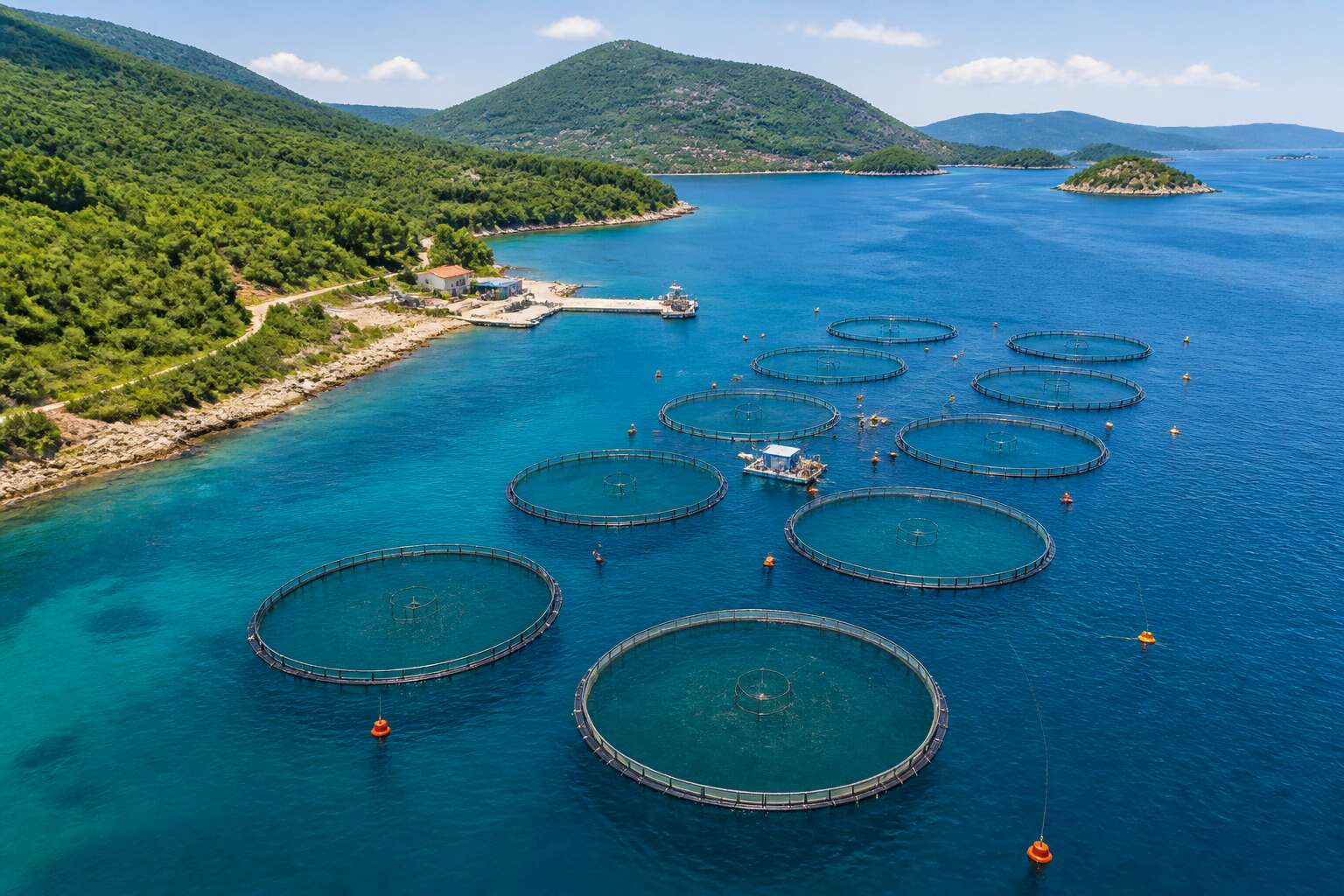
Cage and net pen farming uses floating enclosures in natural water bodies. One net pen can hold tens of thousands of fish. Unlike RAS, these systems rely on the environment for waste dispersal and oxygen. Energy demand drops, but currents, predators, and water quality shifts pose threats. Storms can damage nets, and escaped fish create ecological uncertainty!
In South Africa, cage farming of dusky kob or yellowtail suits sheltered bays. Open water removes pumping and filtration needs, but also removes control. Farmers track dissolved oxygen. Algal blooms or temperature inversions can create a dead zone overnight. Operators consult aquaculture wiki on nets and disease.
- Fixed wooden pens for inshore, low-current sites
- Floating steel cages for deeper waters
- Submersible systems that avoid surface storms
Each arrangement trades structural cost against site exposure. I find aquaculture wiki invaluable for details on these tradeoffs.
Integrated Multi-Trophic Aquaculture (IMTA)
Integrated Multi-Trophic Aquaculture, or IMTA, turns waste into a commodity. Fed species such as finfish share a site with extractive species. Seaweed absorbs dissolved nutrients, while shellfish filter organic particles. This arrangement reduces environmental load without any mechanical filtration.
In South Africa, IMTA trials often pair abalone with kelp and sea urchins. The abalone generate waste that kelp consumes, and farmers harvest both products. The true challenge lies in balancing stocking densities and seasonal growth patterns, which shifts constantly.
I find aquaculture wiki essential for understanding species compatibility. It gives regional examples and water quality data, sparing me from expensive guesswork. The system demands patience, but the environmental returns justify every calculation.
Hatchery and Nursery Operations
Around 90% of farmed marine species begin in hatcheries, where temperature, salinity, and photoperiod are manipulated to trigger spawning. This controlled environment determines whether a farm thrives or fails. The hatchery phase demands attention to live feeds, particularly rotifers and Artemia, which deliver nutrients to larval fish.
Nursery operations bridge the larval and grow-out phases. Juveniles are weaned onto formulated diets and sorted by size to reduce cannibalism. Many South African farms use flow-through systems here, offering excellent water exchange at lower cost than closed recirculation.
Key hatchery and nursery considerations, documented on the aquaculture wiki, include:
- Maintaining strict biosecurity protocols
- Monitoring dissolved oxygen and ammonia levels multiple times daily
- Adapting stocking densities as biomass increases
This phase is where the aquaculture wiki becomes an invaluable reference, since it catalogs species-specific larval rearing data and survival benchmarks. I find understanding these operations helps producers predict juvenile quality before grow-out begins.
Major Aquaculture Species and Production
Finfish Species: Salmon, Tilapia, and Catfish
Salmon, tilapia, and catfish anchor global finfish production, yet each demands a different farming approach. Salmon flourish in cold marine cages, while tilapia adapt to crowded freshwater ponds. Catfish thrive in earthen ponds across the American South, converting feed with remarkable efficiency.
Their biological differences shape everything from feed costs to disease control. Salmon need oxygen-rich water and precise management; tilapia tolerate lower water quality; catfish require consistent aeration but shrug off temperature swings.
Production factors that define these species:
- Salmon: high-value, protein-dense diets.
- Tilapia: plant-based feeds and warm temperatures.
- Catfish: robust growth in simple pond systems.
Exploring an aquaculture wiki, one learns that these three fish represent distinct evolutionary paths, and matching species to environment remains the core challenge!
Shellfish and Mollusk Farming
Bivalves make up roughly 20% of farmed seafood by volume, yet they eat nothing at all. Oysters, mussels, and clams filter their food from the water column, which means no fishmeal, no manufactured pellets, and no antibiotics. That simple biology makes them a different beast from salmon or tilapia. Abalone, however, require running seawater and a steady kelp supply, making them a higher maintenance crop. The main commercial species in mollusk farming include:
- Pacific oysters and Mediterranean mussels
- Clams and cockles in intertidal sand
- Scallops and abalone in temperate zones
Each uses distinct methods, from suspended ropes to bottom culture. In South Africa, mussel farming along the cold Benguela current thrives without any artificial feed. That efficiency is precisely why this sector stands out in any aquaculture wiki. Unlike finfish, mollusks produce no nitrogen waste, and they even remove excess nutrients from surrounding water. The real challenges are spat supply and predation, not feeding. So while salmon get the headlines, shellfish quietly anchor a more sustainable form of protein production.
Seaweed and Algae Cultivation
Seaweed accounts for more than half of global aquaculture production by volume, and its cultivation follows an unusual logic. No feed is added. No freshwater is used. The plants grow directly from sunlight and dissolved nutrients in the sea.
In South Africa, the cold Benguela current that sustains wild mussel beds also supports commercial kelp harvesting. Permitted boats work the West Coast kelp forests while cultivated Gracilaria grows in ponds and lines beside abalone farms. The harvest yields agar and alginates for laboratories, food stabilisers, and cosmetics.
- Giant kelp (Macrocystis pyrifera) harvested off the Cape coast
- Gracilaria cultivated in lagoon systems
- Nori and wakame farmed on suspended nets in Asia
Each species solves a different problem. Some supply hydrocolloids. Some enter human food directly. An aquaculture wiki entry on algae requires a simple admission: this is the sector’s most productive crop by weight, and the least reliant on human intervention.
Crustacean Aquaculture: Shrimp and Prawns
Shrimp and prawn farming is the high stakes division of aquaculture. In South Africa, the warm Mozambique current supports prawn production in KwaZulu-Natal ponds. Farmed shrimp output now exceeds 6 million tonnes globally, yet the sector depends on careful disease management. An aquaculture wiki entry on crustaceans would highlight the paradox: these operations yield luxury products while addressing protein demand.
Most systems use aerated ponds and formulated feed. Some have adopted biofloc technology to control water quality. Key species include:
- Pacific whiteleg shrimp (Litopenaeus vannamei)
- Giant tiger prawn (Penaeus monodon)
- Eastern river prawn (Macrobrachium nipponense)
Each species demands different temperature tolerances and stocking densities. Meanwhile, the industry faces scrutiny over mangrove destruction, prompting shifts toward inland, recirculating systems.
Ornamental Fish and Emerging Species
Ornamental fish production turns aquaculture toward beauty. South Africa imports over 20 million ornamental fish each year, yet local hatcheries supply only a fraction. Freshwater angelfish, guppies, and goldfish dominate, while marine ornamentals demand specialised systems.
Emerging food species offer a different kind of promise. Barramundi tolerate fluctuating salinities, making them ideal for coastal ponds. Pangasius catfish grow rapidly at high densities. The humble tilapia remains the workhorse, but alternatives like cobia and pompano are gaining attention.
Useful criteria for evaluating candidates:
- Growth rate under culture conditions
- Disease resistance
- Market price stability
- Feed conversion efficiency
An aquaculture wiki account of these species would note that ornamental and emerging food production share a common constraint. Both require dependable juvenile supply. From my own visits to farms in the Western Cape, I have seen how this bottleneck shapes investment decisions. South African producers are evaluating these species with increasing seriousness, and a thorough aquaculture wiki should track their progress.
Sustainability, Challenges, and Environmental Impact
Environmental Impacts and Mitigation Strategies
Aquaculture supplies over half of the world’s seafood, yet its environmental record remains incomplete. Sustainability depends on site selection, feed sourcing, and waste management. Coastal farms can disrupt mangroves, while inland systems may strain water tables. These challenges demand attention, not applause.
Mitigation strategies vary by operation. Polyculture reduces nutrient loading by pairing species with complementary habits. Advances in feed formulation cut reliance on wild-caught fishmeal. The industry’s stubborn pests, from sea lice to algal blooms, require vigilance.
Consider what works!
- Biofiltration to recycle water.
- Fallowing pens to allow benthic recovery.
- Certification schemes that reward progress.
Of course, an aquaculture wiki would be remiss to ignore trade-offs. Every intervention has its own cost. The shift toward circular systems provides a route, provided operators embrace accountability. Personally, I find shellfish farmers, who filter water while earning a living, a rare and reassuring sight.
Disease Management and Biosecurity
Disease outbreaks erase more than a third of farmed seafood value every year, a loss that outweighs any market fluctuation. For an aquaculture wiki, this fact shapes every discussion on sustainability and environmental impact.
Biosecurity involves multiple layers, from closed water loops to strict stock tracing and regular health audits. The environmental cost of neglected disease control often appears later, as chemical residues or untreated effluent.
- Quarantine new arrivals for one full cycle.
- Test water parameters twice daily.
- Remove mortalities immediately.
Challenges intensify as farms scale up. Higher densities invite parasites, and treatment chemicals can drift into nearby waters. A clear disease plan, written and enforced, becomes essential to long term production.
Feed Sustainability and Alternative Ingredients
Seventy percent of farmed seafood’s carbon footprint comes from feed. That fact anchors every serious aquaculture wiki discussion on sustainability. Traditional fishmeal and soybean meal deplete wild fisheries and expand agricultural frontiers, so alternative ingredients are not optional.
Challenges multiply when costs collide with consistency. Insect protein, microalgae oils, and single cell bacteria perform well in trials, yet commercial scale alters everything. Supply chains remain thin, and regulatory approval moves at a glacial pace.
Environmental impact improves when feed uses less land and fewer wild fish. Nutrient discharge also drops with more digestible formulations. Consider these emerging options:
- Black soldier fly larvae meal
- Fermented yeast protein
- Omega 3 from genetically modified canola
Each alternative carries tradeoffs. Yield, palatability, and price shape adoption. The aquaculture wiki must record both promise and failure, because feed determines whether farming feeds the world without starving it.
Regulatory Frameworks and Certification Standards
Regulatory frameworks in aquaculture remain fragmented, with national laws often lagging behind international commitments. A dependable aquaculture wiki records these inconsistencies honestly. Certification schemes attempt to standardize performance, yet their criteria vary widely by species and region. Producers must navigate overlapping audits, rising costs, and shifting market expectations. Sustainability depends on measurable outcomes, not aspirational statements.
Environmental impact assessments now require cumulative data on nutrient loading, habitat disturbance, and climate change effects. Those assessments drive permitting decisions and shape future investment. Here are the key certification programs:
- Aquaculture Stewardship Council (ASC) covers biodiversity and water quality.
- Best Aquaculture Practices (BAP) addresses social and environmental metrics.
- GlobalG.A.P. focuses on food safety and traceability.
Each framework affects market access differently. That variation complicates export strategies, particularly for South African producers.
Social and Community Considerations
Aquaculture now supplies over half the world’s seafood, but its social license to operate remains fragile. A dependable aquaculture wiki would document the tension between production targets and ecosystem boundaries. Nutrient discharge, escaped stock, and wild seed collection still vex coastal communities. Social and community considerations often receive less attention than biological metrics. Local employment and food security rank high, yet consultation processes remain inconsistent.
Challenges multiply when environmental impact assessments reveal cumulative loads on water systems. Communities near farms report conflicting evidence about water quality and shared resource use. Effective governance demands transparent datasets, not promotional narratives. Farm owners must engage neighbors early, share monitoring results, and acknowledge uncertainty! That engagement builds trust. However, without enforceable standards, small communities bear disproportionate risk.
Climate Change Resilience in Aquaculture
Climate change now reshapes every farming decision. Warmer waters stress fish metabolism, while unpredictable rainfall alters salinity in coastal ponds. An aquaculture wiki must capture these shifting baselines, otherwise producers chase outdated targets.
Sustainability here means building redundancy into operations. Some South African farms are trialing drought resistant species and deeper water intake systems. Others adjust stocking densities based on seasonal forecasts.
The challenges are immediate:
– Oxygen depletion events arrive with less warning.
– Disease outbreaks follow temperature spikes.
– Insurance premiums rise as extreme weather becomes common.
Environmental impact assessments now include carbon footprints and heat retention. This data informs resilience planning. The sector’s adaptive capacity will determine whether aquaculture remains viable through coming decades.
Technology and Innovation in Modern Aquaculture
Automation, AI, and Data Analytics
Farming fish across thousands of hectares used to rely on guesswork and weather lore. That era is closing. Modern operations now use sensors and machine learning to manage the underwater environment with a precision that was unthinkable a decade ago. This shift is a central narrative for anyone researching an aquaculture wiki.
Feeding, in particular, has been transformed. Automated cameras and sonar systems observe fish appetite in real time, telling operators exactly when to stop scattering pellets. This prevents waste and protects water quality. The data collected also powers predictive models, where algorithms forecast growth rates and potential disease outbreaks before they become visible to the naked eye, a huge advantage for managers.
– Water temperature and oxygen levels monitored continuously
– Feed intake verified against acoustic and optical signals
– Biomass size estimated using 3D imaging and AI
For South African farmers, often operating in remote coastal regions, this connectivity proves vital. The analytical tools can be accessed via satellite or mobile networks, making high level biosecurity and rapid response decision making possible without constant physical presence. The outcomes are better survival rates, lower production costs, and a more consistent supply for markets. This is where the modern, data driven farm wins, making the older manual methods look very costly by comparison. Data, not just water, is now the primary resource in the aquaculture wiki of the future.
Genetic Improvement and Selective Breeding
The longer a species is cultivated, the more its genetics diverge from wild stock. This is not accidental. Selective breeding now drives measurable improvements in feed conversion, disease resistance, and fillet quality. For South African farmers, this matters because local conditions demand robust animals. A tilapia strain selected for heat tolerance can survive a KwaZulu-Natal summer with minimal mortality.
This process is turning biology into a ledger. Each generation is assessed for specific traits, and only the top performers are retained. The tools have advanced beyond simple size grading.
– Marker-assisted selection identifies genes linked to disease resistance
– Genomic sequencing reduces the generation interval for broodstock
– Crispr and other gene editing tools are being evaluated for regulatory approval
The outcome is a more predictable harvest. Every farmer knows that an unpredictable environment is their primary risk. Genetic improvement reduces that uncertainty by producing animals with a narrower performance range. A salmon that reaches market weight on schedule, or a prawn that resists a local pathogen, changes the financial calculus of an entire operation.
This is the quiet revolution within the aquaculture wiki. It is less visible than automation, but it is foundational. The fish we farm today are not the same animals our fathers farmed. They are the result of generations of careful selection, and they will keep changing. Each new broodstock cohort brings a small, measurable advantage, and those advantages compound over time. For the farmer, this is security. For the industry, it is the path to sustainable growth.
IoT Sensors and Smart Farming Solutions
One dissolved oxygen probe sends 2,880 readings a day. For a South African farmer watching summer temperatures climb, that stream is the difference between a healthy dam and a silent die-off.
IoT sensors have moved from experimental to essential. They measure pH, temperature, ammonia, and turbidity in real time. A solar powered gateway links a remote pond site to a farmer’s phone, no matter how far the farm is from town. That changes everything!
Consider what a farm can do with this data:
- Automated aeration systems wake up only when oxygen drops below a threshold
- Feeding platforms adjust portions based on water temperature
- Leak detection in RAS units triggers alerts before water loss becomes critical
This is the quiet work that fills aquaculture wiki pages. It does not replace instinct, but it adds certainty. The farmer walks the dams at dawn, but the sensor has told them where to look.
Emerging Biotechnology and Vaccine Development
Viral diseases kill up to a third of juvenile tilapia in South African farms each year. Emerging biotechnology is changing how producers prevent these losses. Oral vaccines now target the most common pathogens, cutting mortality in trials by half. DNA vaccines for nodavirus are next, training fish immune systems without relying on antibiotics. This research leaves the laboratory quickly, reaching commercial hatcheries within seasons.
- Recombinant protein vaccines for bacterial co-infections.
- Gene silencing tools that block viral replication at the cellular level.
- Probiotic feeds that strengthen intestinal immunity.
Local conditions determine each method’s effectiveness. Farmers monitor water temperature and stress factors before choosing a vaccine protocol. The compiled results, failures included, form a practical database for aquaculture wiki. Farmers consult aquaculture wiki to compare regional outcomes. Early adopters reduce chemical use and stabilise harvests. Biotechnology supplies precision, not certainty. It shifts farm management from reactive treatment to preventive biology.

0 Comments