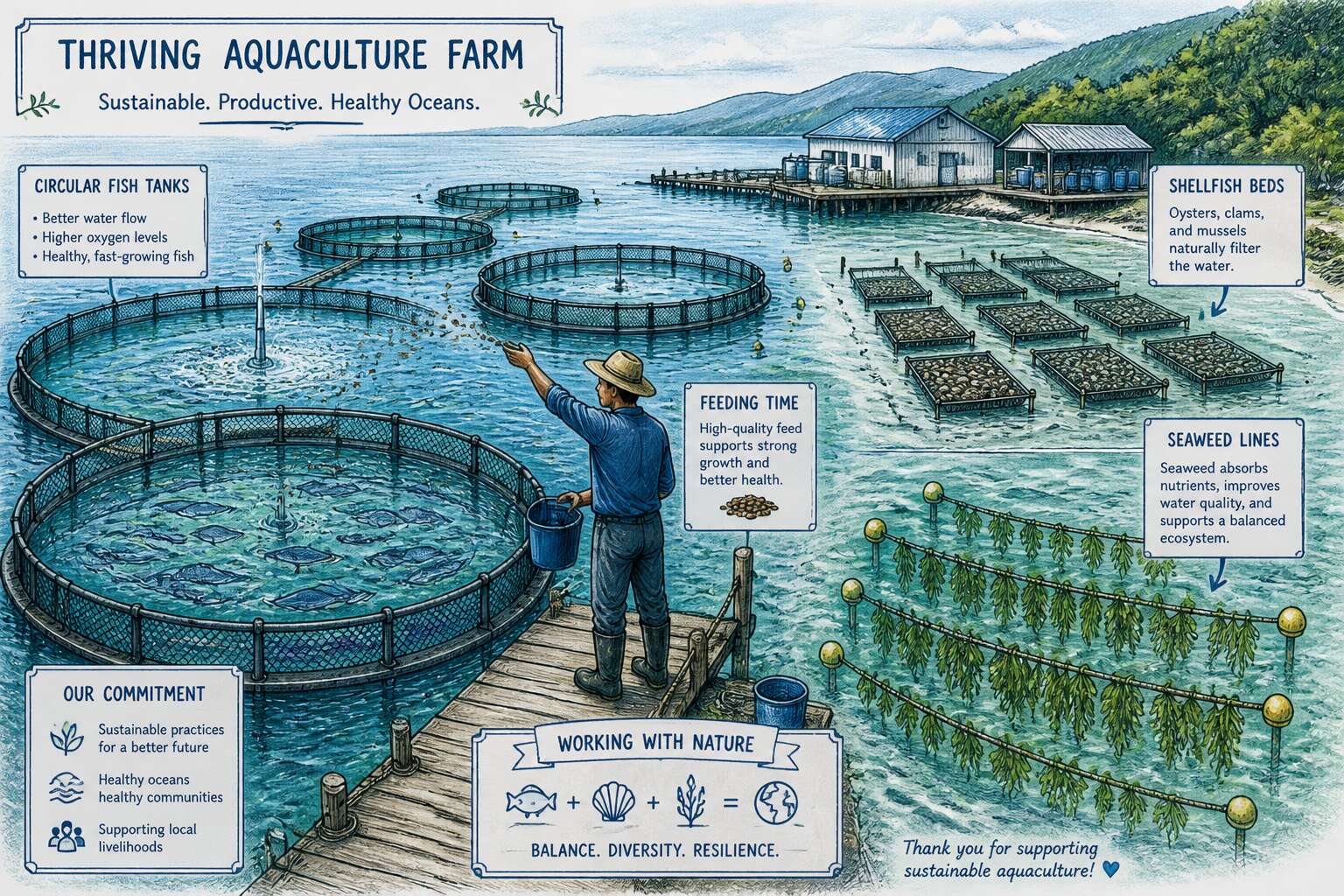
The Importance of Visual Representation in Aquatic Farming
Aquaculture drawing underpins every successful farm design. In South Africa, where marine finfish farming is expanding rapidly, a single precise sketch can prevent costly infrastructure errors. Farmers, engineers, and regulators need the same visual reference to align their work.
A well-structured aquaculture drawing exposes critical details before construction begins:
- Water flow dynamics across tanks
- Species specific stocking densities
- Placement of aeration systems
- Emergency access routes for harvest crews
These drawings convert feasibility reports into tangible layouts for the site. They reveal weak points in pipe networks and highlight shaded areas where bacterial growth may occur. Spreadsheets cannot offer that spatial clarity, and verbal descriptions lose accuracy over distance.
Selecting the Right Medium and Digital Resources
A single wrong medium can ruin a week of careful observation. Choosing the right material for aquaculture drawing takes thought. Graphite suits quick field studies of fish behaviour, yet it smudges horribly in Durban’s humidity. I have seen novices waste hours on paper that refused to hold a clean line.
Digital resources offer a practical alternative. A simple tablet and stylus let you erase without smearing, and software like Sketchbook handles layered water tones effortlessly. For traditionalists, a fine waterproof pen works well!
- Graphite for initial poses
- Ink for permanent outlines
- Digital brushes for texture
The key lies in matching your tool to the subject’s pace. A slow-moving kelp bed needs patience, while a darting sardine demands quick strokes. Respect that, and your aquaculture drawing gains clarity and presence.
Core Techniques for Drawing Aquatic Species and Infrastructure
When I first tried aquaculture drawing, I missed the water’s pulse. On a South African farm, every species and structure demands respect for how light bends and solids settle. The true craft lies in observing fish’s lateral lines and the subtle sag of cage nets.
Focus on contour before shading. For aquatic species, capture the gill cover’s rhythm and the fin’s translucent edge. For infrastructure, draw the tension lines of mooring ropes and the corrosion patterns on steel frames. Use short strokes to suggest submerged movement.
- Sketch the waterline first to anchor the composition
- Study the angle of sunlight through the surface
- Layer graphite for depth, then lift highlights with an eraser
Infrastructure demands accuracy, not flourish. Pumps, aerators, and sorting tables have rigid geometry, yet their placement in a pond alters the flow. I always map the current direction before committing to lines. That keeps the aquaculture drawing honest and alive.
Ensuring Scientific Accuracy and Effective Communication
In South Africa’s growing aquaculture sector, the precision of an aquaculture drawing can determine whether a system thrives or fails. Engineers and farmers rely on these visuals to align water flow, species placement, and infrastructure. A single misrepresented dimension can lead to costly errors. Scientific accuracy demands thorough cross-checking with biological and environmental data. Effective communication, however, requires more than technical perfection. It asks the artist to translate complex data into a visual language that stakeholders easily grasp.
For any aquaculture drawing, certain elements deserve special attention:
- Scale markers that reflect true field conditions
- Water flow directions verified by site measurements
- Species dimensions proportional to real growth stages
These are not optional details. They are essential to responsible design. Clear labels and consistent colour coding help viewers interpret the image quickly. Without human perspective, even accurate drawings lose their utility. A skilled hand balances data with insight. As one local facility manager noted, a drawing should be a preliminary answer, not a decorative afterthought.
Practical Applications and Career Opportunities for Illustrators
In South Africa’s aquaculture boom, a precise drawing beats a fuzzy snapshot every time. That’s where illustrators step in, turning biological data into visual clarity. Practical applications range from species identification guides to hatchery layout diagrams. You might create infographics for research papers or storyboards for farmer training workshops. The work demands patience plus a steady hand.
Career opportunities are expanding for those with aquaculture drawing skills. Consider these avenues:
- Technical illustration for aquaculture journals
- Educational content for extension services
- Visual aids for funding proposals
I’ve seen illustrators pivot into marine biology communication, and the results are rewarding. Some even freelance for overseas clients handling sea farm layouts. The niche is narrow, but the demand is real. A good illustration saves time, money, and confusion. That’s a skill worth sharpening.




0 Comments