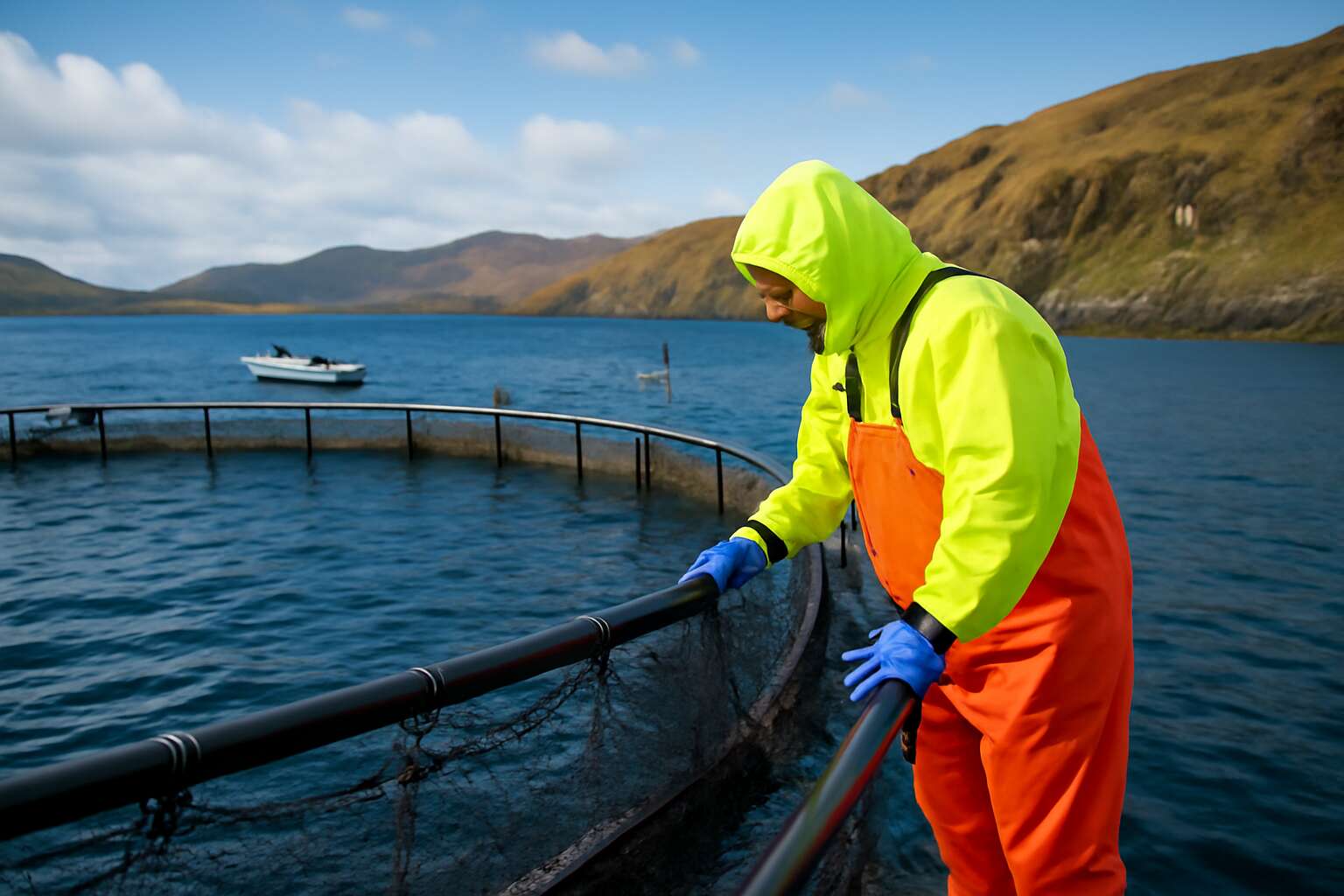
Overview of aquaculture jobs in Scotland
Key sectors driving Scottish aquaculture employment
Coastlines feeding towns and shaping futures: in 2024, the Scottish aquaculture sector supported around 4,000 full-time jobs along its shores. From hatchery technicians to site managers, the work blends patience with modern science—and keeps rural communities afloat. Explore aquaculture jobs scotland and imagine a career where the sea teaches you daily lessons in responsibility and resilience.
Several sectors power this growth, including:
- Finfish farming
- Shellfish and seaweed cultivation
- Processing, packaging, and quality control
- Research, feed supply, and environmental monitoring
For South African readers imagining a coastal career, this breadth—from hands-on farming to data-driven research—offers a ladder into meaningful, steady work.
Beyond the gear and gauges, I’ve met families who wake before dawn to tend nets, count mussels, and welcome visitors to the shore.
Careers stretch from biology and engineering to logistics, marketing, and policy—roles that keep the lights on and the fish well cared for.
Common job roles across Scottish farms and hatcheries
Across Scotland’s coast, aquaculture jobs scotland shape daily life on the shore. The work blends hands-on care with data and design, from hatchery floors to site decks. I’ve met crews chipping away at nets at dawn, while scientists log water quality and feed efficiency in the same breath. For readers in South Africa, Scotland’s model offers a ladder into meaningful, steady work.
Common roles across Scottish farms and hatcheries include:
- Hatchery technician
- Farm supervisor or site manager
- Processing operator
- Quality control and packaging technician
- Environmental monitor or sustainability officer
These positions span biology, engineering, logistics, and policy.
Industry size, regional distribution and demand trends
Scotland’s coast isn’t just a postcard; it’s a bustling jobs corridor. The sector supports tens of thousands of coastal livelihoods, tying hatcheries, farms, and on-site processing into daily life. aquaculture jobs scotland spread from high-tech labs to deck-side duties, proving this isn’t a relic of fishing lore. It’s a serious market where weather charts meet workflow charts!
Key regional hubs include:
- Shetland and Orkney: hatcheries and onshore facilities
- Argyll and Bute: processing, packaging and live fish handling
- Moray Firth and Cromarty area: farm support and logistics
- Highlands, Inverness-shire and Western Isles: R&D and sustainability roles
Demand trends point to smarter farming—more data, more automation, and tighter environmental checks. Regions from Shetland to the Highlands are expanding, with onshore processing and monitoring teams keeping the tide of production steady.
Impact of government policy and sustainability goals on jobs
Across Scotland, more than 40,000 coastal livelihoods hinge on sustainable aquaculture—a living economy that blends craft with data-driven care. aquaculture jobs scotland aren’t relics of the deep; they’re modern timbers of the shore, where hatchery technicians, onshore processors, and researchers stitch production to policy. For South African readers curious about global trends, Scotland’s approach offers a vivid template for resilient coastal work.
Three policy currents shape these roles:
- Licensing and environmental oversight that ensure safe, traceable seafood
- Investment in onshore processing and workforce training for higher-value jobs
- Smarter farming with data and sustainability targets driving new skills
Sustainability goals create resilience—emerging career paths in R&D, automation, and sustainability reporting, while on-the-ground teams adapt to real-time monitoring and compliance. The North Sea and Western Isles are becoming laboratories of responsible farming, where policy and people move in lockstep!
Career paths and roles in Scottish aquaculture
Entry level roles, apprenticeships and training pathways
In Scotland’s jagged coastlines, opportunity rises with the tide. “The first day on a Scottish farm feels like opening a door to a horizon,” a veteran hatchery supervisor told me, and the image sticks—care, craft, and possibility coasting together.
Career paths here unfold through hands-on roles that grow with time. Entry-level work—farm technician or hatchery assistant—grounds you in routines, while apprenticeships fuse on-site duties with training. Pathways through accredited courses unlock supervisory roles and leadership in hatcheries and farms. In aquaculture jobs scotland, opportunity lifts beginners toward seasoned responsibility.
- Entry-level roles: farm technician, hatchery assistant
- Apprenticeships and training pathways: SCQF-aligned programs combining practical work with theory
As readers in South Africa eye global horizons, aquaculture jobs scotland offer a luminous crossroads of skill and belonging.
Technical and supervisory career tracks
Across Scotland’s jagged coastlines, opportunity rises with the tide, and the horizon of work glints like a fresh hatch. In aquaculture jobs scotland, the ladder begins with on-site craft—watching nets, monitoring larvae, maintaining routine—while the sea itself teaches patience, precision, and pride.
Technical tracks privilege those who inspect water quality, calibrate feeds, and safeguard biosecurity, then open doors to supervision—coordinating crews, schedules, and safety across hatcheries and farms. The ascent is incremental and dignified, a dance as careful as tide charts and as lucid as blue-water clarity.
From first-hand practice to leadership, the route offers measurable competence and human resonance.
- Develop technical mastery on-site through rotating assignments in water quality, feed systems, and biosecurity.
- Move into operations supervision, coordinating teams, schedules, and safety with a view to compliance and efficiency.
- Advance toward hatchery or farm leadership, shaping strategy and mentoring the next generation of aquaculture professionals.
For readers in South Africa, aquaculture jobs scotland offer a stage where science and stewardship meet.
Specialist and research oriented roles within aquaculture
Across Scotland’s jagged coast, every decision on the farm negotiates with weather and data. “The sea is the best tutor,” a veteran biologist once said, and in these aquaculture jobs scotland the sea’s rhythm trains the craftsman’s eye.
Specialist paths unfold in hands-on surveys and lab-driven inquiry, where professionals translate water snapshots, feed trials, and disease surveillance into resilient stock and sustainable practices.
- Genetic selection and broodstock management
- Nutritional formulation and feed efficiency studies
- Health monitoring, disease risk assessment, and biosecurity planning
- Environmental data analytics and marine ecosystem impact
For readers in South Africa, aquaculture jobs scotland offer a stage where science and stewardship meet. The pathway blends curiosity with discipline, inviting you to contribute to hatcheries, research institutes, and cross-border collaborations that shape the next generation of sea-farmed protein.
Operations management and farm leadership opportunities
“The sea is the best tutor,” a veteran biologist once said, and in Scottish farms leadership is forged at the edge where weather, water, and workforce converge.
In operations management, you steer the daily rhythm—planning, logistics, compliance, and team cohesion—turning data into dependable harvests.
- Farm Operations Manager
- Production Scheduling and Harvest Lead
- Compliance, Health and Safety Officer
- Training and Skill Development Coordinator
For readers in South Africa seeking cross-border opportunity, aquaculture jobs scotland offer a stage where stewardship and science meet, inviting you to balance craft with care and lead by example in coastal communities.
In Scotland, aquaculture jobs scotland connect coastal craft with global science, inviting disciplined, curious leaders to shape the sector from hatchery to harvest.
Cross disciplinary roles in health, nutrition and biosafety
“The sea is the best tutor,” a veteran biologist once said. In Scottish aquaculture, career paths braid health, nutrition, and biosafety into a resilient seam of practice. For professionals in South Africa eyeing cross-border opportunities, aquaculture jobs scotland offers a stage where science weds stewardship—from hatchery benches to coastal moorings—calling disciplined minds to balance care with craft.
- Health and Welfare Officer
- Nutrition Scientist and Feed Formulation Specialist
- Biosafety and Compliance Manager
- Environmental Health Technician
Across Scotland’s coastal farms, these cross-disciplinary roles weave daily practice with long-term stewardship, shaping stock health, feed efficiency, and safety culture. For those in South Africa exploring aquaculture jobs scotland, the blend of lab-like rigor and fieldcraft promises a horizon where talent meets responsibility.
Finding aquaculture jobs in Scotland
Where to search for vacancies and openings
Scotland’s coastline isn’t just scenery; it’s a living job board. aquaculture jobs scotland have popped up across hatcheries, farms, and support roles, turning the blue economy into a surprisingly solid career move.
Finding these opportunities is about knowing where to look. The following sources surface openings without chasing mirages:
- Company career pages of leading Scottish farms and hatcheries
- Dedicated aquaculture or agri-food job boards and UK industry portals
- LinkedIn, industry newsletters, and regional business networks
- University and college careers services offering placements or apprenticeships
For readers in South Africa eyeing cross-border opportunities, Scotland’s training programs and employer networks help bridge the distance—robust apprenticeships, practical placements, and industry partnerships keep the profile high rather than hidden.
Ocean-faring careers with a local twist await those who search the right channels. aquaculture jobs scotland has more to offer than a sea breeze and a steady paycheck.
Industry networks, associations and events in Scotland
The coast isn’t just scenery; it’s a living ledger of opportunity. Industry voices say Scotland’s blue economy is growing, turning sea breeze into careers. A mentor once said, ‘the sea keeps a steady tempo for those who listen.’ For readers in South Africa eyeing cross-border work, opportunities offer a bridge to hatcheries, farms, and support roles that keep the tide reliable and the career path compelling.
- Scottish Salmon Producers Organisation (SSPO)
- Scottish Aquaculture Innovation Centre (SAIC)
- Local university–industry networks
Industry networks, associations and events in Scotland form the connective tissue between openings and employers. Through these channels, researchers and managers meet in rooms alive with shared purpose. Newsletters, LinkedIn groups, and regional forums keep conversations moving, helping hopeful profiles connect with mentors who understand cages, feeds and biosafety. These networks keep aquaculture jobs scotland visible to professionals across borders.
Recruitment agencies and company career pages
The tide of opportunity in Scotland’s aquaculture sector continues to rise, with a growing emphasis on direct routes to work. For hopefuls chasing aquaculture jobs scotland, recruitment agencies that specialise in seafood and farming, along with company career pages, are the most reliable ports of call. For readers in South Africa eyeing cross-border work, these channels offer a bridge to hatcheries, farms, and support services. A recent HR note put it simply: “Networks accelerate careers like currents accelerate ships.”
Look for agencies and firms that publish clear pathways—training credits, internships, and progression milestones. The following touchpoints often lead straight to openings:
- Specialist aquaculture recruitment agencies
- Company career pages of salmon and hatchery operators
- Industry-specific job boards and LinkedIn postings
Partnering with recruiters who understand biosafety, feeding regimes, and farm logistics can shorten the voyage to aquaculture jobs scotland.
Using job boards, social media and direct applications
Opportunity rises with the tide in Scotland’s seafood heartlands, and South African readers know these currents well, where every vacancy ripples outward through networks and shoreside farms. The right connection can turn a season into a career, and it still holds true for aquaculture jobs scotland.
Job boards, social media and direct applications are the three oars you’ll use to row toward openings. You’ll find listings on sector boards and LinkedIn postings, and many firms invite direct applicants through their career pages. Here’s how to navigate these channels:
- Job boards dedicated to aquaculture and rural employment
- LinkedIn and other professional networks for sector postings
- Direct applications to company careers pages and hatchery portals
With persistence, these channels will reveal opportunities that align with training and biosafety standards.
Hiring seasons and notice periods in Scottish aquaculture
Across Scotland’s coastlines, opportunity surfaces with the tides. The rhythm of aquaculture jobs scotland reveals itself most clearly in spring and autumn, when stocking cycles and farm maintenance demand the most hands. For South African professionals dreaming of Scotland’s sea farms, these seasons map the hiring heartbeat and the notice periods that accompany it.
- Spring surge (March–May) as new stock arrives and crews grow with the ponds and pens.
- Autumn prep (August–October) when harvest, repairs and planning swell the workforce.
- Short-notice postings exist for seasonal needs, reflecting the cycle’s flexible tempo.
Beyond the dates, the industry’s current carries patience and persistence, turning a shoreline vacancy into a voyage!
Skills, qualifications and training for Scottish aquaculture roles
Essential practical skills and on the job safety training
Across Scotland’s coasts, skills in aquaculture are not merely learned; they’re earned, stitch by stitch. For South African professionals chasing aquaculture jobs scotland, the threshold is the steady hand and a calm eye—the ability to read water, respect the tides, and translate silence into safe practice!
Essential practical skills and on-the-job safety training mark the passage from trainee to technician. Here are the core competencies we rely on to keep operations afloat:
- Water quality testing and interpretation
- Careful routine maintenance and minor repairs of nets, cages and pumps
- Feed handling, inventory and dosing system operation
- Stock welfare observation and humane handling
- Emergency response, PPE discipline and first aid basics
So training paths mirror the craft: hands-on shadowing, short biosafety courses, and on-site inductions that embed habit over hazard. With every shift, procedures become second nature, reducing risk while elevating precision in harvests and husbandry.
Formal qualifications, certificates and licenses
A sharp eye and the right certificate open more doors than years on the quay in Scotland’s bustling aquaculture scene. For South African professionals chasing aquaculture jobs scotland, formal qualifications, certificates and licenses are the anchors that keep careers steady, not ships wandering off course.
- SCQF-aligned qualifications (levels 4–6) in biology, water quality or farm management
- HSE-approved safety training and First Aid at Work
- Net, cage and equipment maintenance certifications
- On-site inductions and biosecurity and welfare awareness
Beyond entry roles, Scottish farms value structured training paths—apprenticeships, short biosafety courses, and vocation certificates—that convert potential into precision beneath the grids of netting and feed lines.
With every credential earned, a career in aquaculture jobs scotland becomes less about luck and more about a crafted, buoyant future— a truth I’ve watched on the pier!
Soft skills, teamwork and communication in farm environments
On Scottish farms, clear communication is the quiet engine that keeps nets from tangling and crews aligned. As a veteran supervisor puts it, ‘communication is the gear that keeps buoyant days turning.’ The result is steadier shifts, safer work, and a culture that values practical, shared sense over lone heroics.
Soft skills such as active listening, concise briefing, and calm decision-making are measured as closely as gear handling. Teams thrive when language is inclusive, feedback is timely, and roles are understood. For South African professionals pursuing aquaculture jobs scotland, cooperation across generations and nationalities turns routine tasks into reliable routines.
- Clear communication under pressure
- Active listening and feedback
- Conflict resolution
- Cross-cultural collaboration
Structured training—on-site inductions, short biosafety modules, and leadership-focused mentorship—bridges practical know-how with people skills. Employers value collaboration as much as craft, and pathways from inductions to supervisory duties are common on Scottish farms.
Continuing education, upskilling and professional development
On the wind-swept shores of Scotland, a single certification can change a season. ‘Skills are the ballast that keeps a crew steady,’ a veteran supervisor often says. For aspiring professionals chasing aquaculture jobs scotland, the right mix of training and curiosity is your compass!
- On-site inductions and biosafety modules
- Certificates aligned with the Scottish Credit and Qualifications Framework (SCQF)
- Leadership-focused mentorship and supervisory training
Continuing education, upskilling and professional development keep pace with evolving standards. Short courses in water quality, fish health, nutrition, data literacy, and environmental compliance sharpen judgment and broaden career horizons. I’ve seen how a curious mind opens doors, and in aquaculture jobs scotland, employers expect a mind that learns as tirelessly as the tide.
Salary, benefits and career progression in Scotland’s aquaculture sector
Typical pay ranges by role and experience in Scotland
Salaries in Scotland’s aquaculture sector rise with responsibility. Entry-level technicians typically start around £18,000–£22,000, skilled technicians £22,000–£28,000, and supervisors £30,000–£40,000. Farm managers can exceed £50,000 depending on farm size and performance. For readers considering aquaculture jobs scotland, the ladder is transparent and skills-driven, reflecting a sector with steady demand and practical, hands-on rewards.
Benefits go beyond base pay and include pension schemes, health cover, and paid training. The following benefits are commonly available on Scottish farms:
- Pension contributions
- Overtime or shift allowances
- Funded training and apprenticeships
- Relocation or travel support
- Paid safety certifications
Career progression is practical and linear. Technicians move into farm leadership, hatchery roles, or biosafety support, backed by on-the-job training and industry networks. For readers in South Africa, the pathway mirrors familiar routes, and Scottish employers value transferable experience in aquaculture jobs scotland.
Benefits, shift patterns and on farm living considerations
Salary in Scotland’s aquaculture sector climbs with responsibility, from technicians to farm leaders. For aquaculture jobs scotland, the ascent is practical and merit‑driven, a transparent ladder for South Africa’s readers.
Shift patterns and on-farm living shape daily life. Typical rhythms include:
- Day shifts with early starts
- Rotating day/night schedules
- Weekend rotas and on-call coverage
- On-farm accommodation and travel considerations
Benefits go beyond pay, with pension contributions, health cover, and funded training. Relocation or travel support and paid safety certifications further smooth the transition to Scottish farms.
Career progression is practical and linear: technicians move into leadership, hatchery roles, or biosafety support, backed by on-the-job training and networks. The path resonates with South Africans, while Scotland’s system prizes transferable skill and steady demand.
Career progression pathways and leadership roles
Scotland’s aquaculture salaries rise with responsibility; in aquaculture jobs scotland, leadership steps carry an 18–22% uplift as technicians move into farm leadership roles.
Beyond base pay, pension contributions, health cover, funded training, relocation support, and paid safety certifications smooth the transition to Scottish farms.
Career progression is practical and linear: technicians move into hatchery or biosafety roles, then into farm leadership, supported by on-the-job training and networks.
- Technician to senior technician or team supervisor
- Hatchery supervisor or hatchery operations lead
- Biosafety, quality assurance or nutrition specialist
- Farm manager or operations director
For South Africans, the ladder is transparent and merit-driven.
Industry outlook, future demand and regional opportunities
Scotland’s aquaculture sector rewards responsibility with tangible numbers: leadership roles carry an 18–22% uplift over technicians, and salaries rise as you assume farm leadership duties. For South Africans eyeing aquaculture jobs scotland, the path is clear, merit‑driven and anchored in hands‑on training and strong professional networks.
- Pension contributions and health cover
- Funded training and safety certifications
- Relocation support and onboarding assistance
The ladder remains practical and linear: technicians move into hatchery or biosafety roles, then into farm leadership, with on‑the‑job training and networks guiding each step. As regional demand grows, Scotland’s aquaculture jobs offer a transparent, stepping‑stone career that rewards both skill and responsibility.
Economic factors affecting wages and demand in Scottish aquaculture
Across Scotland’s coastal farms, leadership roles carry a meaningful premium—up to 22% more than technicians, with higher earnings as you steer operations. For those exploring aquaculture jobs scotland, the path blends merit, hands-on training, and strong networks. For readers in South Africa, Scotland’s model shows a merit‑driven, hands‑on path.
Salary growth is transparent, reflecting experience, geographic demand, and the scale of responsibility.
- Clear pay bands linked to role and performance
- Structured training and mentoring to accelerate progression
- On-site leadership opportunities that unlock higher earnings




0 Comments