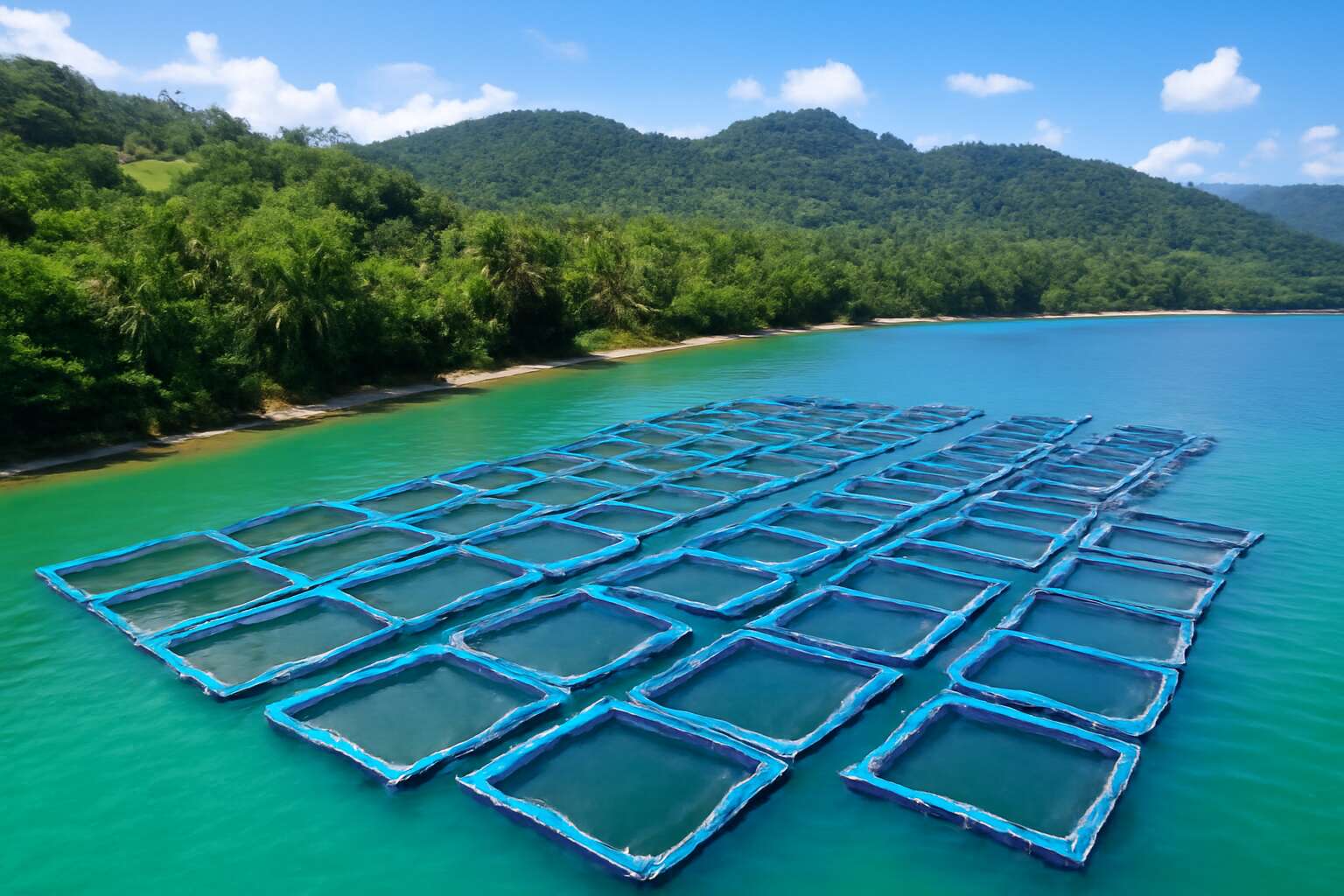
Penang aquaculture landscape and trends
What is the current state of fish farming in Penang and key statistics
Penang’s coastal pens hum with a quiet resilience locals know by heart. fish farm penang has grown from a handful of family plots into a broader network that sustains nearby markets. I’ve stood on weathered jetties at dawn, listening to nets whisper and boats creak, feeling the sea’s patient rhythm. The picture today favors seabass and tilapia, with smarter cage design reducing waste and boosting steady yields.
Key statistics hint at a stable, evolving sector. In recent years the region expanded its coastal pens and invested in water-quality monitoring and biosecurity. For South African readers, the Penang story mirrors the challenges of supply, climate, and responsible farming. A snapshot of trends:
- Enhanced feed efficiency and water management
- Digital monitoring and early-warning systems
- Species diversification toward higher-value fish and prawns
These currents are reshaping how we think about sustainable seafood.
Geography and water resources supporting Penang aquaculture
A sober statistic lands like a tide: Penang’s coastal pens have nudged 12% more feed efficiency in five years. This is more than numbers; it’s a living map of sea, sand, and salinity that defines the fish farm penang landscape.
Geography and water resources shape every choice on the coast—sheltered coves, river mouths, tidal flats, and the Straits of Malacca. Monsoon rhythms drive salinity swings and nutrient pulses, turning water quality into a daily variable you can measure, anticipate, and respond to.
Geography and water resources create a mosaic where coastal pens thrive. Here are the drivers:
- Sheltered bays and steady currents that stabilize pens
- Estuarine plumes that nourish early growth while demanding careful monitoring
- Monsoon-driven rainfall that reshapes salinity and operating windows
That subtle balance pairs with modern tech—digital monitoring, sensors, and biosecurity networks—and keeps Penang at the edge of sustainable seafood. For observers in South Africa, the fish farm penang model reveals how geography can steer responsible farming.
Major players and community farming in Penang
A 10% uplift in early-stage growth along Penang’s pens signals a sea-change—where practice and place fuse into a more resilient coast! The fish farm penang landscape now blends commercial scale with community stewardship, a dynamic that keeps waters clear and nets responsive.
Major players push toward efficiency and traceability, while coastal cooperatives knit resilience from coast to market. The approach couples disciplined farming with local knowledge, delivering seafood that travels from pen to plate with short supply chains and steady provenance.
- Commercial growers and hatcheries expanding scale
- Local co-ops and school-farm programs
- Tech providers offering sensors and biosecurity networks
Across Penang, trends favor digital monitoring, shared infrastructure, and inclusive waterfronts where families test small plots beside larger farms—an ecosystem that sustains both livelihoods and the sea, a page South African readers may find revealing.
Historical growth of Penang aquaculture and future outlook
Penang’s aquaculture landscape has evolved from a handful of family ponds to a diversified, coastwise system. The coast now hosts hatcheries, commercial pens, and community plots that share resources and knowledge, keeping waters clearer and markets nearer. Historical growth came from better feed, smarter stocking, and stronger local stewardship. The fish farm penang scene proves resilience where practice and place fuse to weather shifting tides!
Looking ahead, digital monitoring, shared infrastructure, and inclusive waterfronts are taking hold. A future built on better data, traceability, and cooperative models will keep production aligned with coastal health.
- Expanded hatchery networks strengthening seed supply
- Small-scale plots beside larger pens to diversify risk
- Sensors, biosecurity networks, and real-time water dashboards
South African readers will find the Penang model instructive for coastal farming that marries scale with stewardship.
Economic impact of Penang aquaculture on local communities
The fish farm penang story is a coastwise success tale, where aquaculture quietly supports thousands of livelihoods and a growing local economy. From family plots to sizable coastal pens, it blends tradition with modern efficiency, turning every harvest into earned respect along the docks.
The landscape has evolved beyond isolated ponds. Hatcheries expand seed supply; small plots sit beside larger pens to diversify risk; sensors, biosecurity networks, and real-time water dashboards keep health and hygiene top of mind.
- Creates steady local employment across farms, hatcheries, transport, and markets
- Stimulates ancillary services from feed to gear and maintenance
- Brings closer-to-market seafood to consumers, reducing waste and cost
South African readers will find the fish farm penang model instructive for coastal farming that marries scale with stewardship. It shows how coastal communities can prosper while safeguarding water quality and shared resources.
Species and farming methods in Penang
Common species raised in Penang farms and market demand
Penang’s coast hides a quiet revolution: fish farm penang is feeding a new chapter of the island’s cuisine with steady, double-digit growth. The scene is intimate and meticulous—a mosaic of ponds, pens, and patient water stewardship turning seawater into sustenance.
Species and farming methods in Penang span freshwater, brackish, and coastal systems. Common species raised include tilapia in recirculating ponds, milkfish in brackish enclosures, and seabass or grouper in open-water cages. Methods favor water efficiency, modular layouts, and careful stocking.
- Tilapia in recirculating aquaculture systems (RAS) and ponds
- Milkfish in brackish ponds with aeration
- Seabass or grouper in coastal or offshore cages
Market demand favors freshness, traceability, and sustainable practices. For readers in South Africa, provenance and steady supply from fish farm penang resonate with restaurants and retailers seeking the story and flavor.
Tilapia, sea bass, and high-value species in Penang
Coastal Penang is quietly redefining seafood, turning saltwater into steady plates. In fish farm penang, tilapia thrives in modular RAS units and ponds, delivering reliable harvests with minimal water waste.
Milkfish favors brackish ponds and benefits from careful aeration. Aerated enclosures balance oxygen and salinity, supporting consistent growth for farms of all sizes while protecting water quality.
Seabass and grouper target high-value markets. They perform best in coastal or offshore cages where currents aid feeding and health, but they demand tight siting, biosecurity, and meticulous monitoring.
- Tilapia in RAS and ponds
- Milkfish in brackish aerated ponds
- Seabass or grouper in coastal or offshore cages
Poly culture and integrated multi-trophic aquaculture in Penang
In Penang, integrated multi-trophic aquaculture is a quiet revolution—the sea turning waste into dinner and resilience into profit. Within a fish farm penang, polyculture blends fast-growing species with nutrient-takers and sea greens, weaving a resilient food web that stabilizes yields and trims environmental impact. The approach thrives on modular systems that adapt from compact RAS units to brackish ponds and offshore cages, all tuned to local currents and salinity, a model that resonates with global demand, including South African buyers seeking sustainable seafood.
- Species stacking across trophic levels to convert waste into harvest
- Macroalgae and filter-feeders that remove nutrients and add value
- Strategic siting, biosecurity, and tight monitoring to protect water quality
Penang polyculture thus offers a blueprint—complex, humane, and scalable—for a future where the sea feeds many without waste.
Recirculating and open-water practices in Penang
Penang’s coastal scene is a quiet revolution—water reuse turning waste into harvest and resilience into profit. In a fish farm penang landscape, recirculating systems tame salinity and temperature with modular elegance, while open-water pens ride the currents to balance exposure and filtration. It’s a clean, adaptable model that speaks to investors and stewards alike.
- Recirculating systems offer precise water quality control, waste capture, and minimal effluent, scalable from compact urban racks to larger, multi-tank setups.
- Open-water practices leverage natural currents around offshore cages, delivering dilution, market-ready yields, and straightforward biosecurity through strategic siting.
Species and farming methods are treated as a single, adaptive system in Penang—balancing rapid growth with environmental mindfulness and inviting steady markets around the world, including South Africa.
Sustainability, regulations, and certifications in Penang aquaculture
Environmental management and waste reduction in Penang farms
Penang’s aquaculture landscape is not mere flourish; sustainability is the backbone propelling growth. Regulators require environmental safeguards, from impact assessments to licensing—ensuring coastal livelihoods and clean waters endure.
Environmental management and waste reduction are daily disciplines in Penang. Farms optimize feed, monitor water quality, and pursue closed-loop strategies that curb nutrient runoff. Waste valorisation—turning by-products into fertiliser or feed—softens the environmental footprint and props up community resilience.
For fish farm penang, certifications and regulatory oversight act as confidence signals for investors and consumers. International schemes such as ASC, BAP, and ISO 14001, alongside local compliance, set the bar for traceability, welfare, and stewardship.
- DoF licensing and environmental compliance
- ASC, BAP, and ISO 14001 certifications
- waste management and water quality monitoring programs
Regulatory framework and compliance for Penang aquaculture
Sustainability is the tide that returns more than it takes. For fish farm penang, the regulatory framework is the compass guiding every stake in the pen and every ripple along the coast. Growth here goes hand in hand with stewardship, because clean water and reliable feed are not luxuries but lifelines that shelter families and futures.
- DoF licensing and environmental compliance
- ASC, BAP, and ISO 14001 certifications
- Waste management programs and water quality monitoring
- Traceability, welfare, and local regulatory alignment
These standards are a language that builds trust—with investors, buyers, and the communities that rely on coastal livelihoods. When effluent monitoring and waste valorisation are transparent and rigorous, the sea becomes a partner—steady, generous, and trustworthy.
Certifications and quality assurance for Penang seafood
Sustainability is the coast’s weather, shaping every vessel that leaves and every family waiting ashore. In fish farm penang, the pact between farm and tide is sealed with licenses and audits that trace each ripple. ‘Sustainability is reputation written in water,’ a regulator once whispered, and the harbor keeps its counsel as new farms rise with transparency and discipline.
Certifications function as a universal language—trusted by investors, buyers, and communities that depend on the sea. They translate local effort into measurable promise. The following pillars are often observed:
- Independent audits and transparent reporting
- Chain-of-custody ensuring traceable origin
- Respect for welfare and workforce standards
Together, these frameworks guide Penang’s seafood story toward quality and resilience. Such governance turns clean water from a constraint into a lifeline, making harvests reliable and shoreline livelihoods sustainable.
Biosecurity and disease prevention in Penang aquaculture
Sustainability in Penang’s waters isn’t a mood—it’s the weather that guides every shipment, every buyer’s question, and every fisherman’s quiet prayers at dawn. In the fish farm penang ecosystem, licenses and regular audits pat the coastline like a watchdog with a velvet glove, tracing each ripple from hatchery to quay. Sustainability is reputation written in water, a pact that keeps coastal livelihoods steady even as markets shift and tides turn.
Regulations and certifications function as the universal language of trust, binding investors, buyers, and communities to measurable promises. In Penang aquaculture, biosecurity and disease prevention anchor risk management—surveillance, controlled stock movements, and rapid reporting—so outbreaks stay rare and markets remain confident. The harbor keeps its counsel as frameworks evolve; discipline and transparency keep the water clean and the supply chain resilient. This rhythm underpins fish farm penang narratives across the region.
Water quality monitoring and best practices for Penang farms
“The coast speaks in clean water and steady catches,” a Penang fisherwoman told me. Sustainability isn’t a mood—it’s the weather that guides every shipment and every buyer’s question. fish farm penang is a living story of care, written from hatchery to quay in water and memory.
Regulations and certifications are the universal language of trust in Penang aquaculture. They anchor risk management—surveillance, stock movements, and rapid reporting—keeping outbreaks rare and markets confident. Water quality monitoring is daily, tracking oxygen, pH, ammonia, and turbidity from pond to port.
- Independent audits and certifications for responsible farming
- Comprehensive traceability for stock and input movements
- Coastal waste and effluent management aligned with standards
Best practices flow from training, community engagement, and transparent reporting. For South African readers, the Penang model shows how clean water, strict oversight, and open communication support resilient supply chains. Penang farms invest in aeration, biosecurity at every gate, and precise feeding to minimize waste, nurturing livelihoods and coastlines alike.
Community and stakeholder engagement in Penang aquaculture
Penang proves sustainability is weather you plan around, not a slogan you repeat. Daily water checks and tight biosecurity shape every harvest; a longtime fisherwoman reminds me that reliable stock starts with reliable water.
Regulations anchor trust in Penang aquaculture. Independent audits and certifications ensure traceability from hatchery to port and guard against waste and disease. Compliance is a daily discipline that keeps margins stable and markets confident.
Community and stakeholder engagement form the connective tissue. Penang farms invite local fishers, vendors, and residents into transparent reporting and dialogue, turning concerns into collaborative action. The fish farm penang ecosystem thrives when voices travel freely.
South African readers can draw a parallel: clean water, oversight, and open communication build resilient supply chains. Penang’s approach—aeration, biosecurity at every gate, and precise feeding—honors people and the sea alike.
Penang aquaculture supply chain, marketing, and tourism
Distribution channels from Penang farms to markets and eateries
In Penang, more than 50 fresh shipments roll through the supply chain each day, turning waves into dinner tables with clockwork precision. The fish farm penang ecosystem feeds markets and eateries with a steady, nearly supernatural cadence.
Marketing hinges on transparent storytelling, local branding, and farm-to-table experiences that visitors can sample at seaside markets or during guided tours. The tourism angle strengthens demand and creates a living narrative around the supply chain.
- Direct-to-market stalls at coastal markets
- Restaurant and hotel collaborations for daily fresh deliveries
- Seasonal export partnerships via cold-chain networks
That network, from pens and processing hubs to restaurants and markets, keeps Penang’s culinary scene vibrant and invites South African readers to savor a rare, connected fish farm penang journey.
Export potential and import substitution for Penang seafood
Across Penang’s coast, more than 50 fresh shipments traverse from pen to plate each day, a rhythm that makes seafood a daily spectacle. This is the fish farm penang story: disciplined sourcing, transparent nets, and a culinary chorus that travels from docks to dining rooms with quiet precision.
Marketing leans on transparent storytelling, local branding, and farm-to-table experiences that visitors sample at seaside markets or during guided tours. The export potential grows as cold-chain networks tighten, while import substitution for Penang seafood strengthens local resilience and South African curiosity alike.
Key channels to move this narrative forward include:
- Direct-to-market stalls at coastal markets
- Restaurant and hotel collaborations for daily fresh deliveries
- Seasonal export partnerships via cold-chain networks
Tourism and educational experiences related to Penang aquaculture
Across Penang’s coastline, transparent sourcing shapes every plate—62% of seafood lovers say it matters as much as taste. The fish farm penang story unfolds in disciplined sourcing and a hands-on supply chain that travels from dock to dining room with quiet precision.
Marketing leans on transparent storytelling, local branding, and farm-to-table experiences that visitors sample at seaside markets or during guided tours.
- Seaside market stalls offering direct-from-farm seafood
- Guided farm tours and interactive demonstrations
- Culinary workshops that connect harvest to plate
Educational programs and collaborations with hotels and restaurants turn Penang aquaculture into living classrooms—a tourism thread that invites curiosity, resilience, and a steady appetite for origin-led seafood.




0 Comments