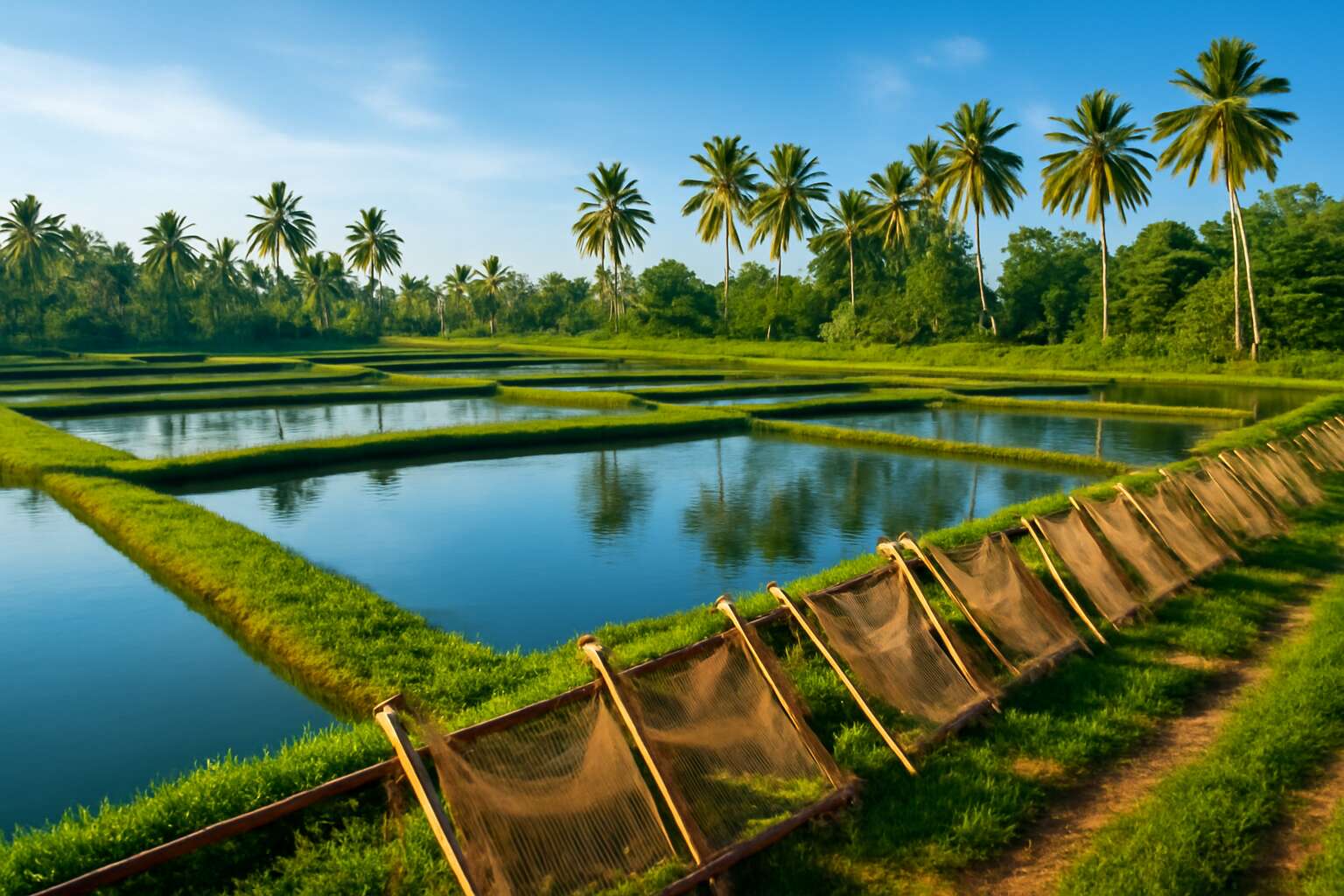
Kodungallur Fish Farming Landscape
Overview of the Kodungallur region’s aquaculture industry
From the tidal lanes of Kerala, Kodungallur reveals an aquaculture legend that nourishes a wide belt of markets. ‘The sea teaches patience,’ declares a veteran grower, and the harvest proves it. In this landscape, a fish farm kodungallur blends age-old craft with modern feed and monitoring, delivering reliable yields even as monsoon moods swing, a signal to South African buyers seeking consistent seafood quality.
Waterways thread the coast like silver filaments, stitching backwater ponds to hatcheries and sun-warmed pens.
- Brackish-water ponds shaped by tidal channels
- Integrated feed, aeration, and health management
- Direct links to regional markets and export hubs
Key species farmed in Kodungallur
From the backwaters of Kodungallur, yields hover around two tonnes per hectare in peak seasons—a quiet testament to patient craft. “The sea teaches patience,” a veteran grower notes, and the harvest keeps faith with that truth. In the fish farm kodungallur, age-old know‑how blends with modern feed and monitoring to steady results even as monsoon moods roll in.
Key species typically raised include:
- Milkfish (Chanos chanos)
- Seabass (Lates calcarifer)
- Pearlspot (Etroplus suratensis)
- Tiger prawn (Penaeus monodon)
Each tidal channel links to regional markets and export hubs, stitching Kodungallur’s ponds into a steady supply chain. That discipline—fastidious aeration, precise feeding, vigilant health checks—helps deliver reliable seafood to South African markets seeking consistent quality.
Infrastructure and supply chains for Kodungallur fish farms
Two tonnes per hectare, when the monsoon cooperates, is not a legend but a measurable tempo in fish farm kodungallur. In the backwaters, patience is the oldest form of logistics—and confidence follows!
The landscape infrastructure blends age-old channels with modern management: tidal sluices, aeration towers, water-quality sensors, and disciplined feeding. A carefully choreographed water exchange and regular health checks keep ponds steady through the monsoon.
Supply chains thread Kodungallur’s ponds to regional markets and export hubs, stitching the coast into a reliable South African-ready flow. Restaurants and wholesalers feel the payoff of fast aeration, hygienic packing, and transparent tracking.
- Canal and gate network
- On-site aeration and monitoring
- Cold-chain packing
- Exporter liaison and logistics
For South Africa’s readers, the discipline of a well-run fish farm kodungallur translates into dependable supply windows and quality seals on every crate.
Market trends and growth in Kodungallur aquaculture
In Kodungallur’s aquaculture tapestry, market demand has become the current that powers growth. Double-digit interest from regional buyers shows in sharper harvest cycles and steadier prices, even as monsoon rhythms shape production. The fish farm kodungallur footprint blends backwater patience with modern quality controls, delivering South Africa-bound shipments with consistent timing and freshness.
Export readiness and consumer trust ride on data-driven planning—temperature-controlled packing, real-time quality checks, and transparent traceability. As volumes grow, suppliers lean into diversified markets, packaging innovations, and longer-term contracts that smooth price swings for buyers in South Africa.
- Diversified product forms and value-added offerings
- Flexible harvest windows and reliable export schedules
- End-to-end traceability and certification for global markets
Best Practices in Kodungallur Fish Farming
Fish health management and disease prevention
On the fish farm kodungallur, water is the first language. “Healthy ponds, healthy profits,” a veteran farmer likes to say, and the truth shows with every dawn check. Clean water, balanced nutrients, and steady observation keep disease at bay and yields steady in Kerala’s coastal climate.
Best practices in fish health management and disease prevention center on quiet, proactive habits. Biosecurity, routine health checks, and thoughtful feed management create resilience against seasonal pathogens and stress. Diligent record-keeping and a cautious quarantine mindset protect stock across batches—I’ve seen these habits pay off again and again. These principles resonate with South African aquaculture goals.
- Biosecurity considerations for ponds and staff
- Water quality indicators and monitoring importance
- Health tracking, disease screening, and record-keeping
- Stock introduction and response to signs of illness
Water quality control and recirculating systems
Water is the first language at the fish farm kodungallur, and when it runs clear, everything else follows. Recirculating systems keep ammonia, temperature, and dissolved oxygen balanced, turning volatile coastal weather into predictable harvests. In Kerala’s humid coast, a tight treatment train and reliable seals mean healthy stock and steady profits dawn after dawn. A recent check shows ponds with optimized water quality delivering up to 25% higher yields. The atmosphere feels charged—almost supernatural—when a well-tuned loop hums behind the numbers. What a difference!
Best practices here center on observation, restraint, and clean water carried by quiet systems.
- biofiltration and mechanical filtration to curb waste
- real-time water quality monitoring for pH, ammonia, and DO
- efficient aeration and recirculation to sustain steady oxygen
In South Africa’s aquaculture market, these features translate into resilience and predictable performance.
Feed optimization and sustainability measures
At fish farm kodungallur, feed optimization isn’t just appetite management—it’s the trick that can cut feed costs by up to 15% while boosting growth, a language translated into bigger fish and leaner waste. When diets match digestive physiology, the stock thrives and the numbers look friendlier.
Smart feed choices lean on sustainable ingredients, digestibility, and lifecycle thinking. We treat feed as a ceiling-to-floor measure—what goes in, comes out as growth, with minimal waste.
- Digestible, responsibly sourced ingredients that minimize waste
- Lifecycle-aware formulations balancing nutrition with environmental impact
- Metrics-led refinement for feed efficiency and profitability
In South Africa’s market, these approaches reassure buyers that fish farm kodungallur’s supply chains stay resilient and sustainable, weathering coastal volatility and currency swings with steady performance.
Biosecurity protocols for Kodungallur farms
Biosecurity on Kodungallur farms isn’t a flashy flourish; it’s the quiet art that keeps households fed and markets steady. One well-kept gate can shave risk and save a season’s yield.
At fish farm kodungallur, controlled access, dedicated equipment, and quarantine zones separate new stock from the main cohort. In South Africa’s market, regular health surveillance and transparent record-keeping turn potential threats into manageable risks that stay offshore!
Key practices to uphold include:
- Controlled access points and visitor management
- Dedicated equipment and on-site sanitation stations
- Quarantine zones for new stock and health screening
- Disinfection protocols for nets, tanks, and transport
Waste management and environmental compliance
Waste streams in the Kodungallur region pulse with potential. Best practices in fish farm kodungallur hinge on turning effluents into opportunities—recovered nutrients, cleaner discharge, and transparent monitoring. Across South Africa’s environmental guidelines, farms that track solids, nitrogen, and phosphorus protect water bodies and reputations alike. The quiet arithmetic of balance—feed input versus waste load—keeps licenses intact and yields steady, long-term performance.
- Efficient solids capture at every stage to reduce sedimentation
- On-site treatment and nutrient recovery for field-ready compost or irrigation
- Transparent reporting and regulatory compliance with audit trails
Adopting energy-conscious pumps, seasonal waste audits, and community advisory rounds seals environmental compliance while boosting trust among buyers. When waste streams are managed with discipline, the ecosystem and the market win together, quietly but decisively.
Economic Impact and Investment in Kodungallur Aquaculture
Local employment and community benefits
In the fish farm kodungallur landscape, every harvest is a chorus that travels from harbor to homes across the coast. A local elder offers a simple truth: “profit travels on the tide when care travels in the nets.” This momentum invites steady investment and builds resilient livelihoods that outlast seasonal ebbs.
Local employment and community benefits include opportunities across farming, processing, logistics, and services—areas where families gain steady incomes and skills grow with the industry.
- Direct farming roles, monitoring and harvest
- Processing, packaging, and cold-chain logistics
- Support for ancillary businesses such as feed supply and transport
Investment in Kodungallur’s aquaculture infrastructure acts as a magnet for investors, including potential partners in South Africa seeking diversified seafood supply chains. The approach emphasizes local procurement, ongoing training, and environmental stewardship, weaving prosperity into the coastline without sacrificing sustainability.
Investment opportunities for investors
Across the Kodungallur coastline, the fish farm kodungallur economy writes its own ledger with every harvest. Recent regional data show a 12% annual uptick in aquaculture output, underscoring how steady returns ride the tides of careful stewardship. “Profit travels on the tide when care travels in the nets,” an elder reminds us, and the truth echoes through every dock and processing shed. For investors, especially those in South Africa seeking diversified seafood supply chains, Kodungallur offers a resilient backbone: local procurement, training, and environmental stewardship weaving prosperity into the coastline.
For global investors, the fish farm kodungallur ecosystem offers a compelling entry. Investment opportunities include:
- Direct farming expansion and precision monitoring
- Processing, packaging, and cold-chain facilities
- Feed supply partnerships and logistics services
Cost structures and profitability in Kodungallur farms
On the Kodungallur shoreline, every harvest writes a patient ledger of salt and sun. The fish farm kodungallur blends stubborn nets with modern prudence, turning capital into living value. A 12% uptick in aquaculture output glides through the season, proof that steady profit rides careful stewardship. For South African readers seeking a diversified seafood spine, Kodungallur offers a resilient backbone: local procurement, training, and environmental guardianship weaving prosperity along the coast.
Cost structure tends to settle on a few steady fulcrums:
- Capital and ponded infrastructure costs
- Feed and nutrition expenses
- Labor and training investments
- Energy, water treatment, and maintenance
- Transport, processing, and cold-chain
Profitability hinges on feed conversion and market cycles; disciplined cost control shapes margins, while local partnerships with processing hubs keep the channel smooth. Profit travels on the tide when care travels in the nets!
Export potential and domestic demand for Kodungallur aquaculture products
Coastal output is turning into currency. A recent surge in seafood demand across Southern Africa nudges buyers toward dependable, climate-smart sourcing. The fish farm kodungallur stands as a bridge between sun-warmed ponds and global shelves, translating capital into steady, protein-rich exports.
Domestic demand, coupled with export potential, positions Kodungallur as a robust anchor for investors. As processing hubs mature and cold-chain logistics improve, fish from Kodungur can meet SA retailers’ expectations for consistency, traceability, and value-added products. This supply chain benefits from training, local partnerships, and engaged government agencies to meet SA market standards.
- Export-ready product standards and traceability
- Strong processing partnerships for a smooth cold chain
- Strategic investment in training and logistics
These levers translate into jobs, regional income, and durable relationships with South African retailers. For fish farm kodungallur, the journey is about sustainable growth that travels with the tides!
Sustainability, Certifications, and Compliance for Kodungallur Farms
Sustainability standards and certifications in Indian aquaculture
Sustainability isn’t a cost—it’s the business model,” a Kodungallur farm manager likes to say, and that mindset is shaping every turn of a fish farm kodungallur. Cleaner water loops, responsible feed, and transparent reporting turn ethical choices into measurable gains. With traceability baked in, partners can verify practices from pond to plate, a rarity that stands out in Indian aquaculture where honesty matters as much as yield.
Certifications and compliance anchor this approach.
- GlobalGAP and local farm standards
- ISO 14001 environmental management and HACCP food-safety systems
- MPEDA/FSSAI traceability and regulatory compliance
Within Indian aquaculture, standards harmonize MPEDA, FSSAI, and international schemes to safeguard water quality, worker safety, and consumer trust, reinforcing why this region is increasingly attractive to buyers in South Africa.
Regulatory landscape and compliance in Kerala
Sustainability is the operating rhythm at fish farm kodungallur—water, feed, and care kept in balance. Cleaner water loops, responsible feed, and transparent reporting translate ethical choices into measurable gains. Traceability baked in allows partners to verify practices from pond to plate, a prized edge in Indian aquaculture that builds trust.
Certifications anchor this approach. GlobalGAP and local farm standards set the baseline, while ISO 14001 and HACCP raise the bar. MPEDA and FSSAI traceability and regulatory compliance align practice with international expectations, giving fish farm kodungallur a durable license to fulfill orders confidently.
- GlobalGAP and local farm standards
- ISO 14001 and HACCP frameworks
Compliance in Kerala’s regulatory landscape guards water quality, worker safety, and consumer trust. The alignment of MPEDA, FSSAI with international schemes makes regulatory compliance a value proposition, reinforcing why buyers in South Africa prefer seafood from this coast.
Water resource management and environmental stewardship
Sustainability at fish farm kodungallur isn’t a slogan—it’s daily practice! Clean water loops, smarter feed, and vigilant care keep flows in balance and local ecosystems intact. Strong water resource management and environmental stewardship translate into resilient yields and cleaner footprints!
Certifications anchor this approach. Key standards include:
- GlobalGAP and local farm standards
- ISO 14001 and HACCP
- MPEDA and FSSAI traceability
Compliance in Kerala guards water quality, worker safety, and consumer trust. MPEDA and FSSAI alignment with international schemes offers a durable license to fulfill orders with confidence—exactly what South African buyers crave when coastal seafood meets their markets.
Monitoring and reporting for sustainability
On the fish farm kodungallur, sustainability is a daily heartbeat, not a brochure promise. In the dawn light, clean water loops, smarter feed, and vigilant care keep ecosystems healthy and families fed. Small acts, season after season, sustain the harvest.
- Clean water loops
- Smarter feed
- Vigilant ecosystem care
Certifications anchor this approach. GlobalGAP, ISO 14001, and HACCP form the core framework; MPEDA and FSSAI ensure full traceability across every link.
- MPEDA
- FSSAI
Compliance in Kerala guards water quality, worker safety, and consumer trust. Monitoring and reporting for sustainability are embedded in routine audits, keeping Kodungallur’s standards verifiable. International buyers, including South Africa, value this transparent, trusted supply.


0 Comments