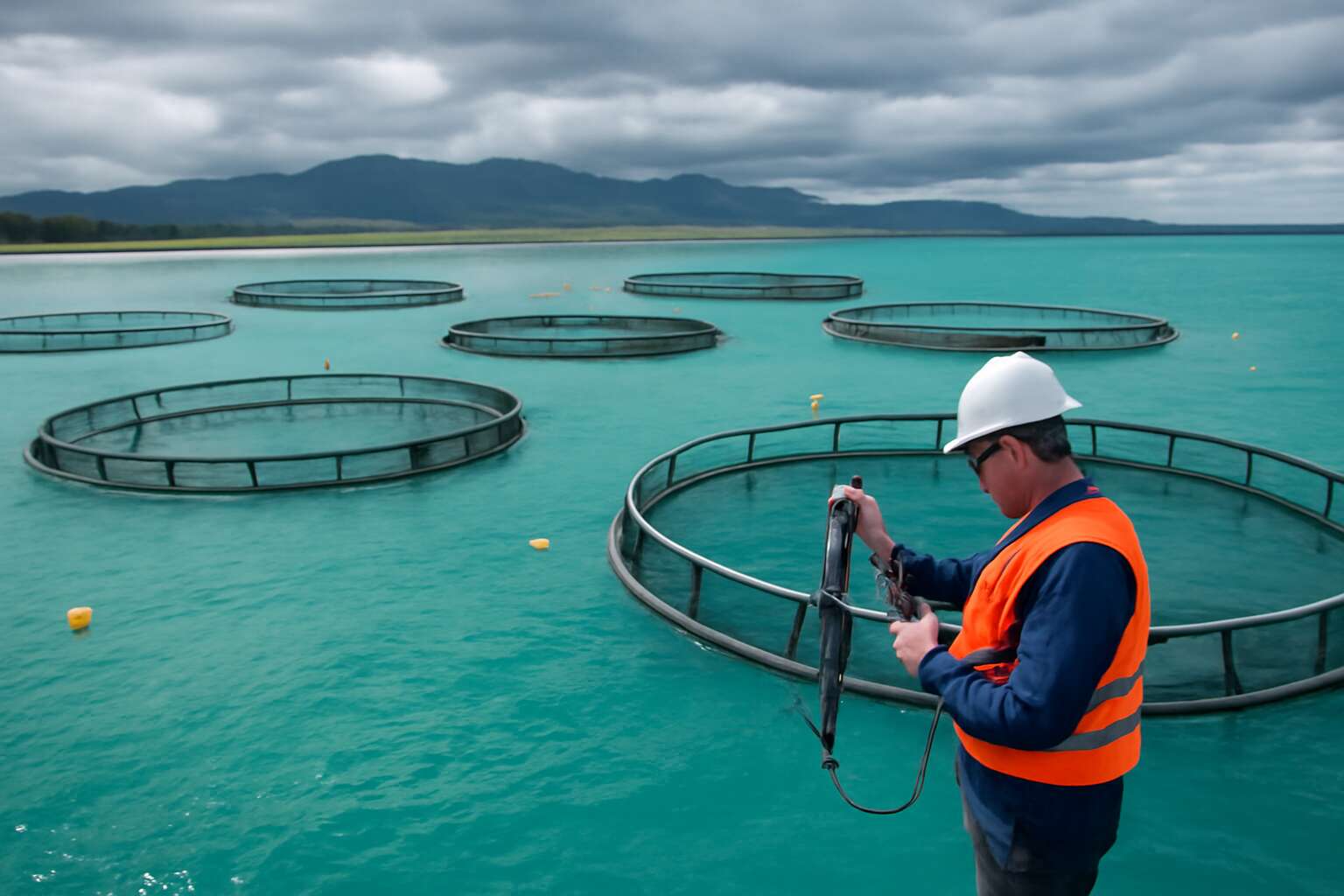
Environmental and Ecological Constraints in Aquaculture
Water quality management in aquaculture
South Africa’s aquaculture sector sits at an ecological crossroads. A telling stat shows up to 60% of new ventures stumble over water quality early on—a sobering reminder that clean culture tanks quietly drive profitability. Water quality management in aquaculture isn’t glamorous, but I know it is the backbone of a harvest. Environmental and ecological constraints here are real: algal blooms, oxygen dips, and shifting salinity weave a stubborn reef knot. These are the challenges with aquaculture.
Key factors to watch include:
- dissolved oxygen that yo-yos with feeding and respiration
- ammonia and nitrite buildup from waste
- pH swings driven by light cycles and photosynthesis
- temperature and salinity fluctuations from rainfall, evaporation, and currents
At South Africa’s coastal estuaries and inland systems alike, the challenge is as much about timing as talent—a test of patience, discipline, and a dash of coastal finesse!
Disease and biosecurity risks in fish and shellfish farming
Across South Africa’s coastline, disease outbreaks can erase a season’s promise in a heartbeat—some farms report losses up to 30% when pathogens slip through the nets. In this theatre, biosecurity is the quiet sentinel, guarding the ledger against invisible guests that travel with gear, people, and water.
Environmental and ecological constraints weave a complex web: stressors from crowding, feed regimes, and shifting seasons can loosen immune defenses, while host-specific pathogens ride currents from hatcheries to pens. The result is a persistent risk that tangible assets—stock, infrastructure, and reputation—live in a delicate, weather-worn balance.
- pathogens and parasites
- breaches from gear and workers
- hatchery to farm transmission
In South Africa’s mixed environments—estuaries and inland enclosures—the challenge is more about timing and discipline rather than brute force. These challenges with aquaculture demand a narrative of vigilance, ecological literacy, and a respect for the unseen currents that bind farms to the broader sea.
Impact on wild populations and habitats
Coastal ecologists warn that nearshore habitats face pressure from aquaculture infrastructure—it’s a startling 25% risk in some estuaries. These environmental and ecological constraints ripple into wild populations and habitats, not just the pens themselves.
Escapes blur the line between farm and reef; nutrient leakage tilts local food webs; equipment and feed subsidies leave footprints on seagrass beds and mud flats. This is not a villain origin story, but a stubborn reality that demands ecological literacy and measured stewardship.
- Genetic mixing from escaped stock with wild populations
- Nutrient enrichment fueling localized algal blooms
- Physical footprint disrupting benthic habitats and sediment flow
When currents shift and seasons turn, the sea remembers. These challenges with aquaculture demand ecological literacy and a quiet respect for unseen currents.
Ecosystem interactions and biodiversity considerations
In some SA estuaries, the risk to nearby habitats from aquaculture infrastructure runs as high as 25%. Environmental and ecological constraints ripple beyond the pens: escapes blur the line between farm and reef; nutrient leakage tilts local food webs; the footprint of gear and feed unsettles seagrass beds and mud flats. This isn’t a villain’s tale, but a stubborn reality that demands ecological literacy and measured stewardship.
The core pressures are clear:
- Genetic mixing from escaped stock with wild populations
- Nutrient enrichment fueling localized algal blooms
- Physical footprint disrupting benthic habitats and sediment flow
When currents shift and seasons turn, the sea remembers. These challenges with aquaculture demand ecological literacy and a quiet respect for unseen currents. I’ve watched how a single nutrient pulse reroutes tiny food webs and reshapes seabed life. We choose measured stewardship!
Climate variability and extreme weather effects on systems
South Africa’s coastline keeps time with the sea! In SA estuaries, climate variability can tilt the balance with warmer peaks and sudden freshwater pulses—seasonal shifts that redraw nutrient maps and ripple through predator–prey chains. These are challenges with aquaculture, not villains, but stubborn reminders that the ocean keeps its own weather. Barely predictable, yields can swing into double‑digit percentages from season to season, a call to ecological literacy and steady stewardship.
Nature’s limits reveal themselves in three currents:
- Temperature and salinity swings that stress metabolism and feeding efficiency
- Storms and shifting currents that displace gear and alter seabed habitats
Beyond the numbers, the sea remembers the season’s pulse. Extreme events intensify sedimentation and alter benthic communities, reshaping the local web long after the storm. The tale of challenges with aquaculture rewards attentive listening and quiet respect.
Operational and Economic Challenges for Producers
Capital investment and financing hurdles
Projected returns in aquaculture can flash like lightning, but upfront costs anchor them in reality. The operational and economic challenges for producers are steep—capital investment and financing hurdles loom over every tank and pen. In South Africa, investors demand meticulous risk controls, while equipment, feed, and ongoing monitoring push the price tag higher. These challenges with aquaculture shape every stocking decision and the pace of expansion.
- Upfront capital for infrastructure (ponds or cages, water treatment, and monitoring systems)
- Access to affordable credit and favorable repayment terms
- Cash-flow management amid seasonal or market-driven harvest variability
Long payback periods and currency exposure add an edge of suspense to every business case; the landscape remains a crucible where cost and return are weighed in real time.
Feed cost volatility and supply chain dependence
“Feed is the drum that beats every budget,” says a South African producer, and in this industry the price pendulum can redefine a season. Feed costs often dominate operating expenses, squeezing margins and forcing sharp buying decisions before a single net pen is stocked. These challenges with aquaculture sit at the heart of daily planning, shaping stocking densities, supplier choices, and the tempo of expansion.
- Volatile feed ingredient prices driven by global commodity markets
- Dependence on imports for key inputs like soy, fishmeal, and specialty additives
- Logistics and port delays that push delivery times and raise costs
Currency swings, freight volatility, and seasonal harvests add suspense to the equation, a hallmark of the broader challenges with aquaculture.
Labor availability, training, and retention
South Africa’s aquaculture floor runs on human grit as much as it does on water. Peak-season labor turnover hovers around 30%, a statistic that makes CFOs reach for the calculator and a strong cup of coffee. Availability is patchy, and skilled fish-handling crews are snapped up faster than a net slips off a winch. Training costs bite, safety rules bite back harder, and retention feels like a tug-of-war with other sectors offering shinier perks.
- Skills gaps and onboarding delays
- Turnover and retention pressure
- Shift patterns and remote-location logistics
All this shapes daily planning, from staffing density to compliance tempo. These realities underscore the challenges with aquaculture that keep producers balancing budgets, safety, and morale.
Regulatory compliance, permitting, and reporting
Regulatory gravity slows even the most motivated aquaculture projects. In South Africa, permitting delays routinely stretch project timelines by six to twelve months, turning budget forecasts into a lottery. Regulatory compliance, permitting, and reporting siphon capital before a single fingerling enters the water, and every missing form sharpens the risk. It’s not just paperwork — it’s a strategic constraint that shapes what gets built and when.
- Environmental Impact Assessments (EIAs) and water-use licenses
- Marine aquaculture licenses and zoning approvals
- Animal health permits and traceability systems
- Annual returns, audits, and compliance binding documents
Beyond the cost, penalties for non-compliance loom and milestone delays tighten cash flow for farmers and financiers. The end result is a carefully choreographed dance of approvals, audits, and deadlines that shape what gets funded and when — a reality that embodies the challenges with aquaculture.
Technological and Innovation Barriers
Adoption of automation, sensors, and digital platforms
As one veteran Cape Town operator puts it, ‘If you can’t measure it, you can’t improve it’! That mindset underpins the push for automation, sensors, and digital platforms in aquaculture. I’ve watched this tension play out on SA farms. These are the challenges with aquaculture. In South Africa, power reliability and patchy connectivity turn promising pilots into stubborn puzzles.
Technology barriers loom: upfront costs, messy integration with legacy systems, and uneven data literacy slow adoption. Add security worries and vendor lock-in, and momentum stutters where downtime bites.
- High upfront and ongoing costs for sensors and automation
- Connectivity gaps in rural coastal sites and power reliability
- Need for skilled technicians for installation and maintenance
In SA’s mixed coastal environments, building a supportive ecosystem of hardware, software, and skilled technicians turns obstacles into a shared enterprise rather than a lone battle.
Genetics, breeding, and stock selection advances
Resilience in the water begins long before stock hits the pens. A veteran SA breeder quips, “If we can’t breed for resilience, automation is a dream with a delayed alarm.” Genetics, breeding, and stock selection sit at the sharp edge of the challenges with aquaculture in our country, where promising labs grapple with cost, regulation, and the friction of scaling to commercial farms.
- Long generation intervals and high R&D costs
- Limited access to diverse, locally adapted broodstock
- Difficulties translating genomic insights into on-farm gains
- Data gaps, phenotyping bottlenecks, and bioscience literacy
- Import controls and biosecurity constraints on stock movement
In SA’s coastal mosaic, partnerships among hatcheries, universities, and tech developers could align genetic work with practical needs, shaping a coherent path through these challenges with aquaculture.
Waste treatment, effluent management, and environmental controls
“In the water, control is a ghost—until it isn’t,” a veteran manager once quipped. Waste streams, effluent quality, and buried energy costs haunt SA aquaculture. Technological and innovation barriers in waste treatment and environmental controls turn clean-water math into a political dance. These realities are among the challenges with aquaculture confronting South Africa as coastal farms scale.
- Legacy treatment systems unable to cope with nutrient loads
- High upfront and ongoing capital for advanced effluent tech
- Sparse real-time analytics and sensor networks
- Cumbersome environmental compliance and discharge permits
- Limited in-situ training for waste management teams
Across the coastline, progress depends on cross-sector partnerships among hatcheries, universities, and tech developers to tailor solutions to local species, climate, and regulatory realities. When these forces align, environmental controls shift from compliance chokepoints to value streams that protect livelihoods and ecosystems.
Data integration, traceability, and interoperability
A 2023 survey showed 40% of SA aquaculture producers still track data on spreadsheets, a stark reality for digital maturity. Technological and innovation barriers show up as data integration, traceability, and interoperability gaps. Different equipment speaks different languages, and legacy systems block real-time insight. These are the challenges with aquaculture.
Key barriers include:
- Fragmented data formats and missing standards hinder cross-system sharing
- Limited APIs and incompatible device ecosystems stall interoperability
- Inconsistent traceability trails across hatchery, farm, and supply-chain nodes
Without common standards and open data, the flow of information remains choked and decision-making suffers!
Technology transfer to small-scale and rural farms
Across South Africa’s coastlines, the digital divide is a stubborn fisherman, dragging efficiency ashore. A 2023 SA survey found only 15% of small-scale aquaculture ventures use real-time sensors or cloud dashboards, leaving decisions anchored to instinct rather than data. The conversation around Technological and Innovation Barriers centers on how technology transfer to small-scale and rural farms stalls, amplifying the challenges with aquaculture.
Key barriers include:
- Limited internet connectivity and unreliable power in rural hatcheries
- High upfront costs and unclear ROI for sensors and automation
- Fragmented device ecosystems and the lack of local service networks
- Low digital literacy and limited access to ongoing training
Progress will hinge on tools that fit local realities rather than slick, one-size-fits-all tech, a reality that keeps the conversation lively and the potential untapped!
Policy, Market, and Social Dimensions
Regulatory frameworks, risk management, and compliance
Policy and regulatory frameworks in South Africa set the guardrails for aquaculture—from licensing to environmental reporting. Compliance isn’t mere formality; it protects investors and communities. When permits, EIAs, and species standards align, projects move with steadier momentum. These challenges with aquaculture hinge on coherent enforcement.
Market dynamics and risk hinge on policy clarity, pricing, and export requirements. In SA, predictable licensing timelines and transparent reporting unlock finance and contract farming. Key dimensions include:
- Licensing timelines
- Environmental and water-use permits
- Certification and market access
Without this clarity, capital detours and supply gaps threaten resilience.
Social dimensions ground growth in people, training, and shared benefit. A strong social license to operate comes from genuine community engagement, fair employment, and transparent governance. When those threads are strong, regulation becomes collaboration rather than constraint; the challenges with aquaculture feel solvable.
Market demand, pricing pressures, and product differentiation
Policy clarity is the compass for aquaculture. In South Africa, the sector has grown 8% year over year, as predictable licensing timelines, environmental permits, and export rules turn risk into rhythm. From the field, I’ve seen coherent enforcement unlock patient capital and credible partnerships. These challenges with aquaculture hinge on that coherence.
Market dynamics drive the fuse: Market demand, volatile pricing, and the need for product differentiation. When buyers seek traceability, species variety, and reliable supply, producers must align harvests with niche markets and seasonal flows. The tides rise and fall on policy, logistics, and branding!
- Market demand trajectories and consumer preferences
- Pricing pressures from feed costs and exchange rates
- Product differentiation through species, processing, and certifications
Social dimension grounds growth in people, training, and fair governance. A robust social license reduces conflict and encourages collaboration; communities stand as stewards, not spectators.
Sustainability standards, certifications, and consumer expectations
Policy clarity is the compass for aquaculture in South Africa, turning licensing timelines and export rules into reliable rhythms. When the framework is coherent, investment follows; when it isn’t, the challenges with aquaculture linger in the margins.
- Sustainability standards that reflect global expectations and local realities
- Certifications that verify environmental and social performance
- Consumer expectations for transparent sourcing
Market forces shape every harvest: demand shifts, price volatility from feed costs and currency swings, and the need for niche differentiation. Buyers chase clear records, steady supply, and responsible branding, pushing producers to align harvests with seasonal windows and certified practices.
Social dimensions anchor growth: a credible social license reduces conflict, while training and governance empower communities as stewards. In South Africa, that means meaningful participation and fair opportunities at every coastal village and inland farm that shares the water.
Community impact, stakeholder engagement, and public perception
Policy clarity is the difference between a thriving harvest and a paperwork reef. In South Africa, licensing timelines and export rules only become reliable rhythms when the framework is coherent; without it, the challenges with aquaculture drift into margins and investor hesitation. Clear policy synchronizes effort with opportunity, turning potential into steady growth.
Market forces tug on every harvest. Demand shifts and currency swings tighten margins, while feed costs bite. Buyers crave credible records, steady supply, and responsible branding—pushing producers to align with seasons and prove provenance.
Social dimensions anchor growth. A credible social license reduces conflict, and training and governance empower communities as stewards. In South Africa, meaningful participation and fair opportunities must reach coastal villages and inland farms that share water.
- Coastal communities
- Local governments and regulators
- Fisheries workers and smallholders
- NGOs, researchers, and funders




0 Comments