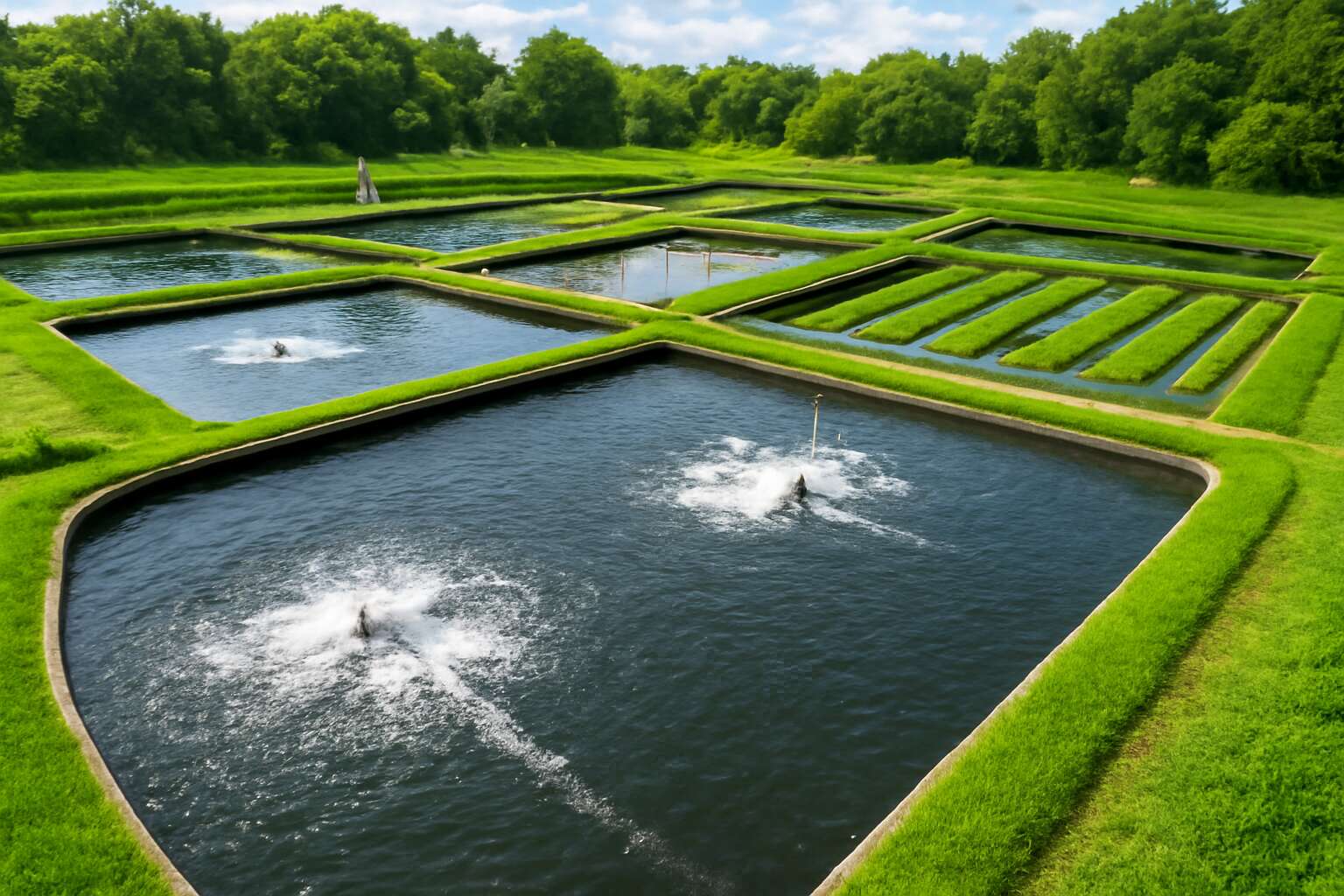
Understanding Aquaculture Wastewater: Characteristics and Impacts
Composition of aquaculture wastewater and key contaminants
Water speaks in current and count, and South Africa’s farms hear its rhythm. In RSA aquaculture, aquaculture wastewater carries a memory of feed, fish, and flow. “Wastewater is not waste; it’s a resource awaiting stewardship,” a veteran engineer reminds us, and the line lands like a bell. The opening verse hints at a system where every drop measures nutrients, oxygen, and risk, telling us how clean or crowded the waters become.
Understanding aquaculture wastewater means reading its makeup—the dissolved nutrients, organic matter, and microbial life riding in with the water. The composition of aquaculture wastewater mirrors feeding regimes, stock density, and water chemistry, marking the difference between a thriving habitat and a troubled reef of sludge in RSA operations.
- Ammonia and ammonium
- Nitrite and nitrate
- Phosphorus and organic phosphorus
- Suspended solids
- Pathogens
Nutrient profiles and variability
Across RSA farms, nutrient pulses follow feed cycles like clockwork, turning calm water into a nutrient storm within hours. “Wastewater is not waste; it’s a resource awaiting stewardship,” a veteran engineer reminds us, and the line lands with a bell.
Understanding aquaculture wastewater means reading its nutrient profiles—the dissolved nutrients, organic matter, and microbial life hitching a ride with the water. The profile shifts with feeding, density, and water chemistry, signaling the line between a thriving habitat and a sludge-prone system.
Common drivers of these nutrient profiles include:
- Feeding regimes and feed quality
- Stocking density and water exchange rates
- Temperature, salinity, and seasonal changes
- Organic load and microbial activity
When profiles swing, impacts show up as oxygen demand, clarity loss, and ecosystem stress—subtly at first, then with real consequences for effluent quality and farm sustainability.
Seasonal and production-cycle effects on wastewater quality
On South Africa’s aquaculture farms, a single feeding burst can turn glassy water into a nutrient storm within hours. Understanding aquaculture wastewater means reading how seasonal temperature quirks, salinity shifts, and reactive feed cycles redraw the water’s profile—and how those changes echo through the system after every stocking event.
- Post-feeding oxygen demand spikes ripple through tanks.
- Turbidity and color shift as organic loads peak.
- Microbial communities rearrange in response to temperature and nutrients.
- Seasonal transitions alter dilution, exchange rates, and resilience.
Those waves of change settle into the daily economics of farming—effluent quality and farm sustainability ride on them, quietly shaping risk and opportunity.
Impacts on receiving waters and ecosystems
“Water remembers every nutrient it ever met,” a South African hydroecologist notes, and the memory shows up fast when aquaculture wastewater enters a river or estuary. A burst of nutrients can tilt the balance in hours—clouding water, shifting color, and altering dissolved oxygen pockets—long before the next stocking round wraps up.
- Nutrient pulses promote algal blooms and rewrite primary production
- Suspended solids cut light and rework sediment layers
- Microbial communities swing with temperature and nutrient shifts
Across South Africa’s waters, these changes ripple beyond farm boundaries, redefining the health and resilience of receiving waters and the wider ecosystem as aquaculture wastewater continues to mingle with currents, estuaries, and coastlines.
Treatment Technologies for Aquaculture Wastewater
Physicochemical treatment methods for effluents
In South Africa, every drop counts, and aquaculture wastewater contains nutrients and salts that threaten local waterways. Clean, efficient treatment turns waste into value—reducing pollution while supporting farm productivity.
Physicochemical treatment relies on chemistry and physics to separate and capture contaminants. Key techniques include:
- Coagulation and flocculation to bind fines into settleable flocs
- pH adjustment and precipitation to remove metals and unwanted nutrients
- Adsorption with activated carbon or ion-exchange media
- Electrocoagulation to generate in-situ coagulants and reduce chemical needs
These methods suit compact SA facilities, offering modular options that fit on-site layouts. They demand careful balance of chemical use, energy, and sludge handling, aligned with local guidelines and water reuse goals. It’s a practical edge for responsible farming!
Biological treatment and biofilter design
Water has a memory, and in South Africa, memory is what the best farms honor. “Waste is tomorrow’s resource if we treat it right,” a seasoned SA engineer reminds us, and the words linger.
Biological treatment uses microbes that thrive in biofilters to reduce aquaculture wastewater loads. Moving-bed and packed-bed biofilters foster robust biofilms, where ammonia and organic matter are converted with quiet, almost eerie efficiency.
Key design considerations quietly shape performance:
- Media choice and surface area
- Oxygen transfer and mixing
- Hydraulic retention time and flow patterns
- Sludge management and maintenance mindset
In South Africa, tuning these elements supports local water stewardship and farm productivity.
Solid-liquid separation and sludge management
“Waste is tomorrow’s resource if we treat it right,” a seasoned SA engineer reminds us. When it comes to aquaculture wastewater, solid-liquid separation is the quiet workhorse that keeps tanks calm and rivers happier. Pulling solids early reduces clogging, improves clarity, and frees up space for recirculation and water reuse on South African farms.
- Decanter centrifugation for compact sludge recovery
- Screw presses or belt filters for dewatering and volume reduction
- Gravity settling and dissolved air flotation for clarifying the effluent
Sludge management follows—and this is where the savings accumulate. Dewatering concentrates the solids, enabling options like anaerobic digestion or composting. The result is a leaner waste stream and a better chance for nutrient recycling within SA’s aquatic landscapes.
Membrane processes and advanced oxidation for water polishing
South Africa’s aquaculture sector stands at a crossroads where every drop reclaimed becomes a pledge kept. ‘Waste becomes resource when water is polished to a gleam,’ a SA engineer reminds us. Membrane processes rise as quiet virtuosos, turning murky streams into clarity with precise sieves and selective barriers. For aquaculture wastewater, water polishing is the final act, making reuse practical and preserving rivers and farms alike.
Membrane strategies include:
- Microfiltration for solids control
- Ultrafiltration to shield downstream processes
- Reverse osmosis for mineral balance
Beyond membranes, advanced oxidation borrows a spark from chemistry—hydroxyl radicals that scrub lingering contaminants and restore clarity to the effluent, making it ready for reuse on SA farms and in rivers.
Nutrient Recovery and Reuse from Aquaculture Wastewater
Nutrient budgeting and removal targets
A single hectare of well-tuned aquaculture facilities can turn waste into wealth, and in South Africa, nutrient budgeting has cut nutrient loads from aquaculture wastewater by as much as 60% in pilots. That shift—from effluent to resource—reframes waste as a regenerative asset for farms and communities alike!
Nutrient recovery and reuse hinge on precise budgeting: tracing nitrogen, phosphorus, and trace minerals across cycles, then setting removal targets that steer recovery rather than letting nutrients drift away.
To turn this potential into practice, consider these focus areas:
- Map nutrient loads across production cycles to identify critical peaks.
- Channel recovered nutrients into controlled reuse streams, such as algae culture or fertigation, minimizing fresh input.
- Track performance with RSA-friendly metrics and adapt targets to seasonality.
With this compass, aquaculture wastewater becomes a circle of abundance—nutrients circulate, water stays clearer, and sustainability hums across South Africa.
Recovery pathways for nitrogen and phosphorus
Across South Africa, the tale of aquaculture wastewater is changing shape: pilot farms report nutrient recovery slashing loads by up to 60%, turning waste into wealth. This is more than clever engineering; it’s a living legend where nitrogen and phosphorus find a second life. When flow, biology, and purpose align, a hectare becomes a regenerative loop that nourishes farms and communities alike.
Recovery pathways channel these elements into practical streams:
- Algae culture systems that rapidly uptake nitrogen and phosphorus into usable biomass
- Struvite precipitation to recover phosphorus as a slow-release fertilizer
- Fertigation and soil amendments that return recovered nutrients to fields
Together, these pathways knit a nutrient circle that sustains aquaculture while feeding soils and crops, a future where nutrients move as assets, not effluents.
Aquaponics integration and crop fertilization options
Across South Africa, aquaculture wastewater is transforming from liability to asset, a quiet revolution that reshapes farming’s watershed. In pilot farms, inputs recaptured from water cut nutrient loads by up to 60%, proving that wastewater can seed harvests rather than burden streams.
In a thoughtful aquaponics weave, we glimpse a circulatory system where fish tanks and plant beds share a single bloodstream: water ferries nutrients to roots, while roots, microbes, and biofilters polish it back for the next round. Crop fertilization options emerge from this loop, precise and context-rich.
- Algae biomass as soil amendment or compost feedstock
- Phosphorus in slow-release forms for steady crop feeding
- Fertigation delivering nutrient-rich water through drip lines
So the nutrient circle runs on if we watch and steward it: aquaculture wastewater becomes soil fertility, farm resilience, and community nourishment, weaving a living loop across hectares and households alike.
Economic and environmental benefits of nutrient reuse
Value flows where others see a liability. In pilot farms, nutrient loads recaptured from aquaculture wastewater cut crop inputs by as much as 60%, proving that waste streams can seed harvests rather than burden streams. This nutrient recovery and reuse creates a living cycle: cleaner effluent, steadier yields, and richer soils that hum with life. Across South Africa, growers are watching costs shrink while shelf life and resilience rise, as waste is reimagined as a resource to nurture communities and landscapes.
A few practical pathways anchor this circular logic:
- On-site composting and digestate programs that return organic matter to fields
- Fertigation blends calibrated to crop calendars, minimizing runoff and leaching
- Market-ready soil amendments that reduce dependence on synthetic fertilizers
By weaving nutrition back into soil, aquaculture wastewater supports community nourishment and environmental stewardship.
Regulatory, Environmental, and Economic Considerations
Discharge standards, permits, and compliance strategies
Regulatory clarity is not red tape—it’s a roadmap. For aquaculture wastewater, discharge standards and permits anchor responsible growth, guided by South Africa’s National Water Act and related environmental statutes. “Regulatory clarity is not red tape—it’s a roadmap,” a regulator notes.
Environmental considerations demand vigilance to protect receiving waters and ecosystems from nutrient imbalance and sedimentation. Permits often include requirements such as the following:
- Discharge limits tied to site conditions
- Regular monitoring and public reporting
- Adaptive management plans when water quality shifts
Economic considerations show that compliant systems reduce risk and can open pathways to green funding and incentives, turning wastewater initiatives into a value driver for the sector.
Environmental monitoring and impact assessments
Regulatory clarity is a roadmap for aquaculture wastewater management in South Africa. Grounded in the National Water Act and related environmental statutes, discharge standards and permits anchor responsible growth, tying site conditions to approved loads and transparent reporting. Regulators emphasize that clarity supports lawful, steady expansion rather than red tape.
Environmental monitoring and impact assessments serve as the system’s early warning. They track nutrient flux, sedimentation, and ecosystem responses to changes in production, helping operators act before problems escalate.
- Regular water quality testing (nutrients, dissolved oxygen, turbidity)
- Sediment depth and composition assessments in receiving waters
- Biotic indicators and long-term ecosystem trend analysis
Economically, compliant systems reduce risk and unlock green funding and incentives, turning aquaculture wastewater management into a tangible value driver for the sector.
Cost-benefit analysis and funding opportunities
“Clarity today, expansion tomorrow.” In South Africa, clear rules and transparent permits anchor responsible growth in aquaculture wastewater management, aligning site realities with approved loads and honest reporting. Regulators remind us that predictable compliance buys stability, trust, and open access to markets for operators and communities alike.
Environmentally, the payoff is resilience and reputational capital. Thoughtful monitoring and adaptive management turn potential problems into predictable costs and long-term value. The following opportunities tilt the balance toward sustainable growth:
- Grants for upgrading wastewater treatment and monitoring equipment
- Tax incentives for energy-efficient upgrades
- Low-interest loans linked to environmental milestones
Economically, disciplined cost-benefit analysis shines a light on upfront investments turning into ongoing savings for wastewater systems. When risk, energy use, and nutrient recovery are quantified, it becomes easier to access green funding, concessional finance, and favorable terms—supporting steady, scalable growth without eroding margins.
Case Studies and Best Practices in Aquaculture Wastewater Management
On-farm wastewater minimization and operational efficiency
Water is scarce in South Africa, and aquaculture wastewater strategies turn waste into value. Case studies from local farms show that targeted on-farm minimization and smarter operations can cut input costs while maintaining fish health and yields!
- Close-loop water systems with recirculation and efficient filtration
- Simple automation for monitoring temperature, dissolved oxygen, and pH
- On-site sludge handling that recovers nutrients or produces energy
Best practices emerge when farms partner with research bodies and tailor solutions to species, climate, and production cycle. The payoff is measurable: lower operating costs, steadier growth, and a smaller environmental footprint in the context of South Africa’s regulatory landscape.
Successful treatment system implementations and retrofit examples
Across South Africa’s aquaculture wastewater landscape, retrofit stories of wastewater systems read like weathered maps guiding a thirsty industry toward resilience. In pilot projects, freshwater withdrawals dropped by up to a third, and the sludge footprint shrank while equipment ran leaner. These case studies show how precision upgrades—quietly integrated into existing farms—can turn a waste stream into steady value, without sacrificing fish health or growth.
- Measured water-use savings and cleaner effluent from retrofit trials.
- Economic signals include lower energy bills and improved logistics.
- Partnerships with research bodies yield species-tuned, climate-aware system designs.
From these case studies, best practices emerge as a quiet chorus: begin with a rigorous baseline audit, choose modular upgrades that scale with season and cycle, and weave independent monitoring into daily rhythms. When farms align with researchers and regulators, solutions fit the land and climate, turning data into durable land and water stewardship.
Monitoring protocols, KPIs, and performance tracking
A cross-country pulse runs through South Africa’s farms, where the quiet engine is monitoring. In pilot sites, we stitch real-time views of flow, quality, and sludge turnover with sensors and weekly audits—turning a volatile waste stream into steady value. This is where disciplined tracking of aquaculture wastewater makes the difference between uncertainty and resilience.
Best practices anchor decisions in baseline audits, modular upgrades, and daily data rituals. Monitoring protocols blend automated sensors with periodic lab checks, creating a living narrative rather than a snapshot. KPIs—the treatment efficiency, energy per kilogram of fish, water reuse rate, and system uptime—keep teams honest. Performance tracking becomes a routine with dashboards, researcher reviews, and regulator reports.
- Baseline audits inform calibration and trend analysis
- Real-time dashboards paired with periodic lab verification
- Structured reviews with researchers and regulators
Emerging trends, research gaps, and future directions
Across South Africa’s aquaculture wastewater fields, resilience is a scaffold for growth—pilot sites report up to a 30% drop in contaminant load as modular upgrades come online. Case studies reveal how farms pair pragmatism with research, turning data into decisions and waste streams into value. I’ve seen teams fuse patience with curiosity, and the results arrive as quiet, measurable proof.
Future directions point to digital twins, low-energy polishing, and nutrient recovery that mirrors nature rather than fights it, while glaring gaps linger around capital access, training, and scalable financing.
- Modular pilots scaling to rural and peri-urban farms
- Open-data benchmarking across aquaculture wastewater systems
- Biological polishing hybrids and algal nutrient recovery
These threads braid case studies, best practices, and future research into a narrative where aquaculture wastewater becomes a shared resource rather than a burden, inviting policy alignment and workforce curiosity, especially in South Africa.

0 Comments